Wow! I’ve had a fabulous two weeks, traveling from the Adirondacks to Acadia, spending five days there with Tracy, then Portland for a couple more, and then on to New York for a serendipitous meet-up with Andrew.
This post is a joint effort with Tracy contributing content and photos.
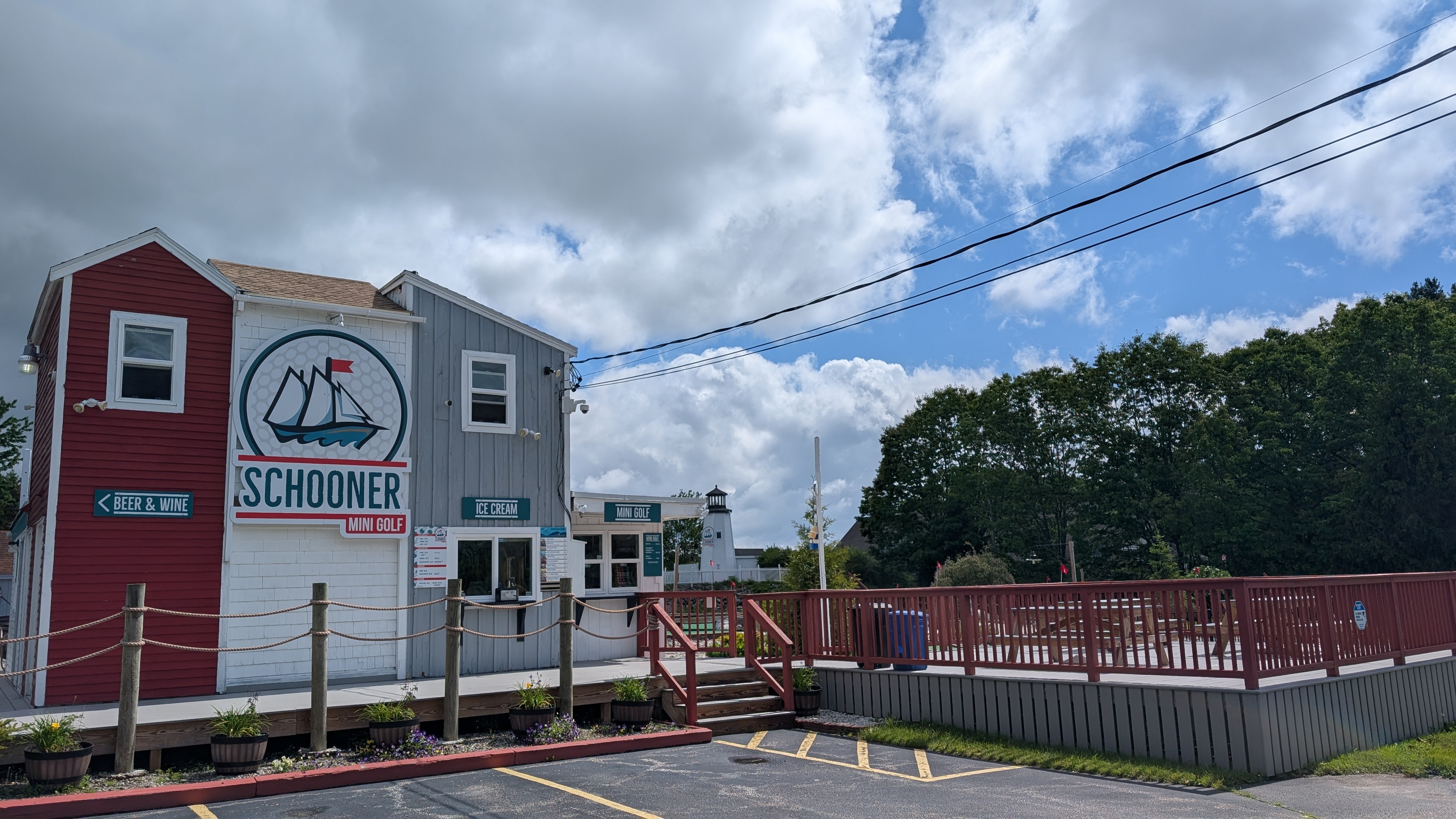
I had three nights at Harvest Host sites – a Vermont maple syrup farm and Schooner Mini-Golf in Saco, Maine boasting Golf! Ice Cream! Fun! I enjoyed the setting and the ice cream; I also was able to walk less than a mile to a restaurant where a terrific cover band, Stolen Mojo, played and where I made some friends and danced the night away. Then it was off to Portland to meet up with Tracy who flew in from Seattle to spend ten days exploring Acadia National Park and Portland, Maine.
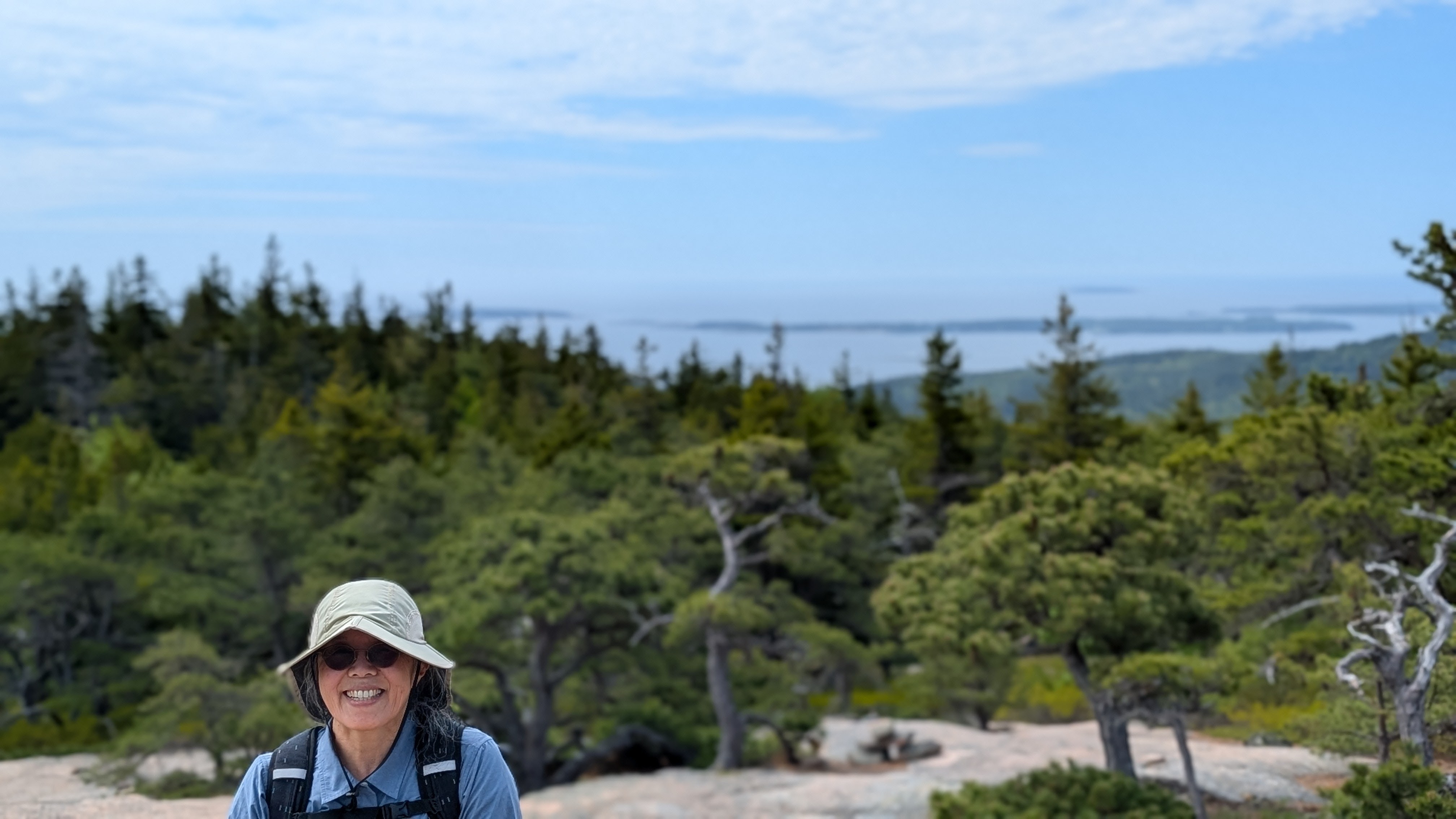
On our first full day we tackled the nine mile round trip Cadillac Mountain trail featuring beautiful views and a 1700 foot elevation gain. It was a lot of climbing and clambering over boulders as well as strolling through the forest on a path of duff. At the top of the mountain, which is the highest point on the coast from Maine to Florida, we had the good fortune to listen to the Burnurwurbskek Singers, a Wabanaki drumming and singing group, share music and stories about the history and culture of the Wabanaki tribes of Maine. John Bear Mitchell told us about his role as a cultural consultant on Stephen King’s prequel to It: Welcome to Derry. It was a beautiful setting to hear the music and the message of their collective power as they continue the struggle to win all of their rights.
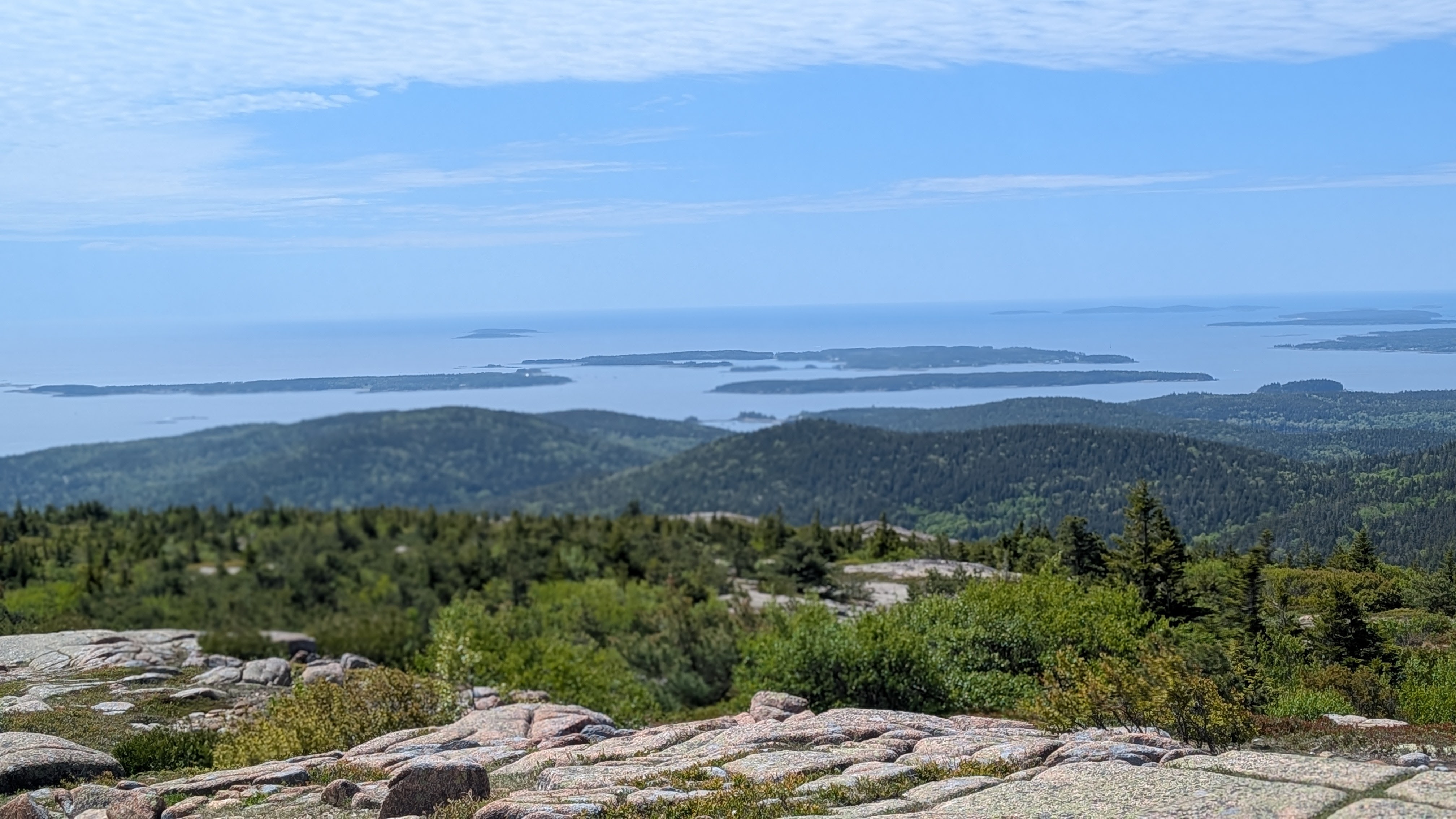
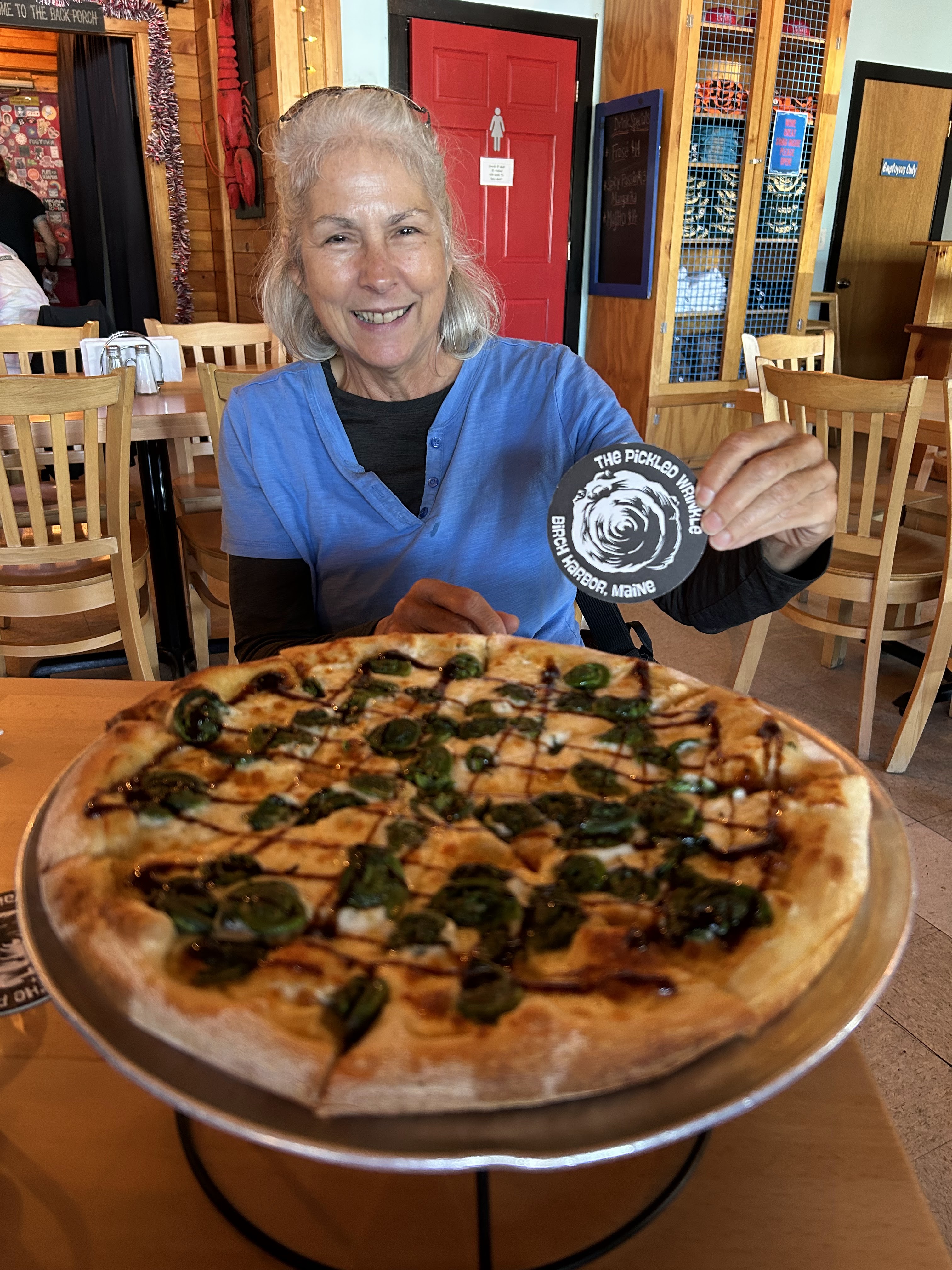
We hiked every day we were at Acadia, including on the Schoodic Peninsula, an hour+ drive from the rest of the park on Mt. Desert Island. I had my first taste of fiddleheads at a restaurant called the Pickled Wrinkle. Fiddleheads are a hearty fern that reminded me of Brussel sprouts…they were delicious on a pizza with balsamic and maybe goat cheese.
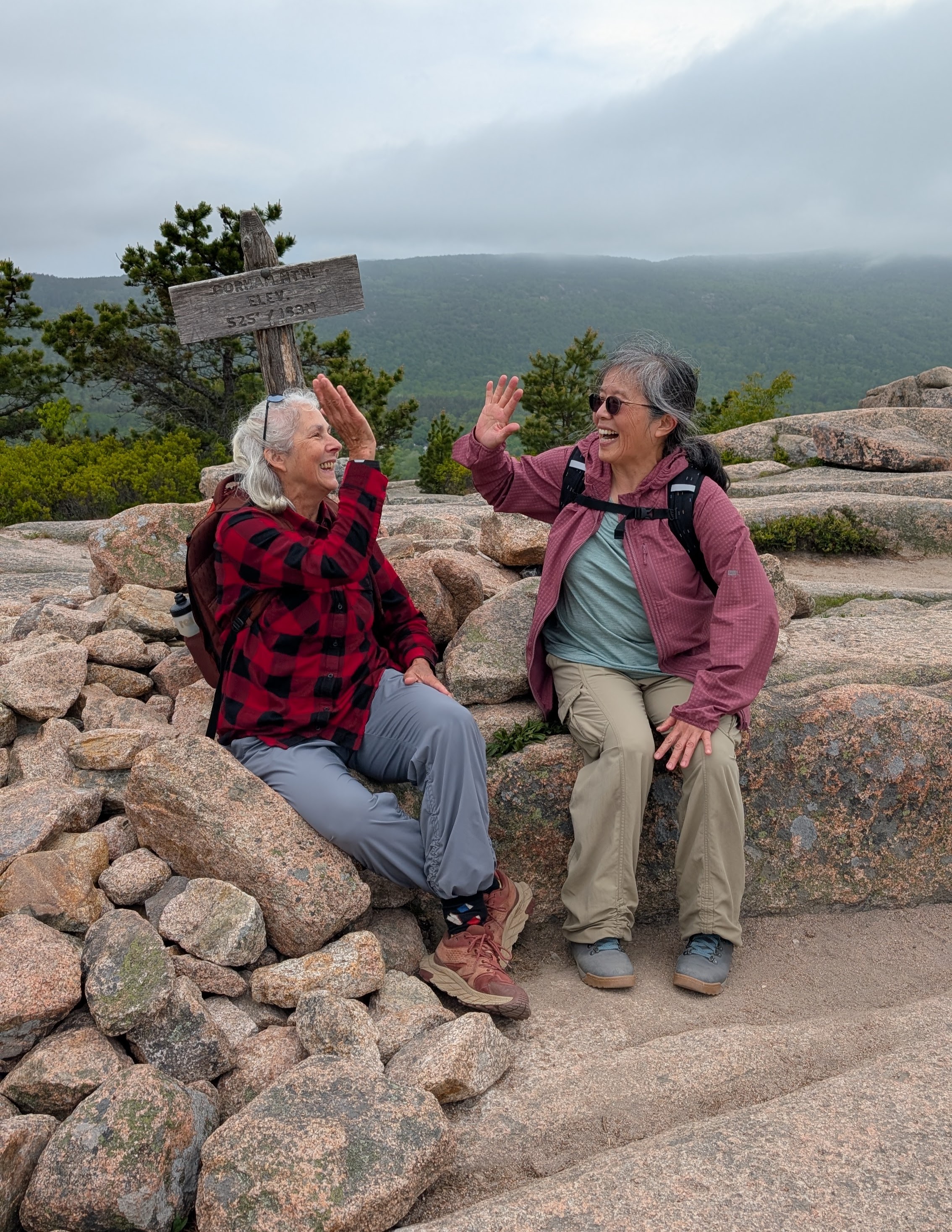
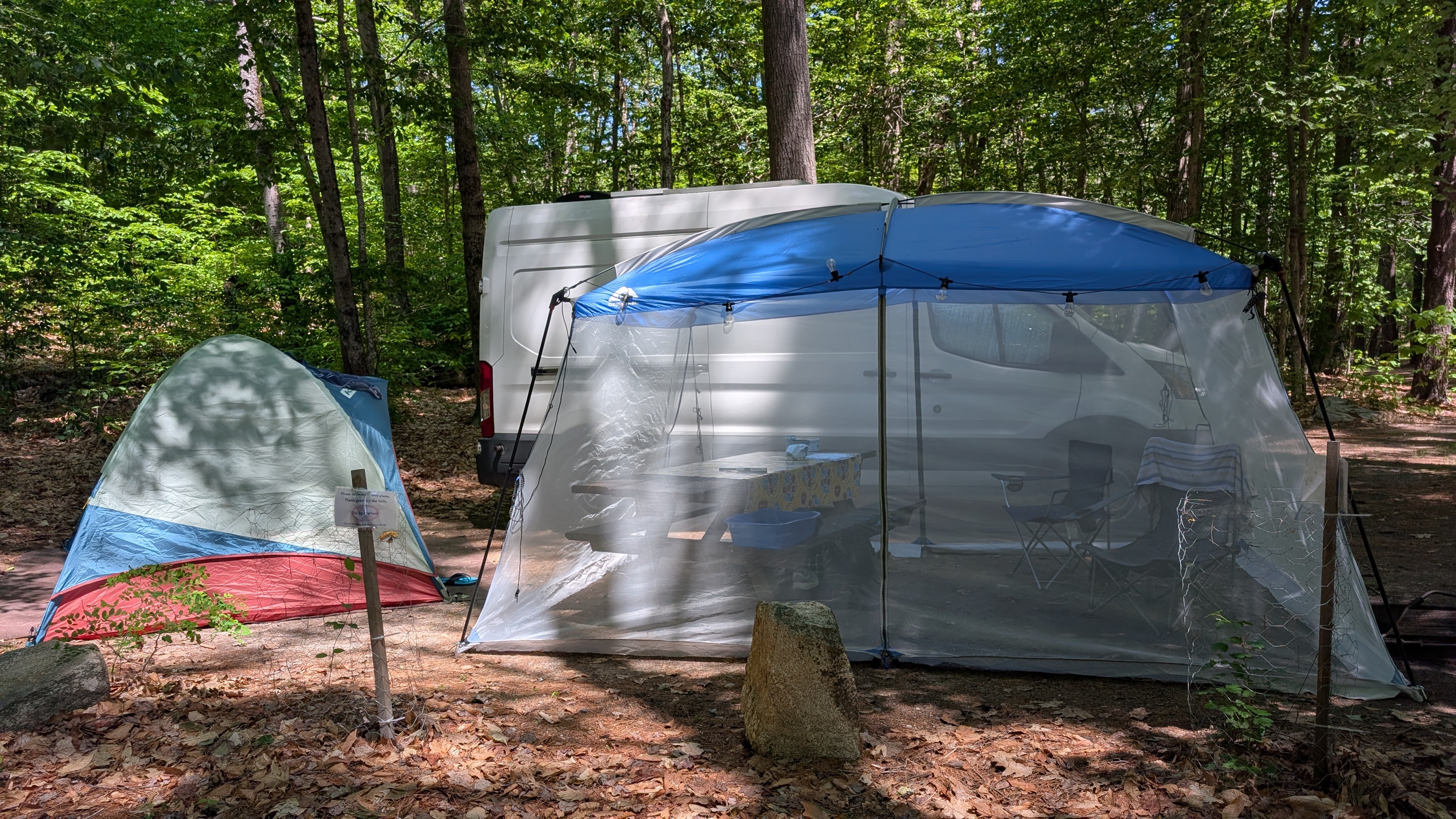
After five nights at Acadia with only a few drops of the rain that had been predicted for much of our time there, we headed southwest to Sebago Lake where we would camp for three days. The weather was gorgeous and we quickly took our camp chairs to the beach to read. It was peaceful and low-key, with just one hike following our days of 16 and 17,000 steps each day in Acadia.
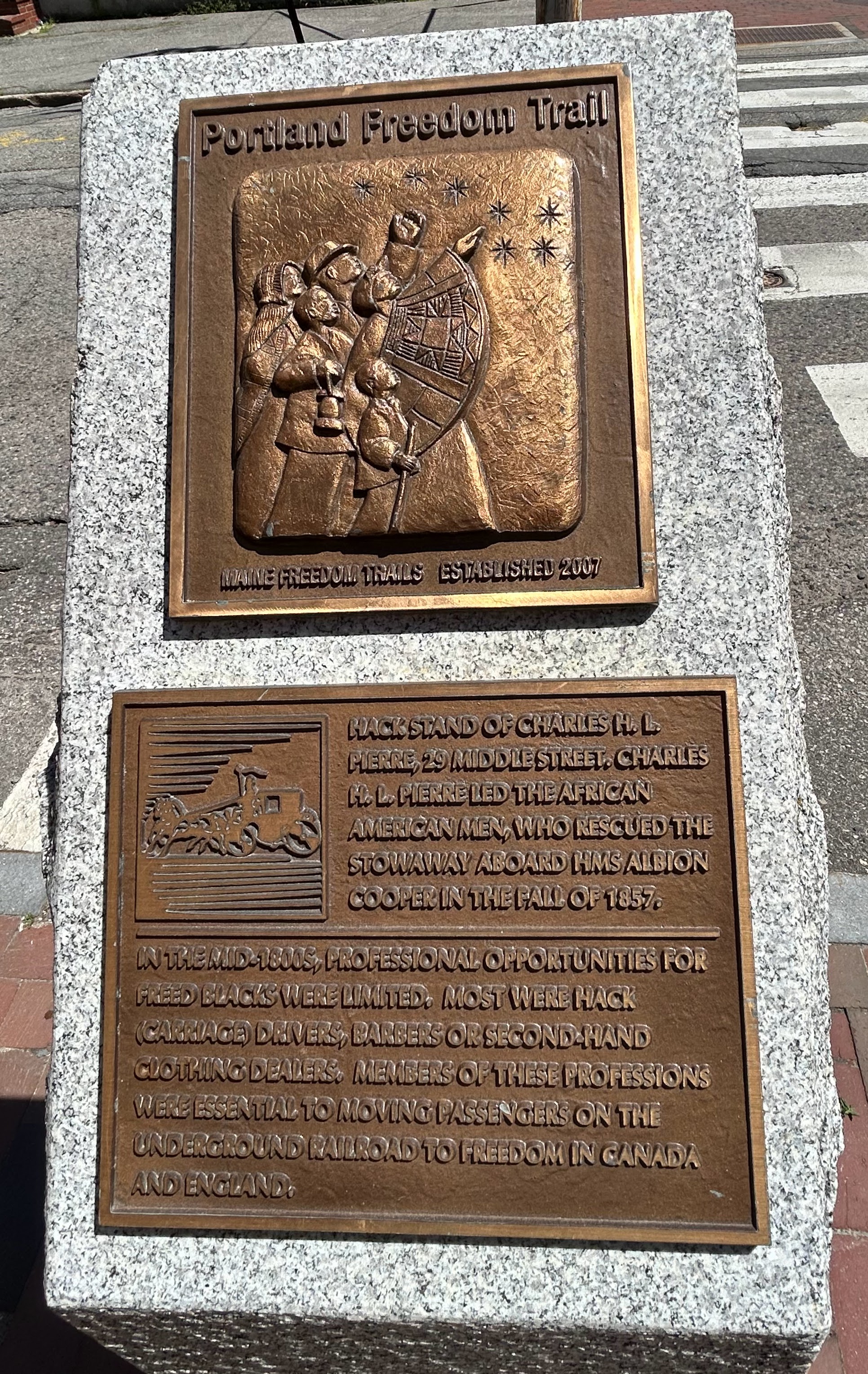
We got more steps in as we sought out points of interest related to the Underground Rail Road (https://www.mainehistory.org/documents/41/Portland_Freedom_Trail.pdf); most of the lots were vacant or the buildings had been replaced, but there were markers at about half the site locations. The First Universalist Unitarian Church was where William Lloyd Garrison gave an anti-slavery speech in 1832 as he kicked off a tour fighting for abolition. We tried to imagine the scene back in the mid-1800s, with a communication network of barbershops and Hack (carriage) stops playing key roles in the system. I can’t begin to imagine the feelings formerly enslaved people must have felt as they reached relative safety after their arduous journey.
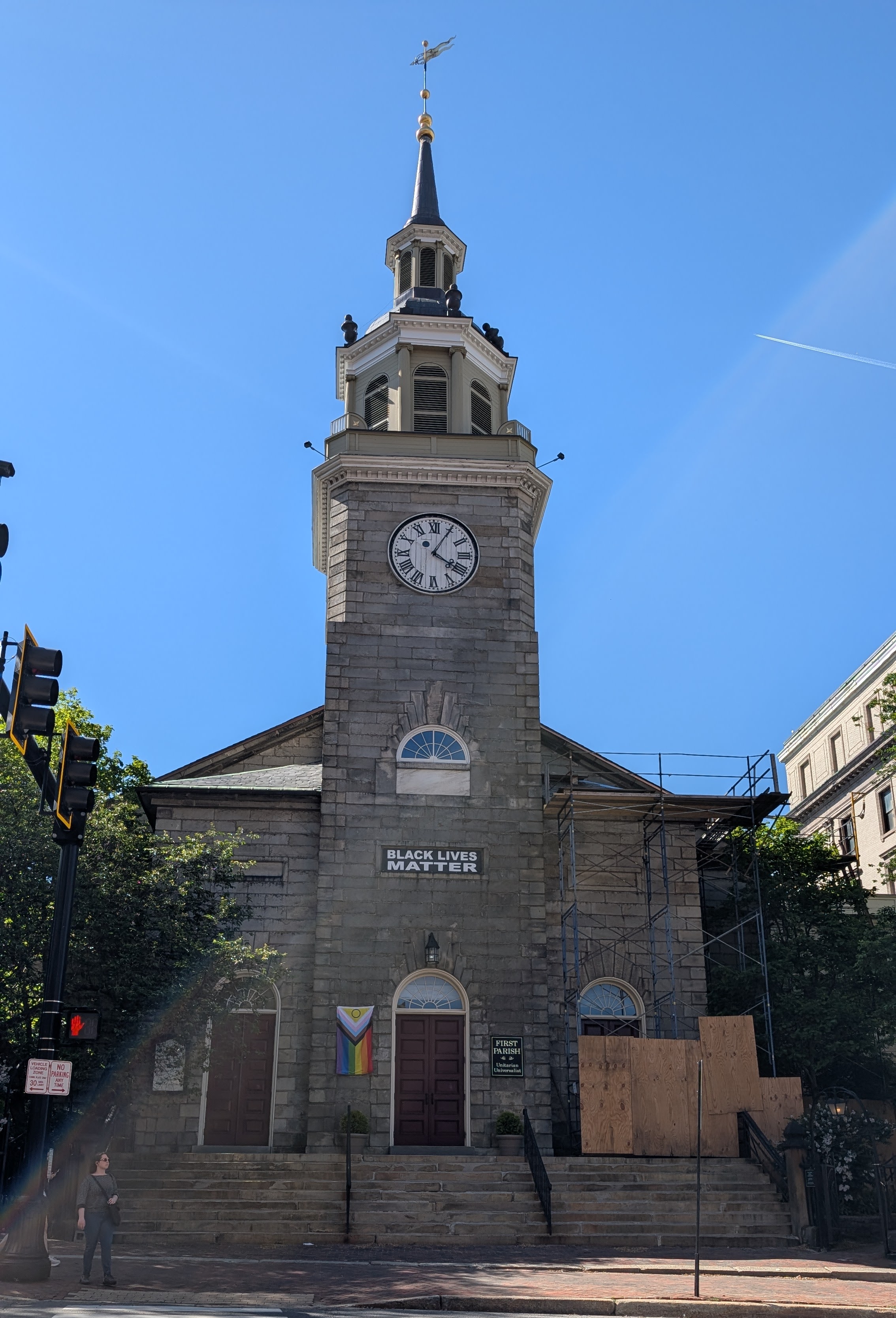
The Portland Freedom Trail was not the easiest self-guided tour, but that may be appropriate to the historical secrecy of this sanctuary movement! Although we followed the numbered sites, we kept doubling back, eventually grasping the segregated area where abolitionists could safely organize. Allies included Unitarians (their church still intact) and Quakers (Friend’s meeting house now the site of a park). We learned that Secondhand Clothing stores provided disguises for escapees and that African American stevedores, longshore men and sailors made up 30% of the US maritime forces prior to the Civil War. The deep harbor of Portland, Maine, was an important byway of former slaves heading north.
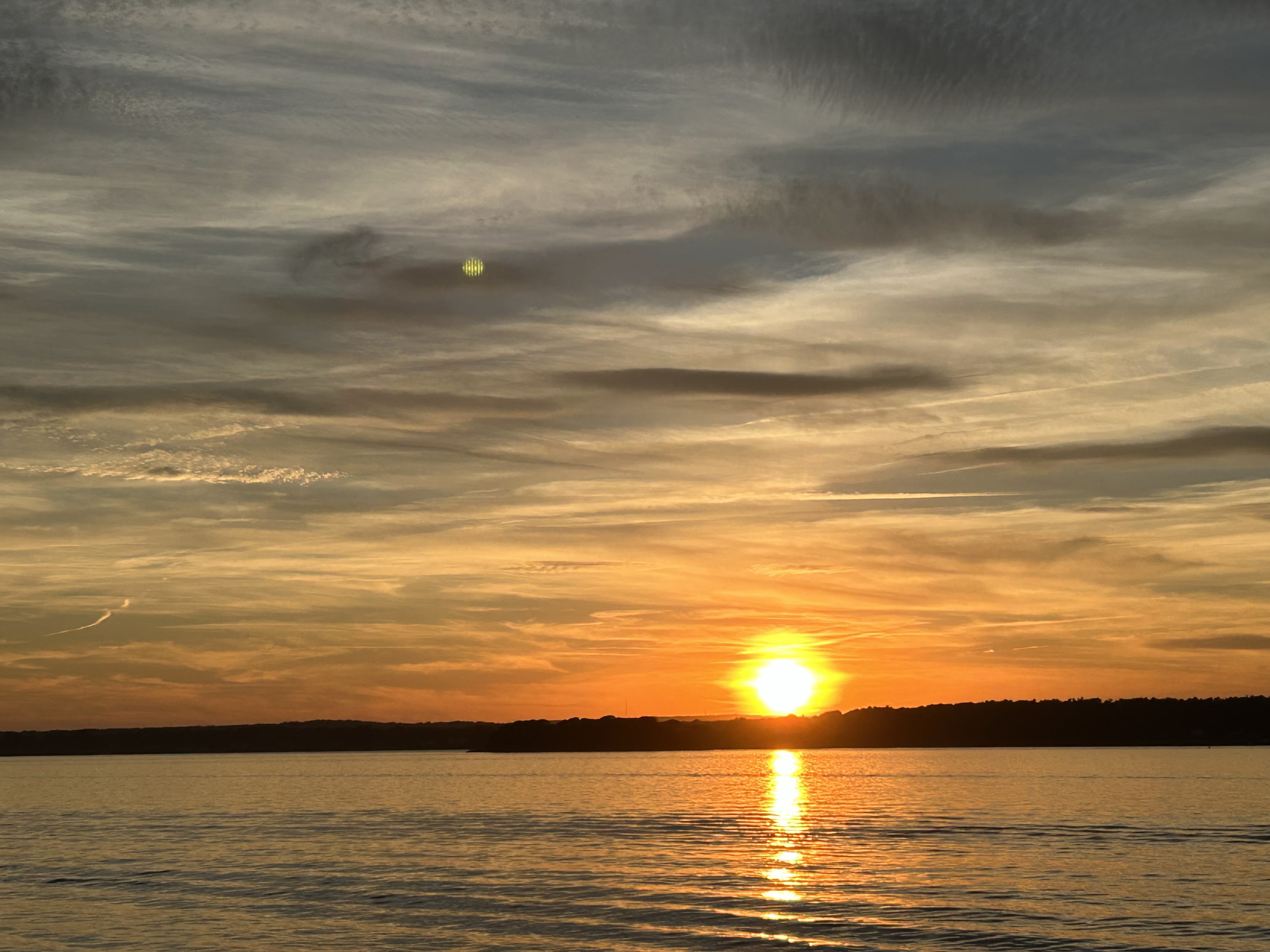
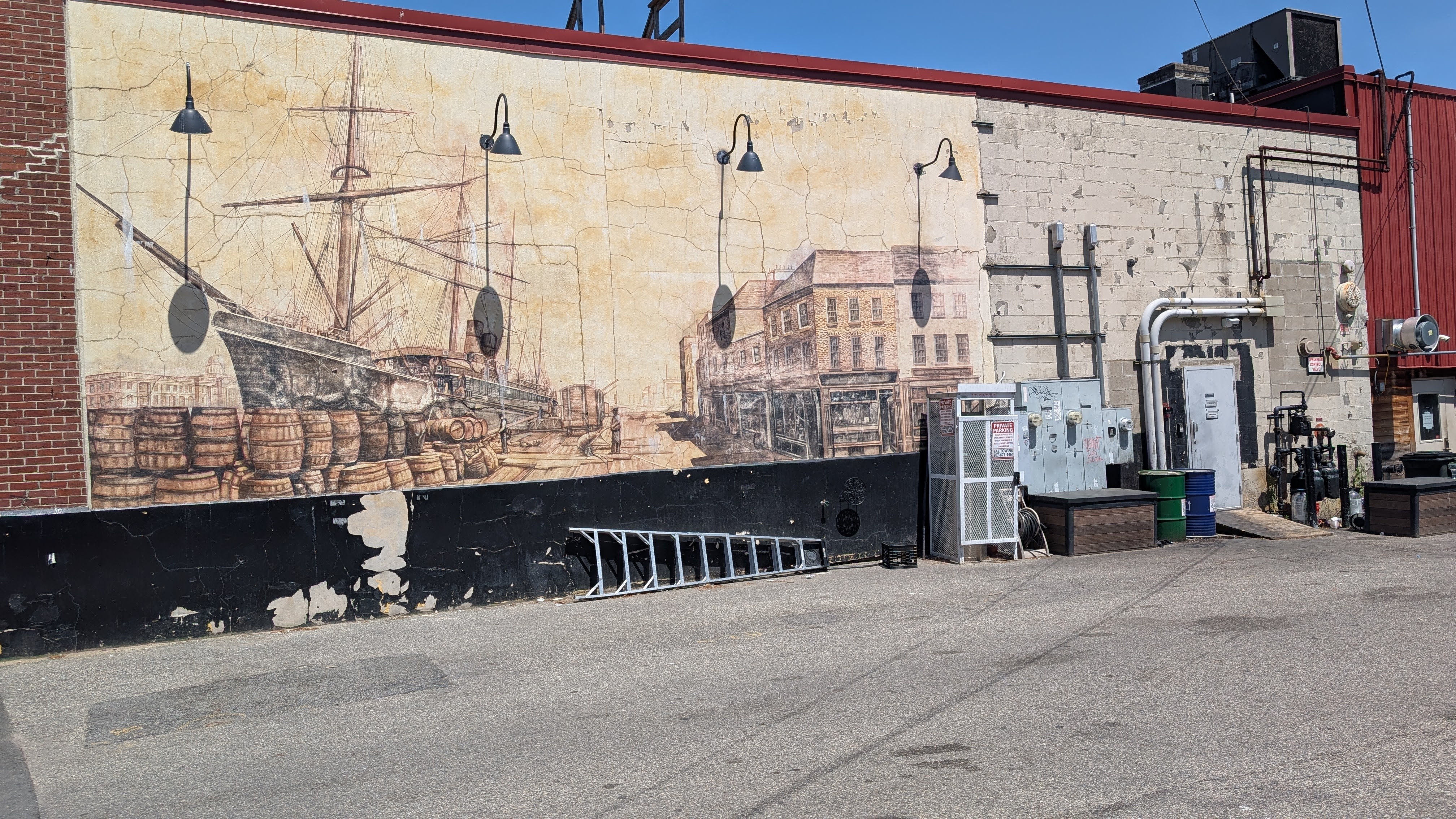
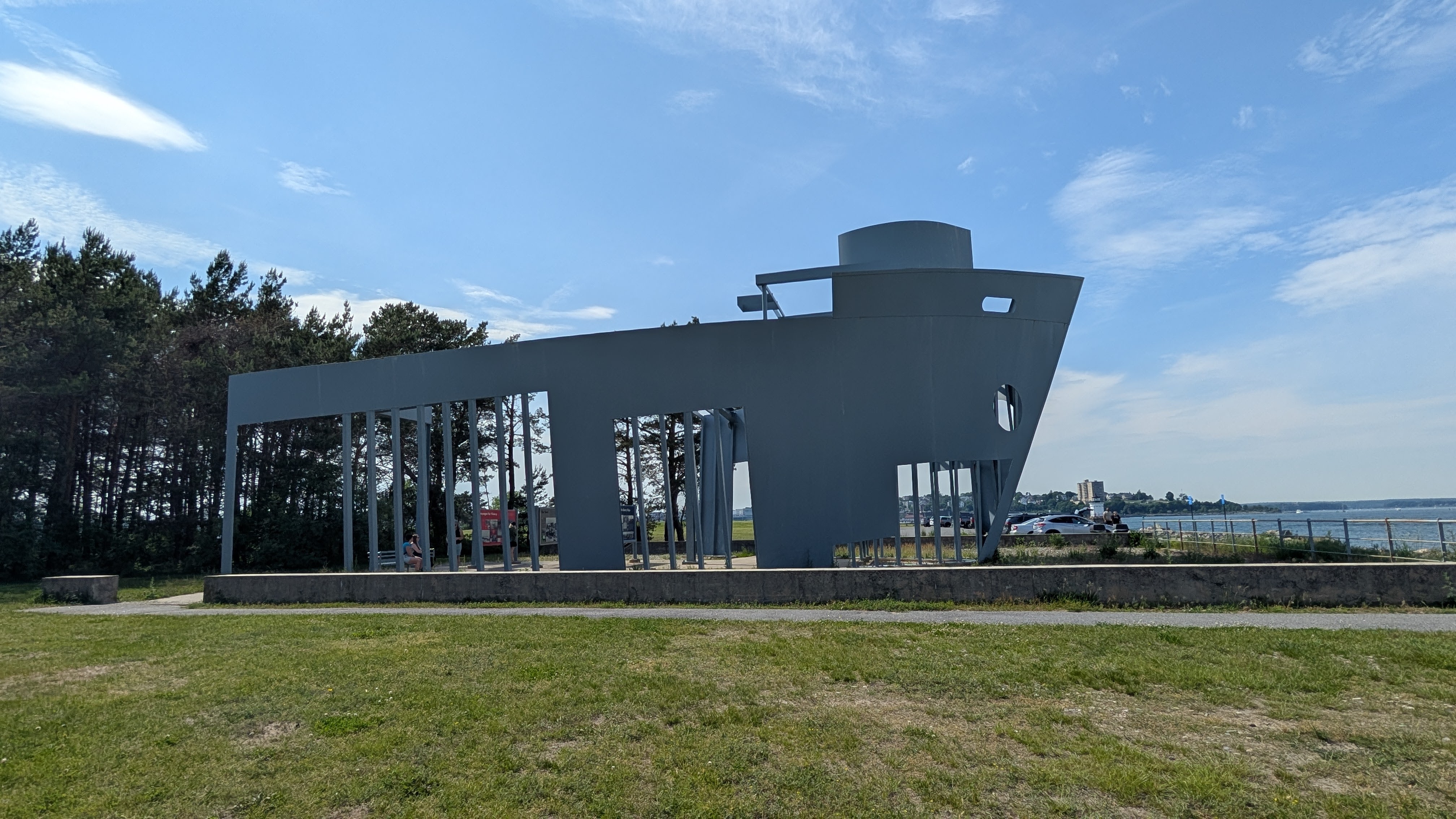
We took a sunset boat tour and learned a thing or two about the lobster industry, Portland’s role in ship building during WWII and the lighthouses along the coast. We also learned that Portland had the “Ellis Island of Maine,” where one million immigrants entered the U.S. over a 30 year span. I had no idea. It was a much more interesting tour than I anticipated, but some topics like the lobster industry are complicated and difficult to sum up in a few sentences. The tour guide made several references to the “working waterfront” and it was clear that was a point of pride.
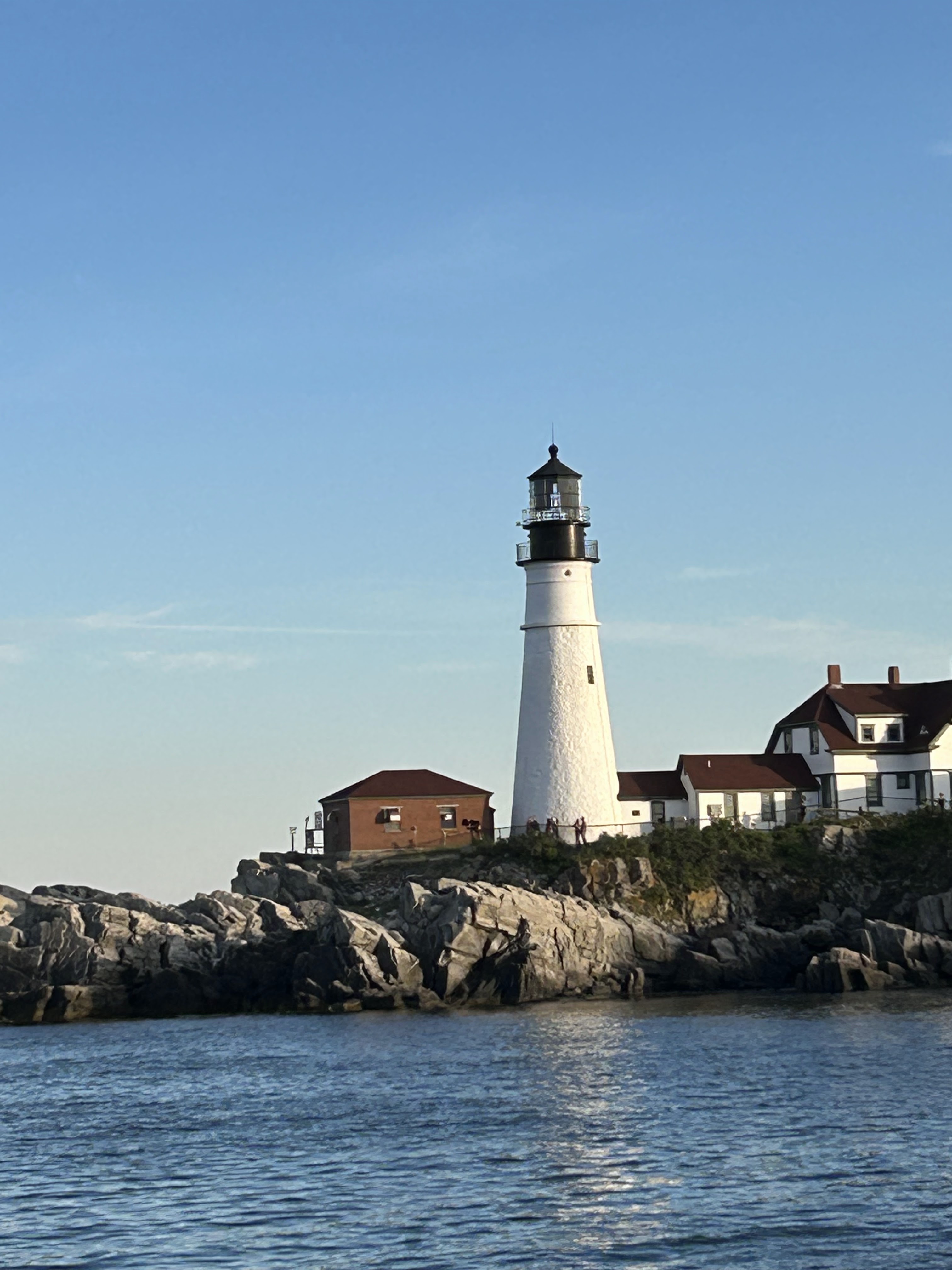
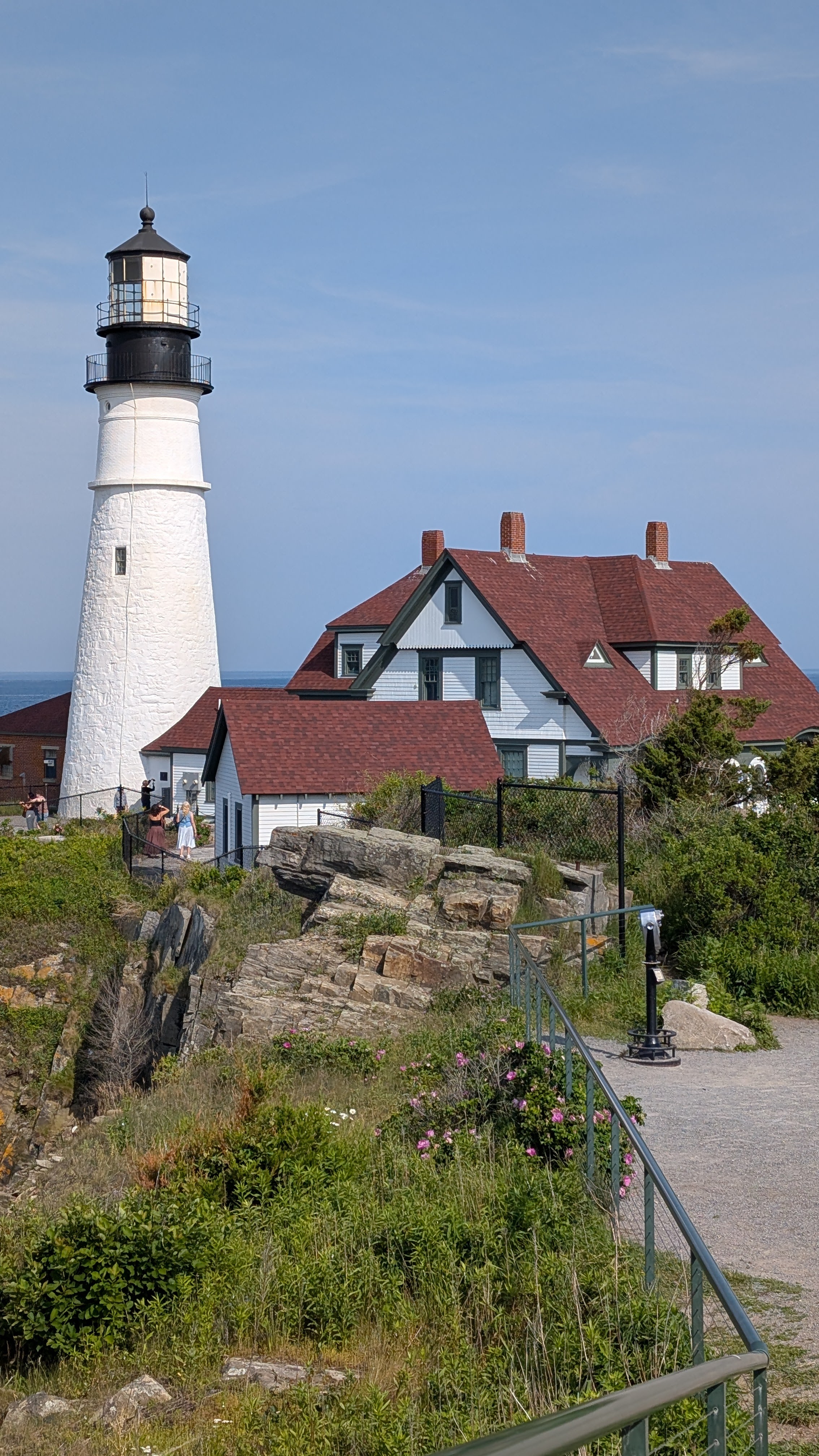
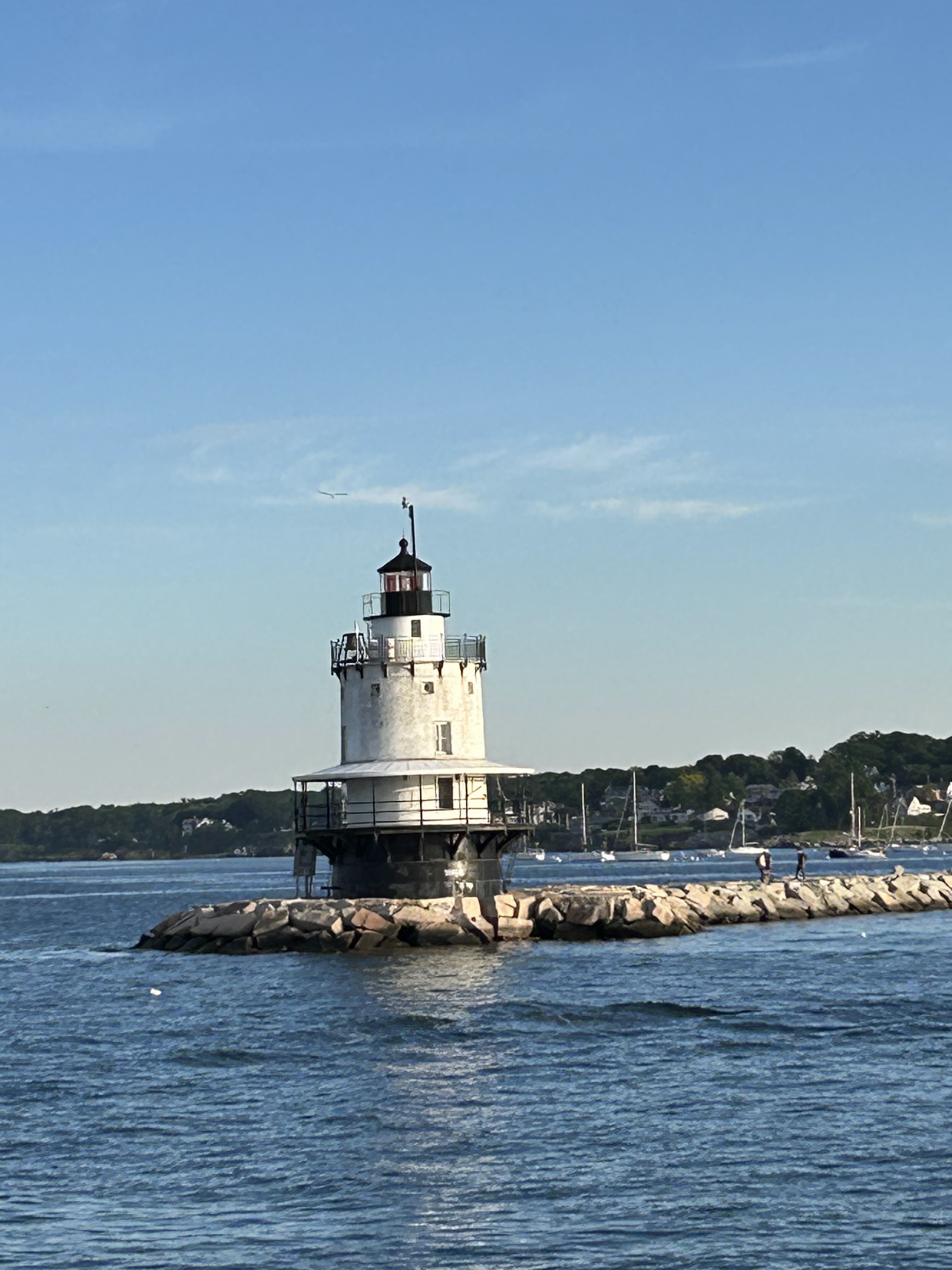
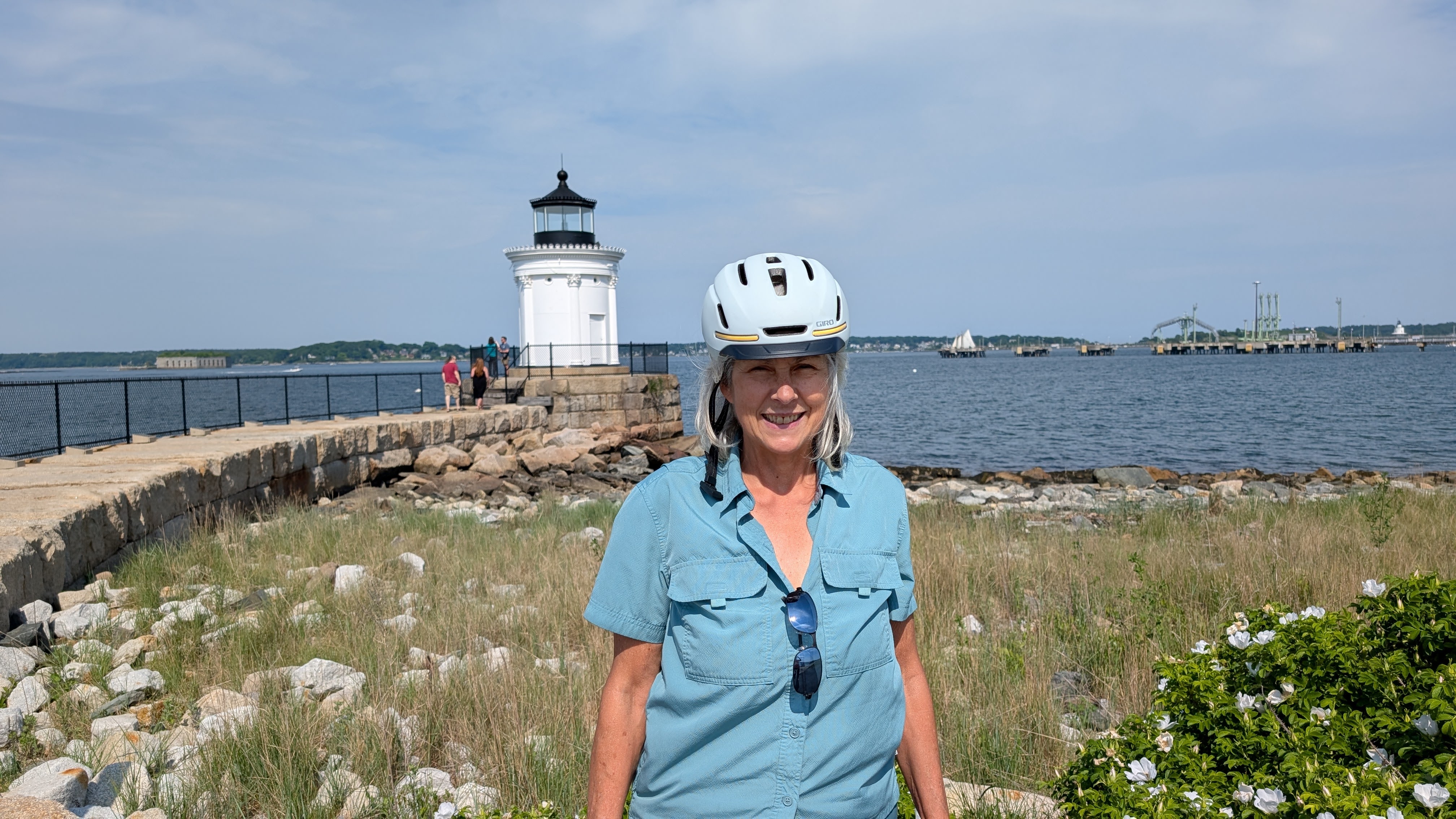
We had seen the lighthouses from the water so decided to hop on bikes to get a close-up view. The biking infrastructure was pretty good and drivers seem accustomed to bicyclists so it was an enjoyable ride over a bridge, through some pretty fancy neighborhoods and onto a community college campus. Portland had plenty of construction under way and a lot of hustle and bustle, but the lighthouses lent an air of a quaint seaside town in spite of that.
I was exhausted by the end of the trip…I haven’t been quite that busy when traveling alone…but it was the terrific type of exhaustion. In addition to Tracy’s company, I realized the benefit of traveling with a historian – I realized at many points that the bucket of unknowns is almost always much deeper than the bucket of knowns! On the day Tracy embarked on her trip home, which was disrupted and not pleasant, I headed back south to meet up with Andrew who was in New York for a funeral – more on my three days with him in my next post!
Kudos to Karen’s van-life experience: she has a good system of making and breaking camp, as well as organizing meals and clean-up. She made it so easy for me to be a guest, and it was lovely to talk about everything and nothing! This adventure allowed me to be the most relaxed that I’ve been in my partial retirement – such a gift. We should acknowledge that Karen had a cold during the last part of our trip which would account for some of the tiredness.
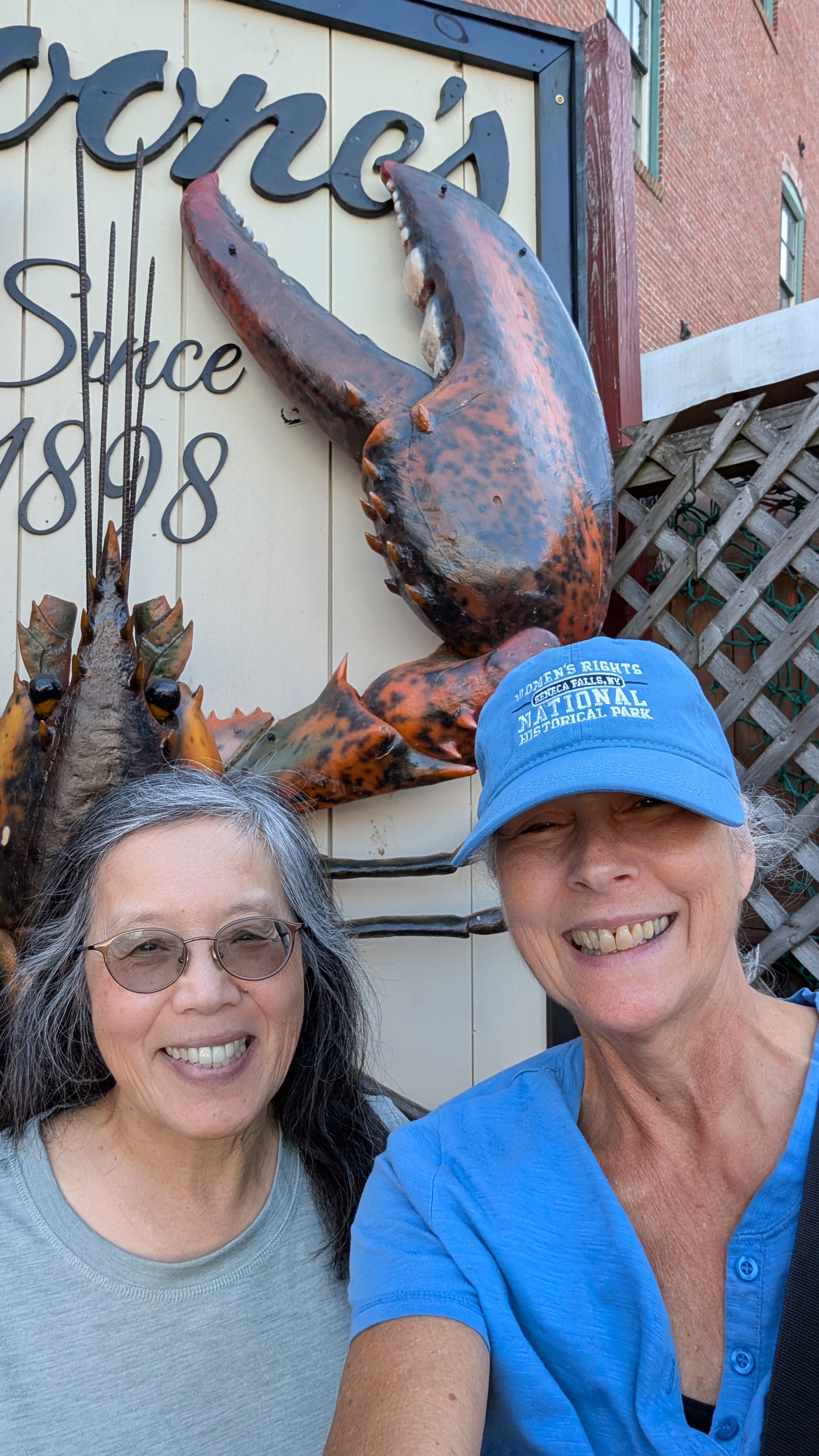
Postscript from Tracy:
I had not appreciated that severe thunderstorms can shut down air space. Karen dropped me off at Portland International Jetport (yes that’s the name) at 6:15 a.m., only to learn that the flight was cancelled. I was able to rebook for 11:00 a.m. but after arriving at the Philadelphia airport, it only got worse. The late afternoon flights were delayed then cancelled, so hundreds of would-be passengers slept at the airport.
However, Philadelphia’s “Sounds of Philly” introduced me to Zachary Devine, an amazing jazz guitarist. He played for nearly 90 minutes: classics and other arrangements. It’s hard to perform in a hallway but some people stopped, and many appreciated his artistry. My favorite of his was a haunting rendition of “How High the Moon.”
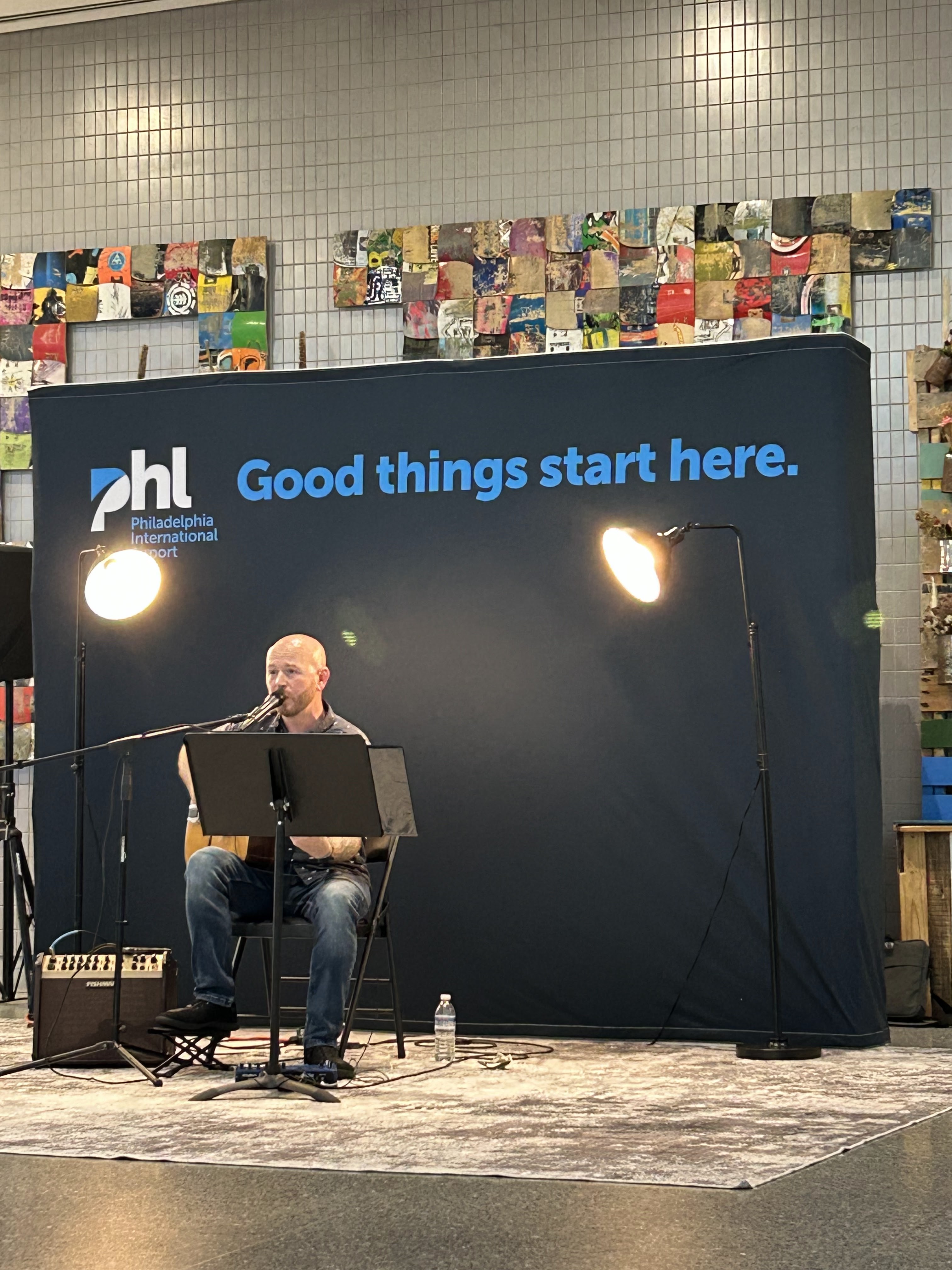
I was rebooked through Raleigh/Durham, North Carolina, and finally arrived back in Seattle around 8:30 p.m. the day after I had planned to be home.


Leave a Reply