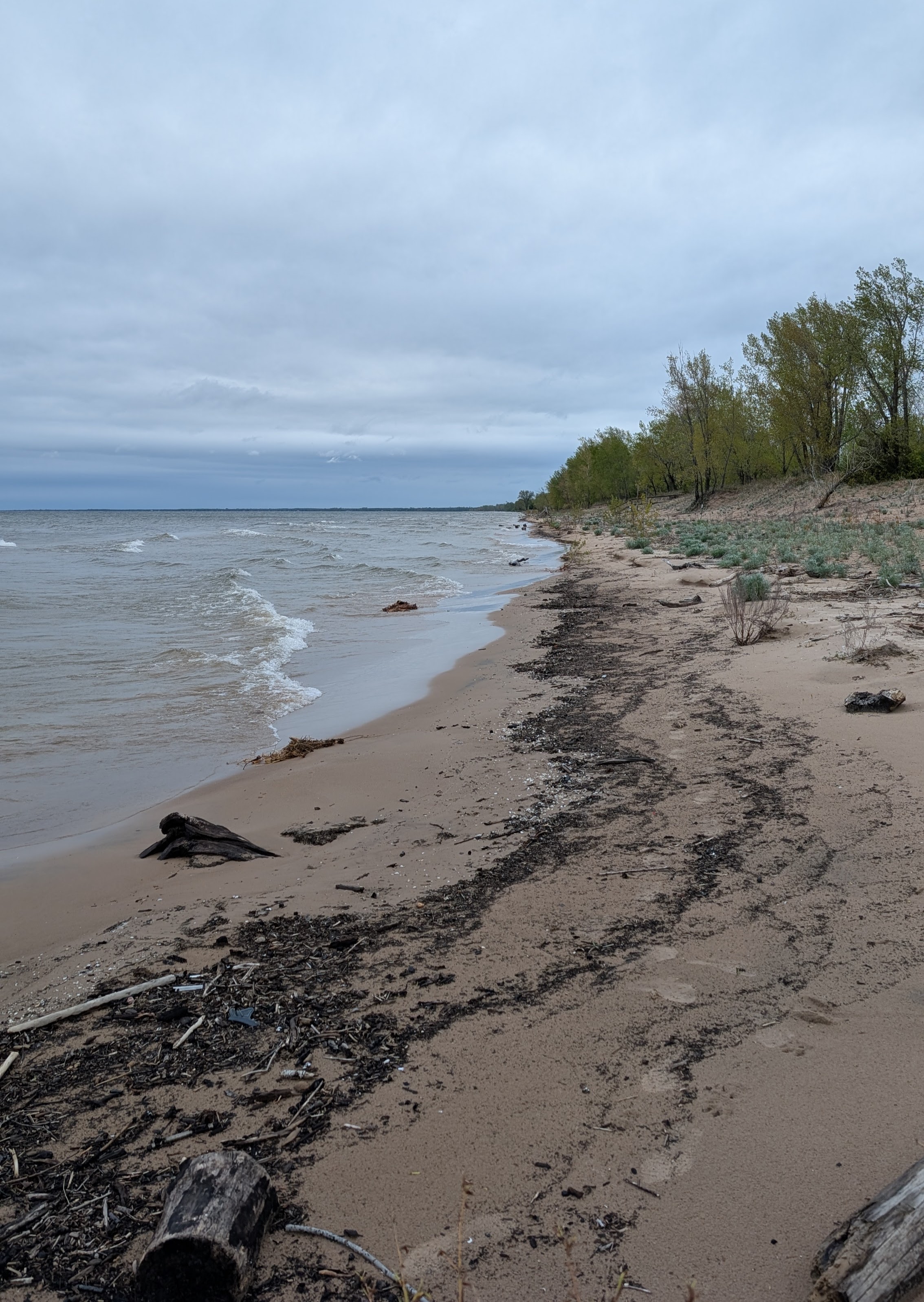
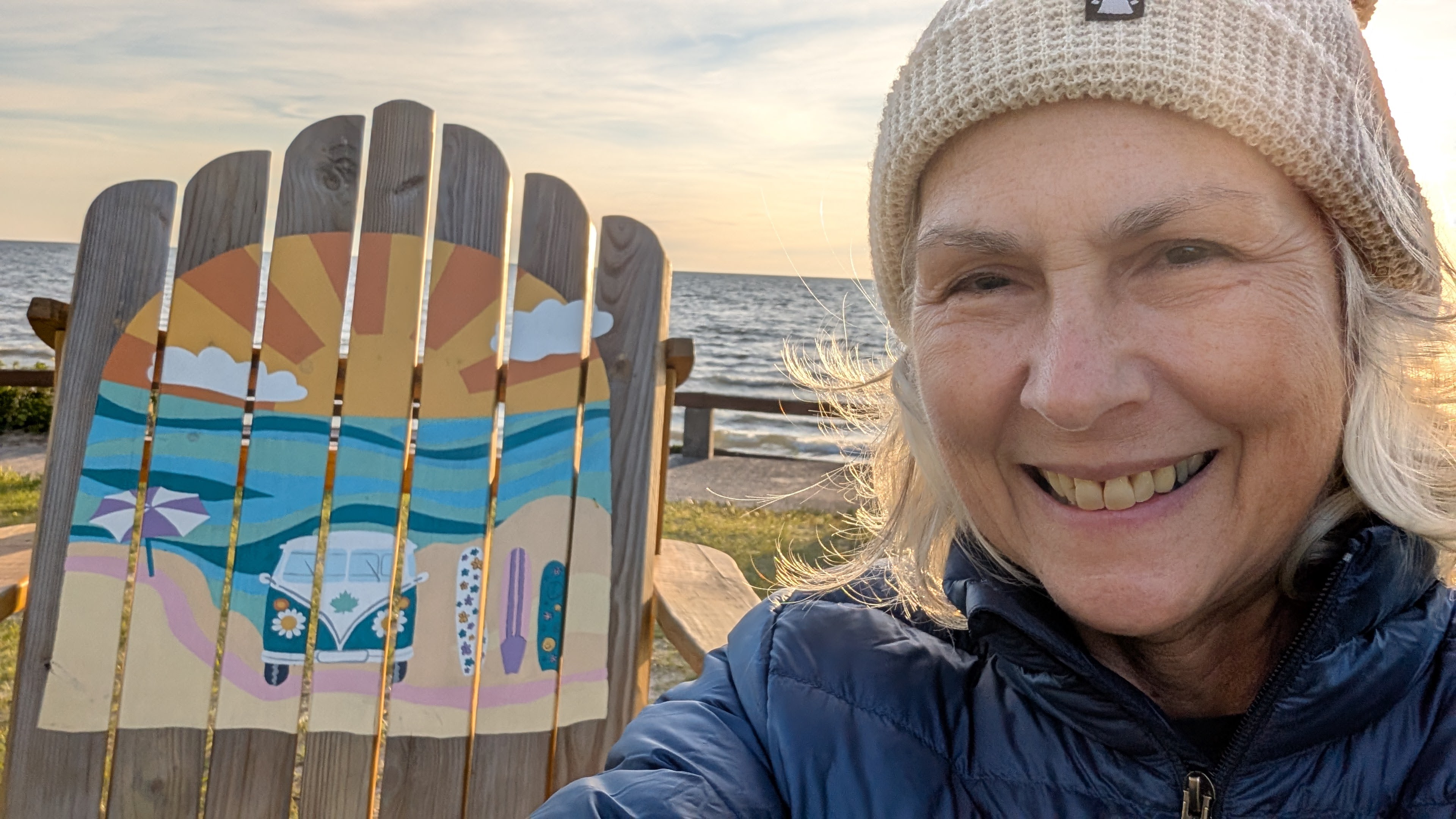
My first two days camping at Southwick Beach were gorgeous – clear blue sky, a comfortably warm sun, and trails through the forest and along the beach – it was great! I hopped on my bike to go exploring and soon found a couple miles of mostly smooth single track with occasional roots, mud and rocks to navigate. At the trail’s end I left the campground to take a ride on the country road to see what I could see. I’m tempted to turn this blog into a “And To Think That I Saw It On Mulberry Street” story (Dr. Seuss, in case you’re wondering), but there’s really no need…the ride was entertaining with no need for embellishment.
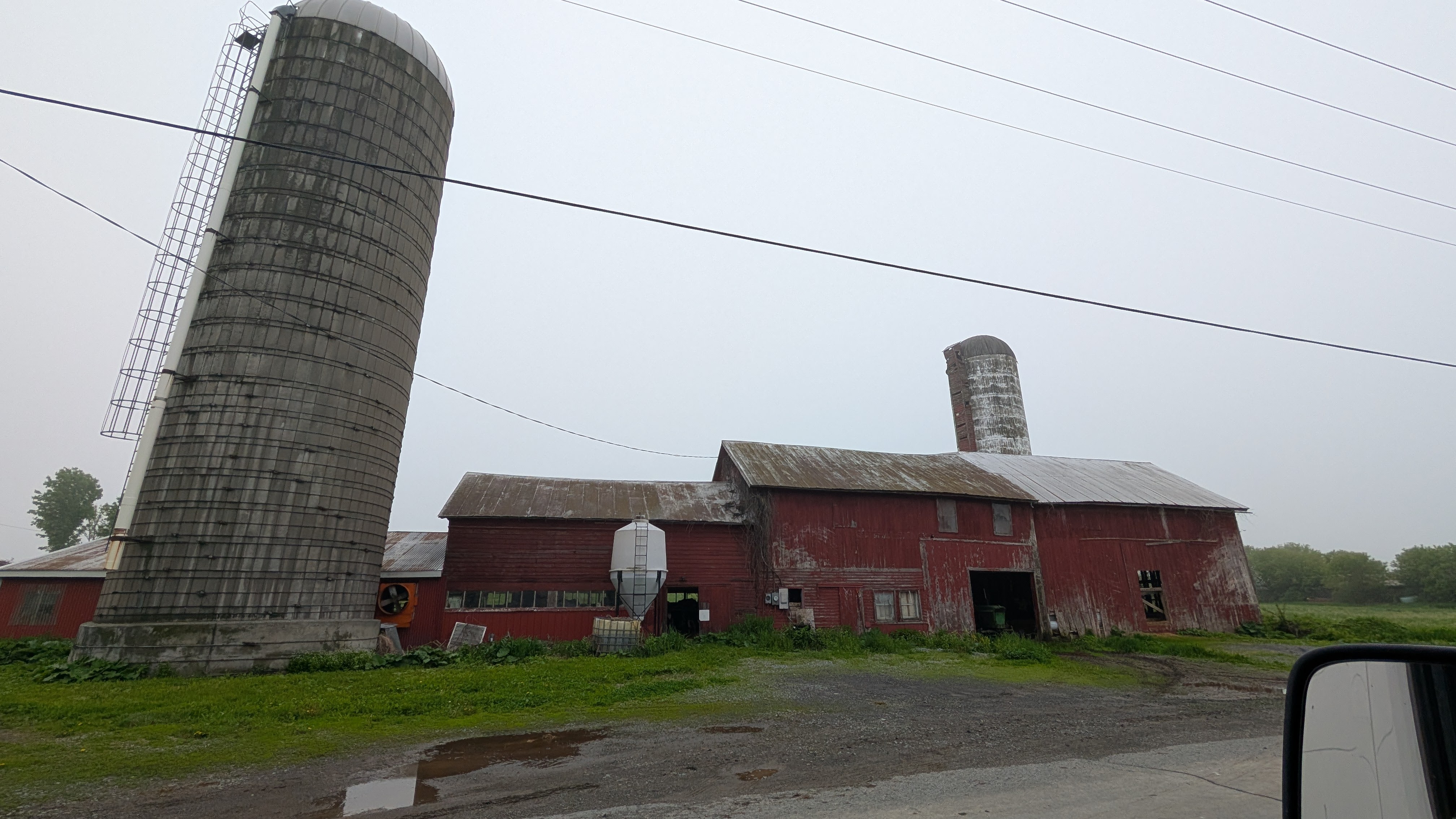
The bike lane down the two-lane Highway 3 passed through farm land with houses a fair distance apart. After weeks of driving through the mid-Atlantic states and seeing one falling-down barn after another, I’d become curious about why they were in poor condition and what it would take to rescue them. I stopped when I saw a large, dilapidated photo-worthy barn on the other side of the ride. Soon a dog and a couple of boys around 7 came dashing toward the street.
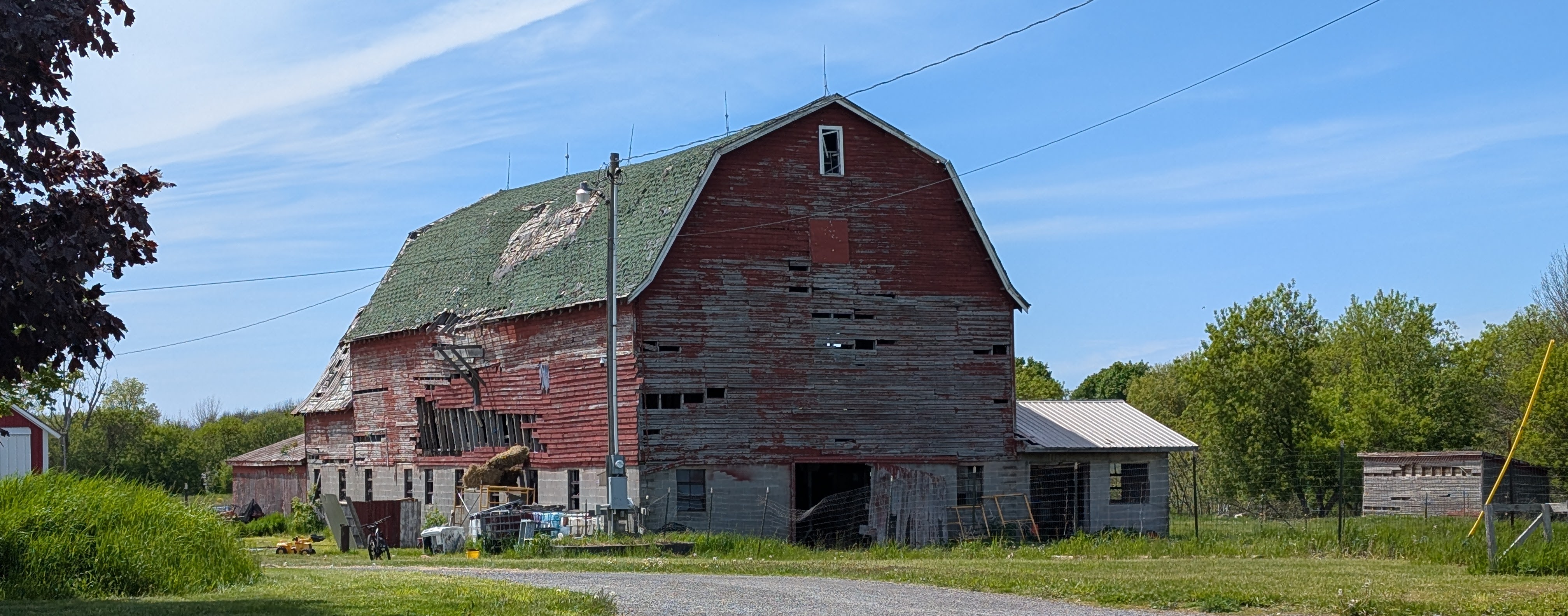
“What are you doing,” asked the bigger boy. I crossed the street so I wouldn’t have to holler.
“Taking a photo of your barn…it’s interesting and I heard about a program that teaches young people how to repair them…hardly anyone knows how anymore.”
“We’re tearing it down. Soon.” He seemed sad about it, but not for long…he got to talking and soon I knew they were a family of nine kids, three sets of twins and three singles. As a third boy, Andy, walked up Liam explained that the two of them were the only same sex twins and that the oldest and youngest were boy singles. I could barely keep up and thinking that a white board would come in handy. Another twin joined us to help lay out the family tree. His twin’s name is Samantha; he challenged me to guess his name. “Samuel,” I said. His eyes got big and he asked how I knew. It seemed an unlikely choice but he probably wouldn’t have asked me to guess if Samantha wasn’t a pretty big clue.
I stood there in the midst of the four boys feeling like I was watching a scene from a movie. I’d noticed at the campground that most of the children didn’t even look at me when I passed by, let alone respond to my “hello.” Sometimes they looked like they were actively avoiding eye contact, like they were just a little bit afraid, like they’d been instructed not to speak to strangers. In contrast, here I was on the side of the road yakking it up with a group of energetic, friendly, interesting kids; it felt so natural.
As their mom and a sister drove toward us down the driveway it occurred to me that mom might not be thrilled that a total stranger was standing on the edge of their property talking to her kids. She stopped, I mentioned the barn and she confirmed…they’d probably be tearing it down…the largest dairy barn in the county, she said, no hint of concern about my presence in her demeanor. By now an older boy and a toddler had joined us, mom gave him some instructions as he hoisted the toddler onto his shoulders and she and her daughter went on their way.
I chatted with the kids some more, pointing out they could have their own baseball team, then said goodbye and continued my ride.
I got back to my campsite and did a little investigating on the barn situation. It turns out that repairing and restoring barns is a skill set, like so many others, that has almost died out. Several states – New Hampshire, Pennsylvania, New York and Vermont to name a few, and the National Trust for Historic Preservations (NTHP) – have programs designed to save these historic buildings. New York offers a 25% tax break for residents who refurbish, and New Hampshire offers grants and tax breaks, as well as referrals to skilled contractors and resources for DIYers. Adams County Technical Institute in Pennsylvania offers a program to teach students barn restoration. The NTHP partners with the National Park Service, offering certificates and degrees to students and volunteer opportunities to retirees. Such riches…I cant say it didn’t occur to me that maybe I should skip finding a job and volunteer to repair old national park buildings!
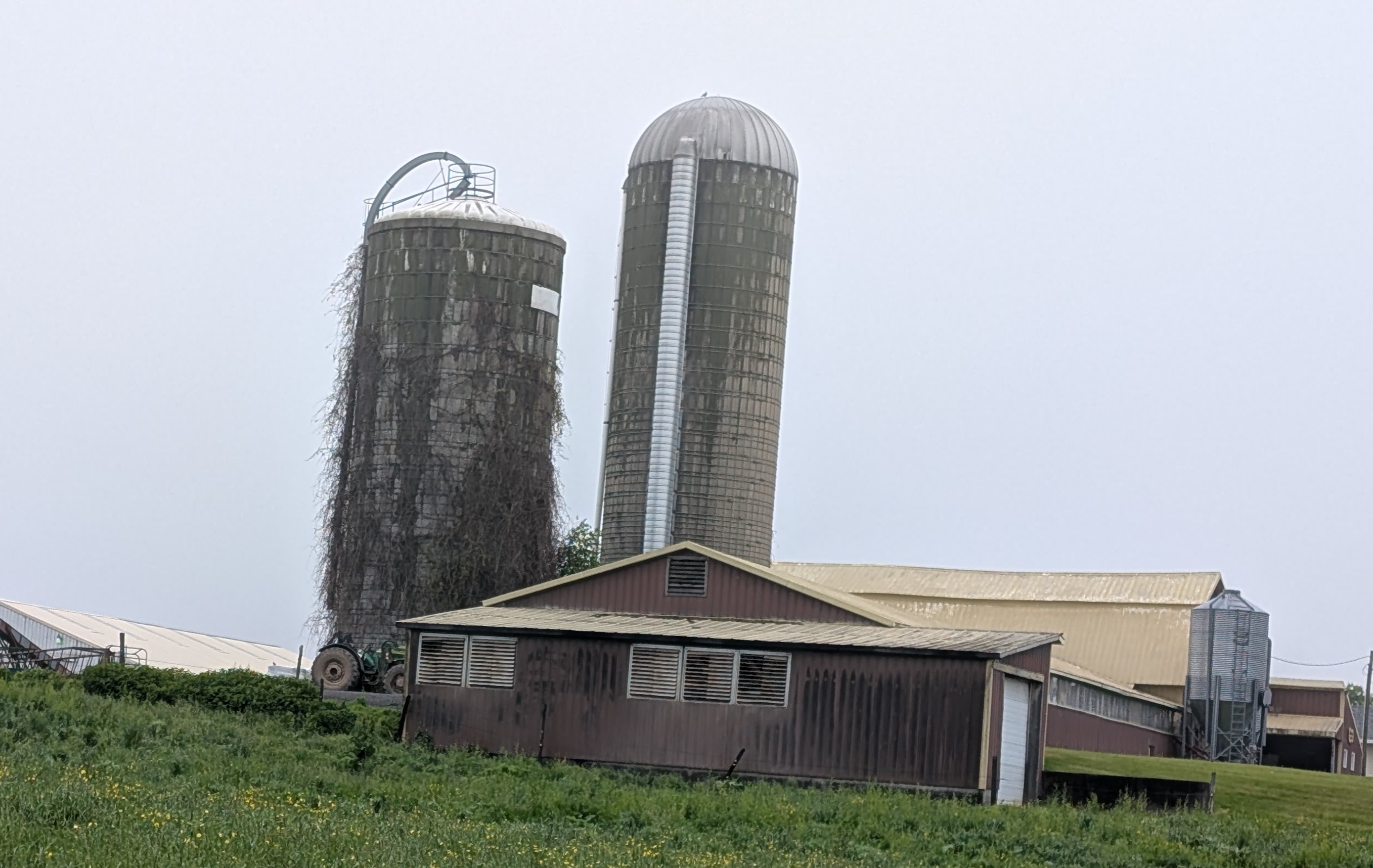
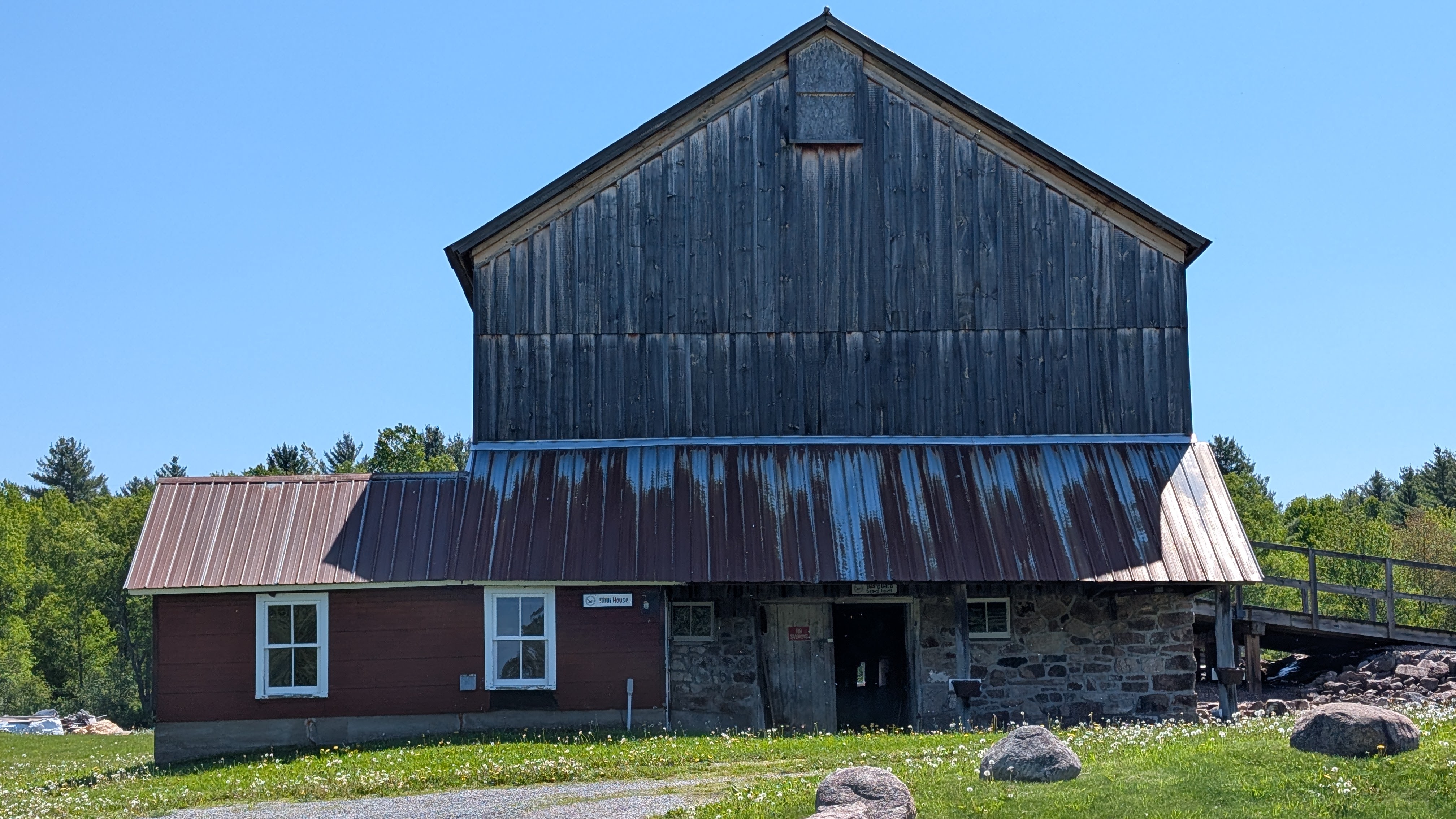
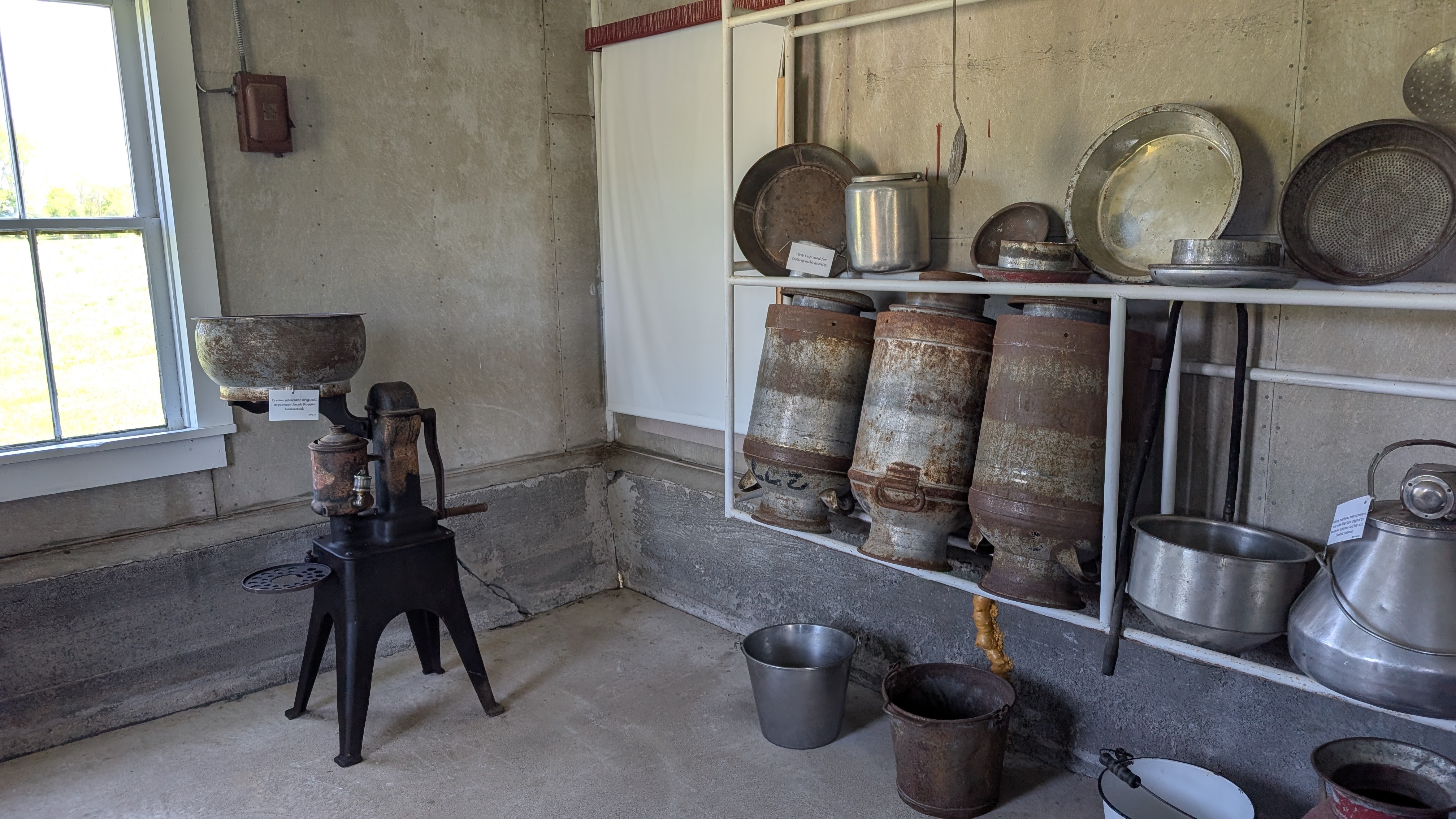
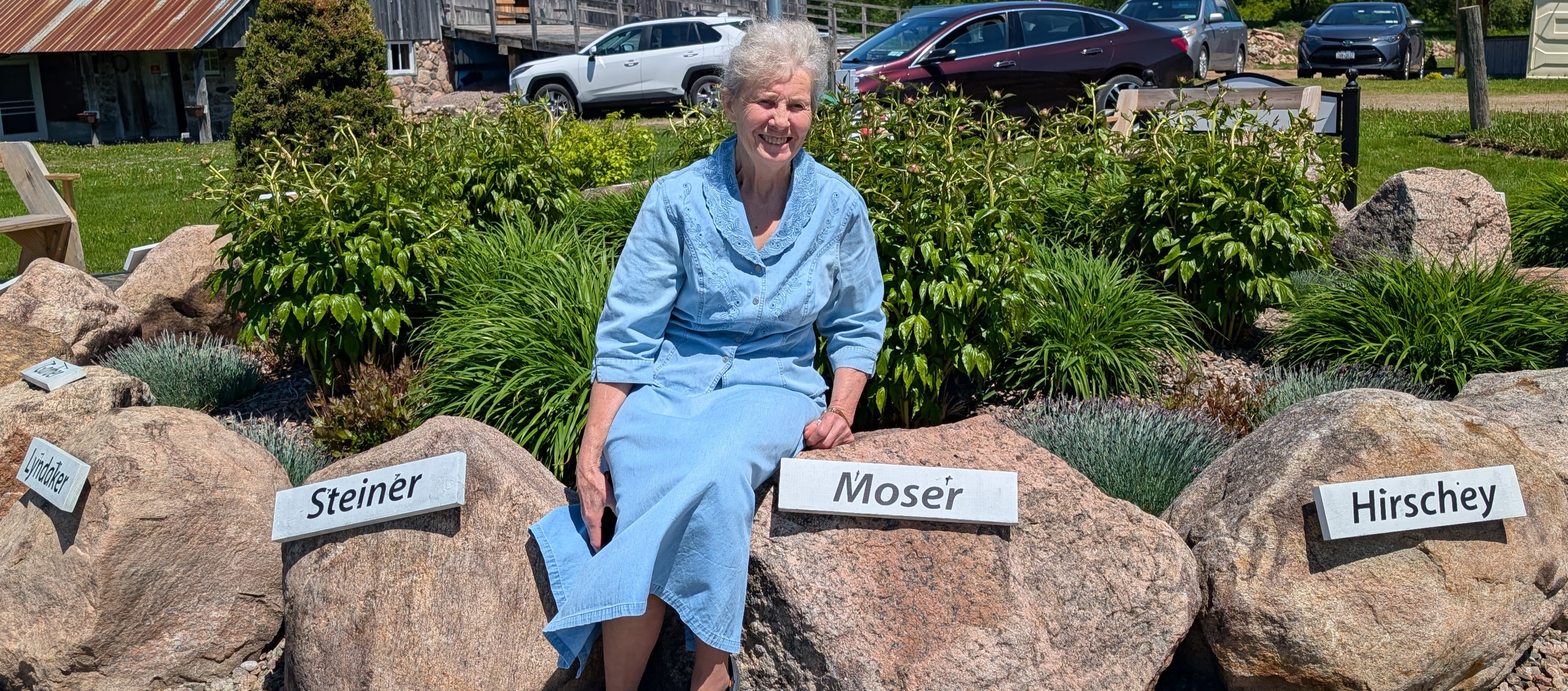
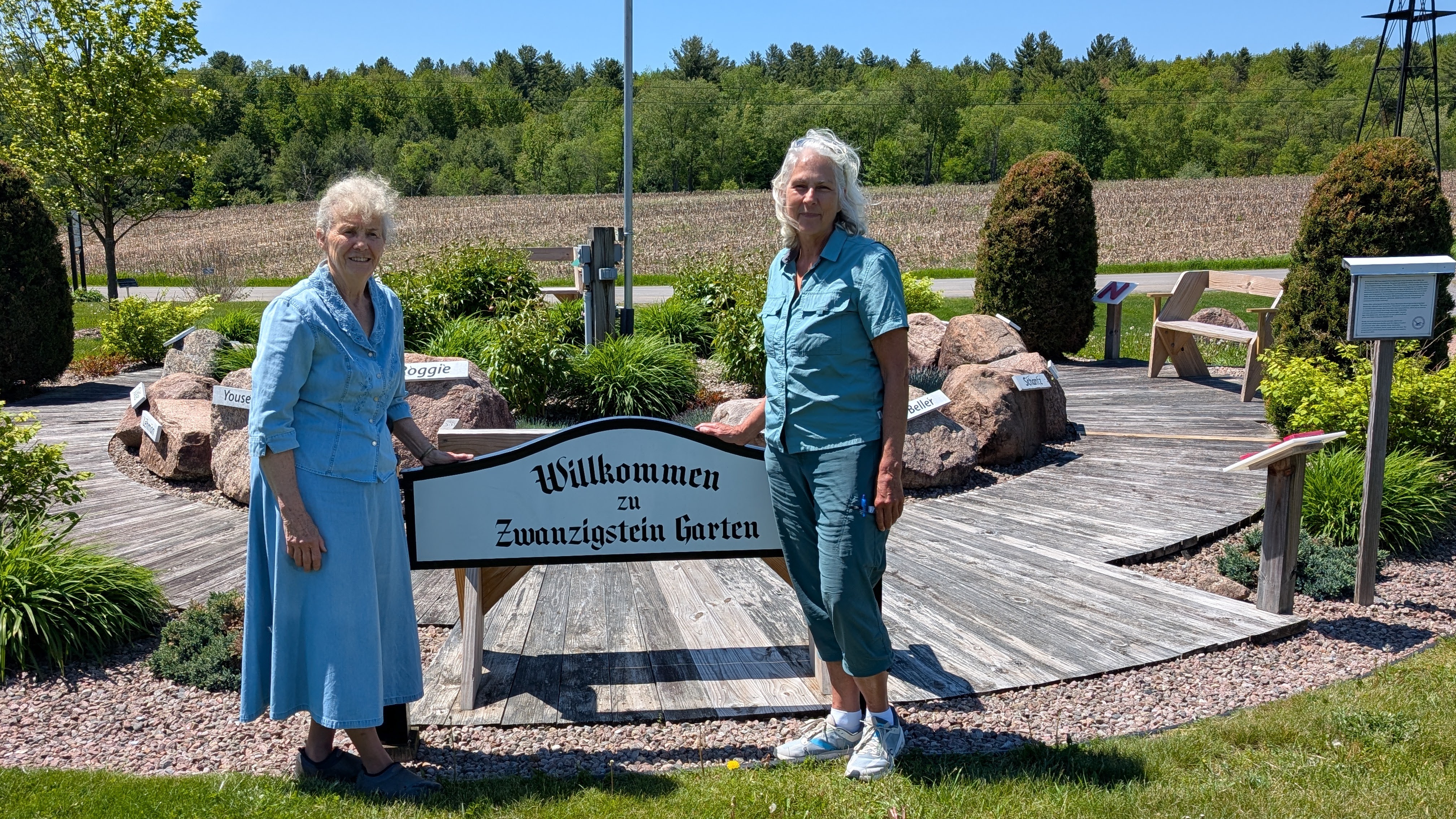
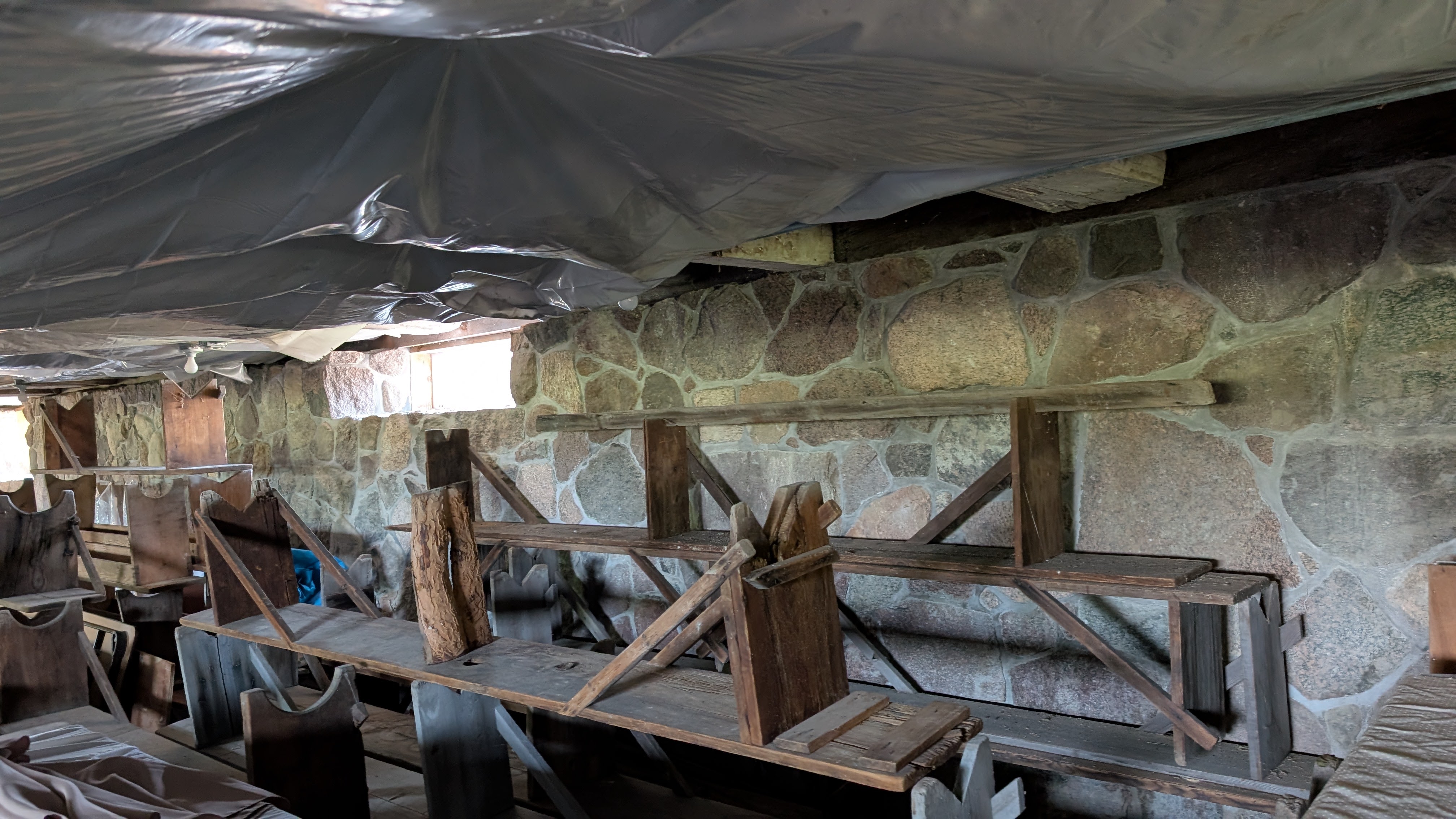
I stayed overnight at the Adirondack Mennonite Heritage Farm (AMHF) in Croghan, NY where I met a retired engineer, Neil, who had designed much of the grounds, including a garden, nature trails and more. He gave me the trail map and I wandered through before it got dark. Next day I spent time with Rosanna, a fifth generation member of the family whose homestead is the location of the AMHF. I learned about the Mennonite community and the buildings on the land. The barn was built in 1874 and it was restored in the 1980s, with stonemasons repairing foundation walls with original stone when possible and new stone when needed. The farmhouse, built in 1845, has the same footprint as it did when first built, but with a basement that was dug out to create a space for the storage of around 5000 artifacts from the 20 families who immigrated from the Alsace Lorraine region of Germany and France in the 1830s fleeing religious persecution.
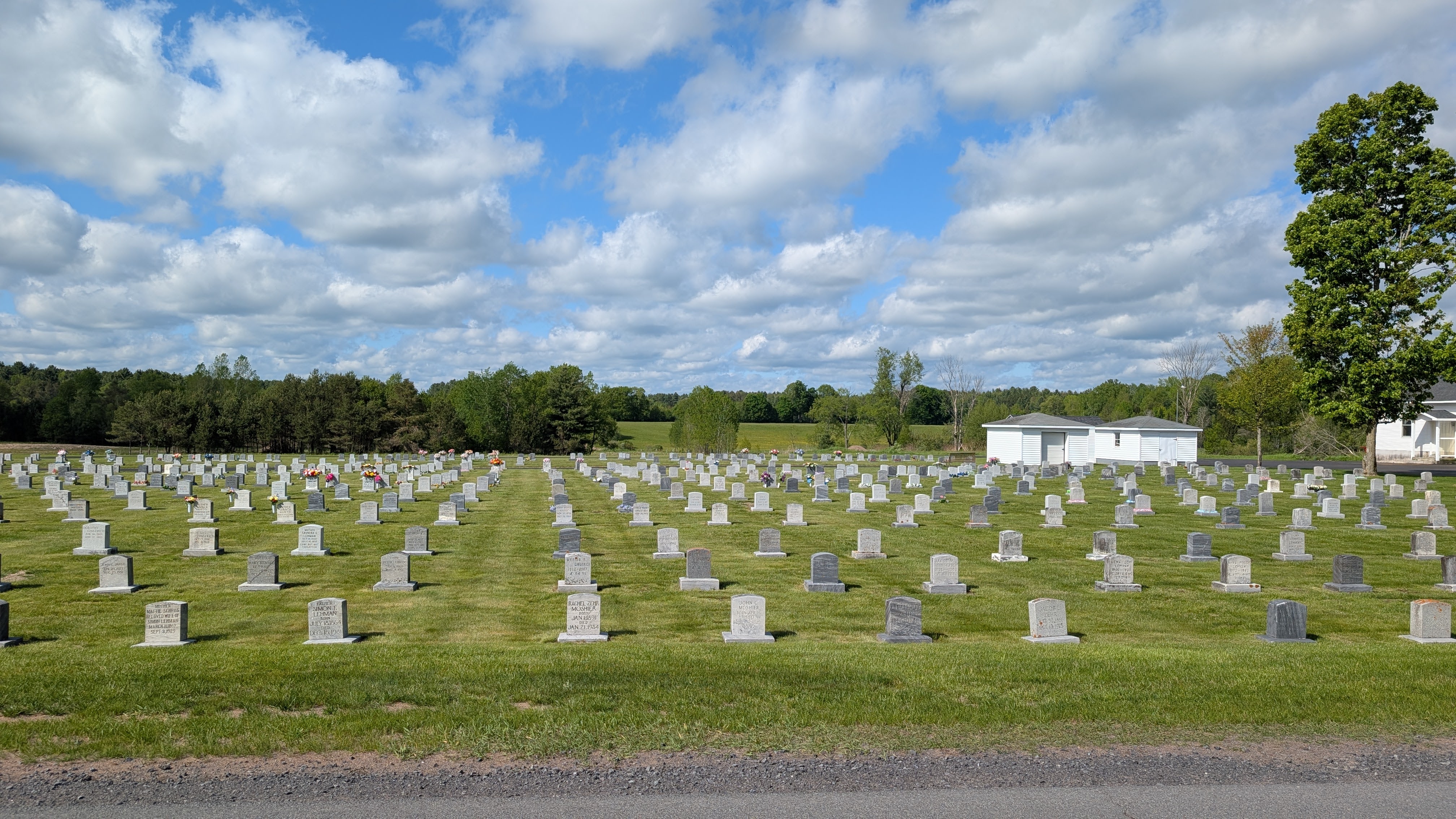
reflect the equality among all people. It is located at the first Mennonite
church in Lewis County, NY
Listening to the history Rosanna shared and seeing the clothing, shoes, bibles, equipment, books and more made the dedication required to remember, document and salvage history abundantly clear. One of the community members who died not long ago at age 103 had kept detailed diaries of the goings-on in the community, carrying on as a teenager what her father had started. Those diaries offer the opportunity for succeeding generations to know their family stories…what a gift! Rosanna showed me the bible written in the 1500s (I think I remember the century correctly) and brought by one of the families when they made the arduous trip in 1830s as well as a bible in German. I saw wedding dresses, men’s suits and shoes that members of the 20 families contributed. My tour ended when Rosanna headed to a middle school to share her knowledge with kids in the community, but I was able to join her for lunch in the pavilion when she returned. Her sister and admin assistant Priscilla and the board president, Linda, joined us, and I was able to learn more about the community and share some of my gap year adventures. The Heritage Farm helps build community with several festivals throughout the year and other events as well. And fun fact – Rosanna taught at a SUNY college represented by AFT!
I was reminded of my experience at the Lancaster History and Museum Center where I spent 3.5 hours seeking information about my mom’s family, the Melligans and the Mentzers. I found tidbits, but I also found myself jumping from one idea to another, one source to another, completely lacking a methodology that might have been more efficient. Regardless, I left with the realization that I would be committing not a few hours here and there but many months if I wanted to make progress toward a full picture of my family history.
Eventually the information will be digitized, I suppose, at least moving forward. But the tangible things add a gratifying richness to exploring history, personal or collective. Sure it may be more efficient and cheaper to raze the old and build it new. It also erases the past in ways that matter. I read a short article from the Watertown Daily News from 1962 commenting on the disappearance of old weathered barns…this is clearly not a new phenomenon. What I found interesting about the article was that the author specified what is lost when they’re erased. Delights from his childhood, like hunting for eggs laid by free range hens, or jumping from the rafters to piles of hay. He described the old barns as “friendly,” contrasting them with the barns scientifically designed for efficiency. It was a sweet reminiscence, although he wrote as if only boys enjoy jumping from the rafters! Hah!


Leave a Reply