A couple of years ago I found out about a walking tour of murals in Belltown, a neighborhood in downtown Seattle facing challenges common in many cities….drug use, housing insecurity, sometimes violence. My sister Linda and I were delighted at the chance to have a guided tour. The tour was part of a mural project the city had funded and it blew me away, exceeding my expectations in a big way.
The value of the tour lay in the opportunity to not just see the art, but to understand a bit about each artist and the building owner who volunteered their building for the project, to learn some of the underlying meanings or context of the art and even to meet a couple of the artists as they painted. The whole experience had a powerful impact on me, at least in part because I realized how much art I pass by with barely a nod in the course of my day to day life. It struck me how much I’m missing out when I do that.
A few months later to celebrate my birthday I invited a few friends and family to join me on a walking tour of a set of murals in other parts of town – the International District and the stadium area, also areas that struggle with drug use, housing insecurity and sometimes violence. Without a guide sharing their knowledge, it was both more challenging to find the murals and then to gain a fuller understanding of the work. It was a bit of a scavenger hunt, but we had fun wandering the streets and talking about the experience.
Fast forward a couple of years to my gap year camper van adventure, launched September 11th 2025, a mere six weeks after completing my sixth and final term as president of AFT Washington. The most intentional focuses of my journey would be national parks, civil rights history, and major league baseball stadiums. I knew I would also enjoy art along the way, but I didn’t know how prominent seeking out murals would become.
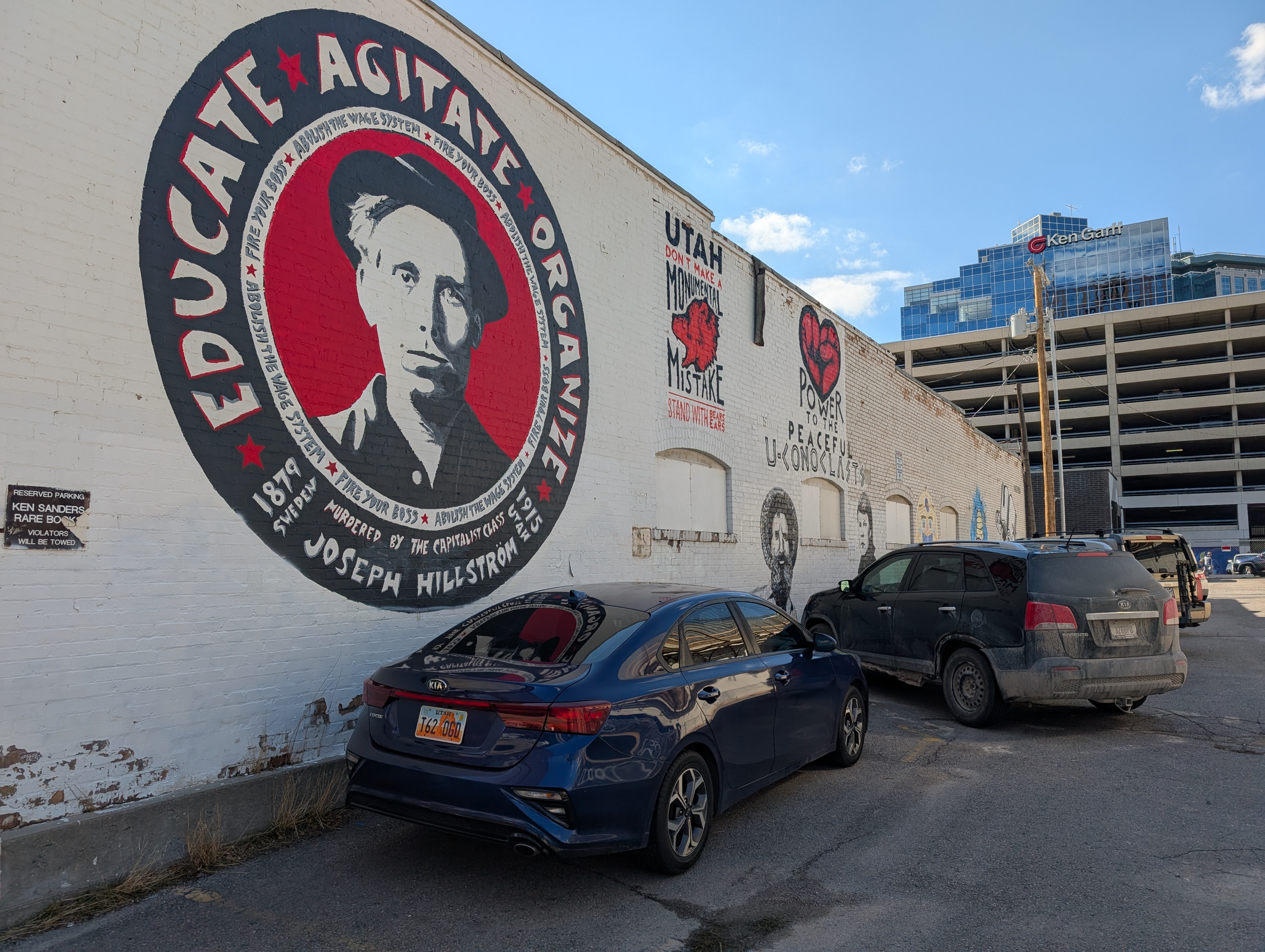
It wasn’t until Salt Lake City in mid-October that I took my first mural snap of the trip – an Educate, Agitate, Organize mural in an alley – as I pedaled around the city. The next few weeks were filled with the beauty of the natural world and I didn’t take another snap of a mural until a month later in Flagstaff, AZ. There were a few in Austin and Galveston and by the time I reached Biloxi, MS I was in full swing, seeking murals out and getting photographs of those whose characteristics drew me in. To be clear, I’m not an artist and have never studied art; I have taken up quilting which has given me a greater appreciation for colors and patterns, especially those that at first glance seem incompatible. Here I’m writing strictly from my own subjective experience.
I’m spare in how often I take photos and I don’t use a lot of fancy features on my phone – the photos serve as a reminder, a representation, a sentimental touchstone, rather than a work of art. My fascination with murals led to me thinking about the purpose of public art broadly, but more specifically, the power of murals and their unique qualities as public art…for me, anyway. Others may respond similarly to sculptures or other forms of public art; for me it’s murals that draw me in and leave me standing in an alley staring at the wall, possibly being perceived by others as if in a catatonic stupor.
What Grabs My Attention?
I notice the colors first. Bright colors for sure, but also certain combinations of colors – orange, teal and yellow, for example, or multiple shades of blue. Distinct lines and boundaries between colors lend vibrancy while colors that gently merge and cross boundaries lead me to pause and look a little more carefully. The starkness of black and white paint draws me in as well, such as the Educate, Agitate, Organize mural I saw in an alley in Salt Lake City. It includes red, which made me think of communism and worker power; the starkness can also draw your attention to a focal point. This mural reflected power, the power of the people…then when I noticed the repetition of “fire your boss” in the inner ring I smiled…ironic, since I’d just left a job where I was the boss!
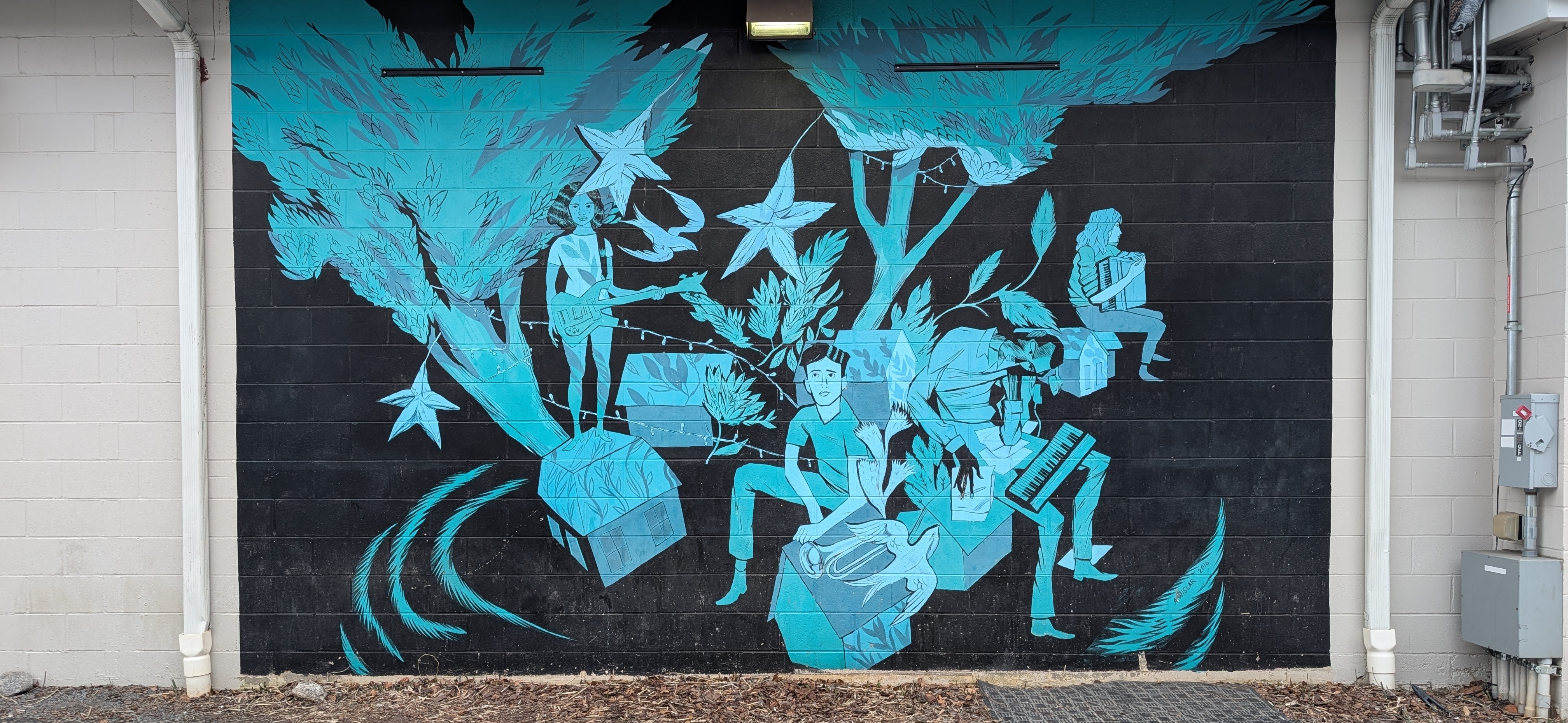
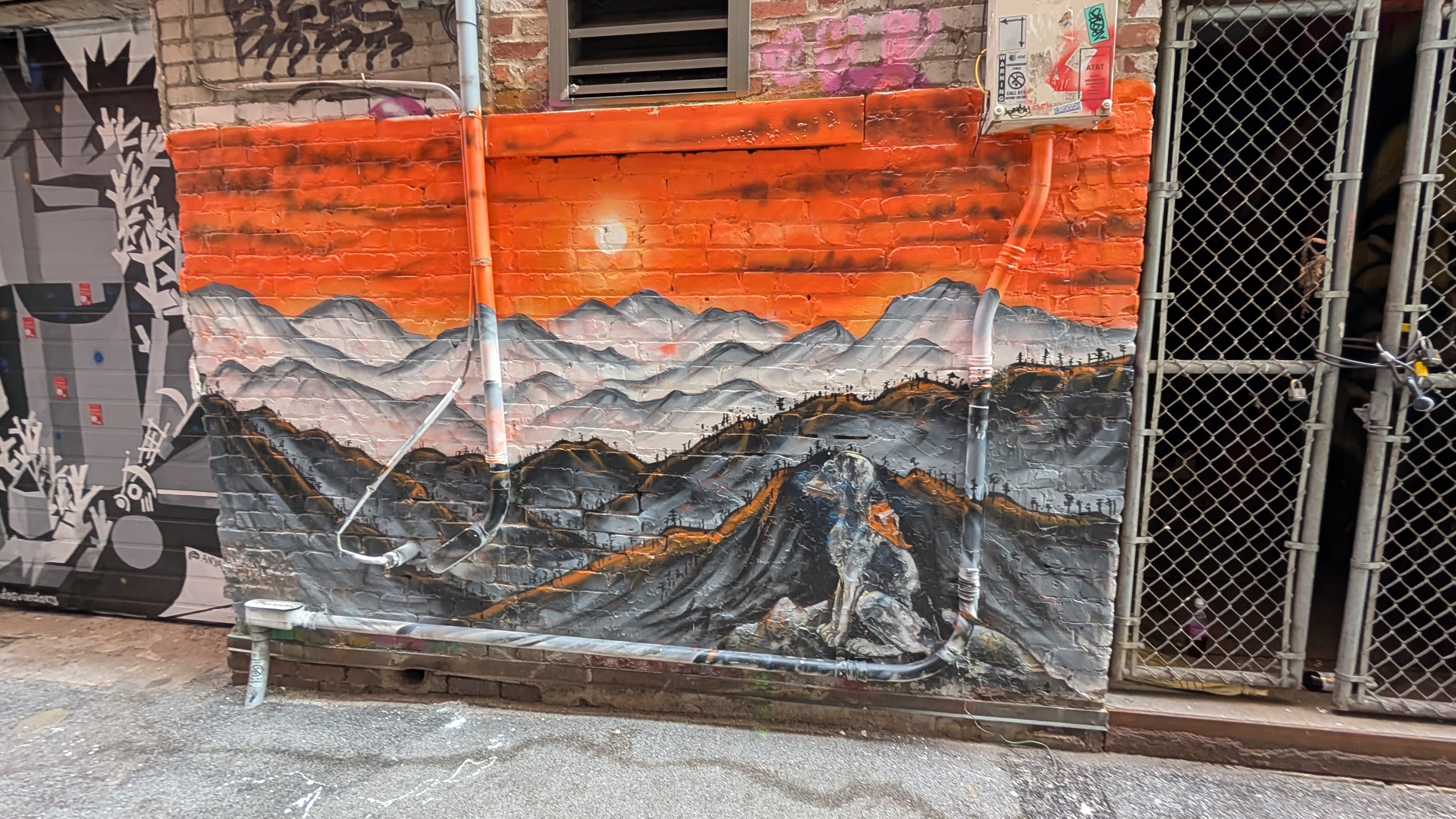
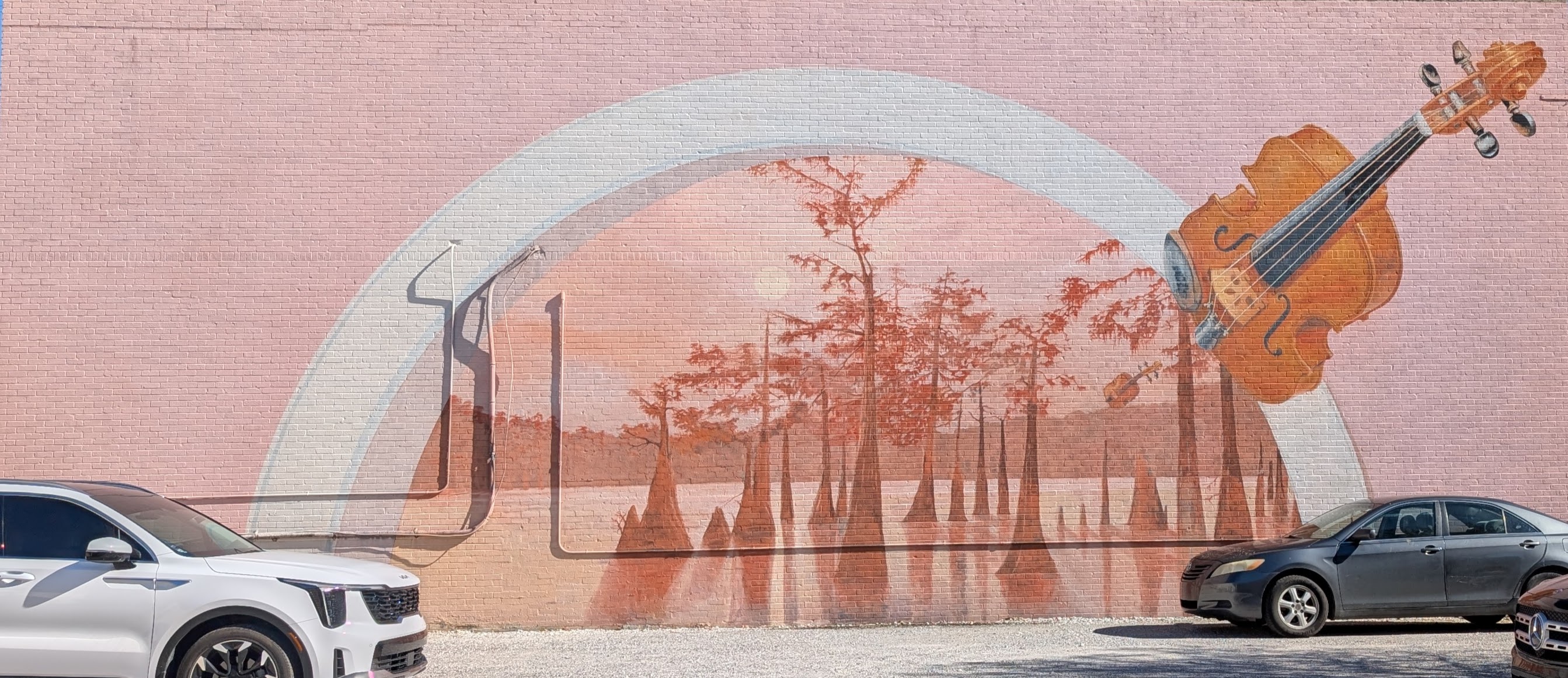
I’ve noticed that I often pass right by murals of muted colors…they seem passive, worn out, maybe even unimportant. I have found myself retracing my steps back to a mural like that when it clicks half a block later that I had dismissed a mural as of no interest.
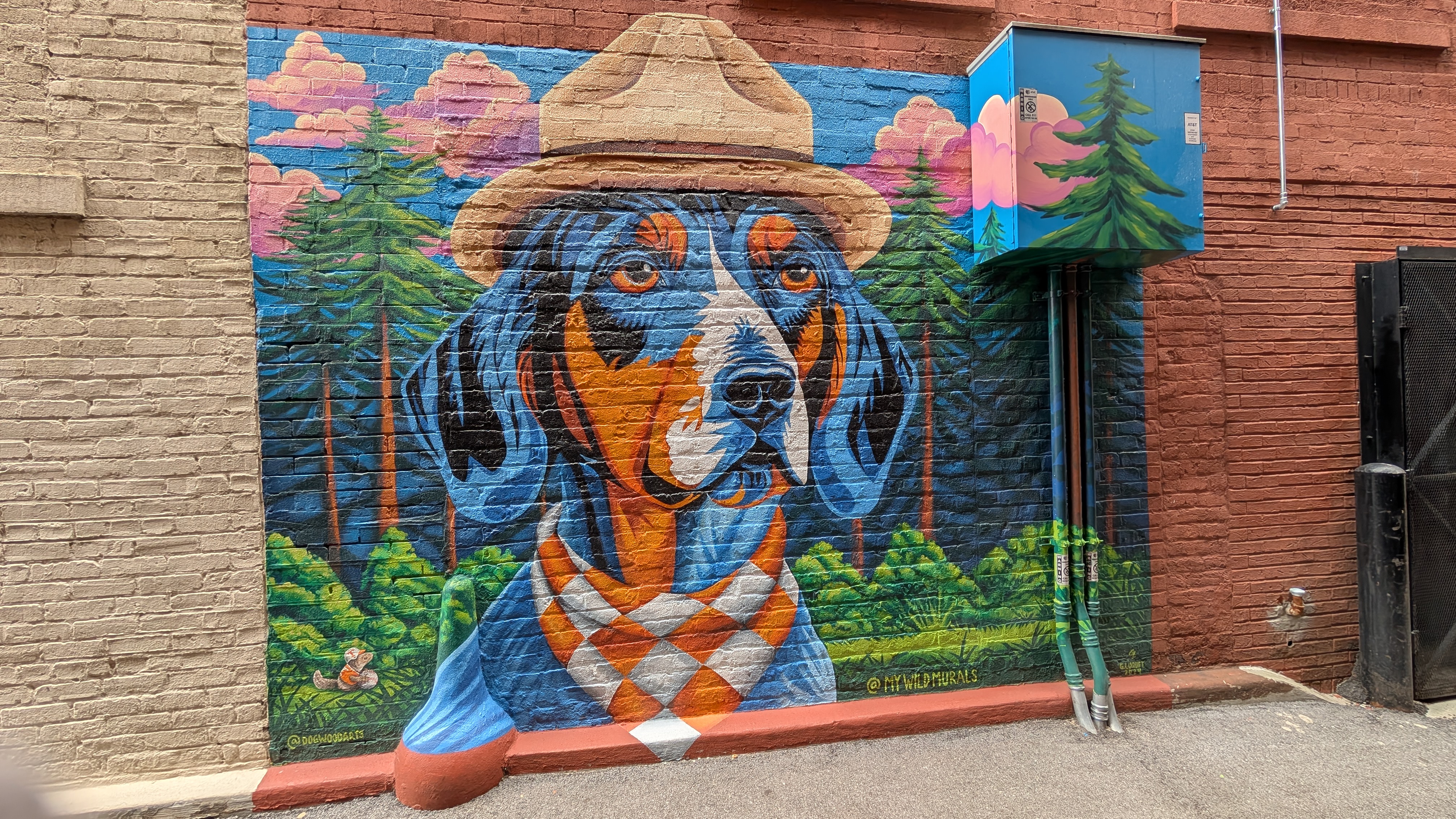
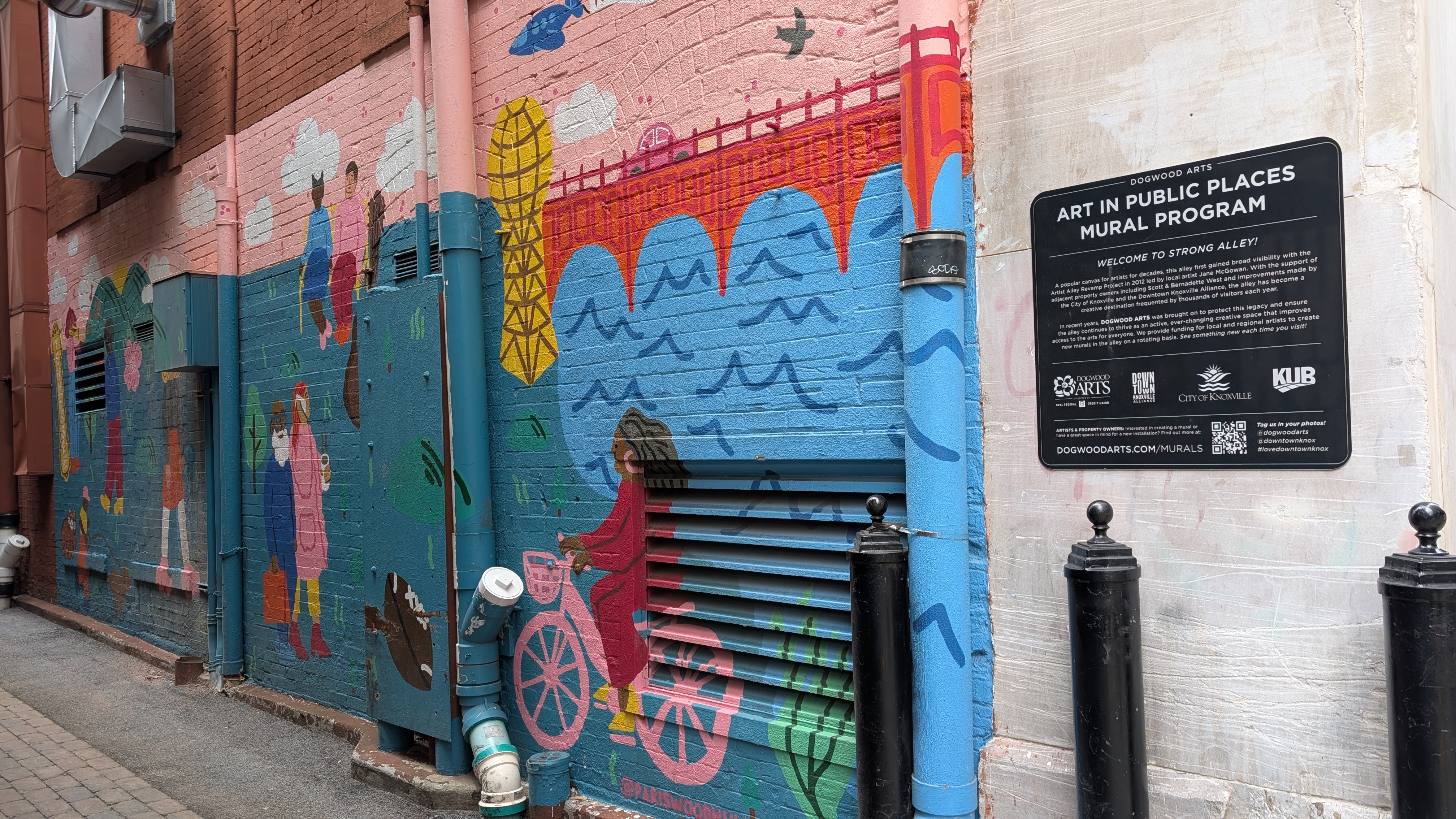
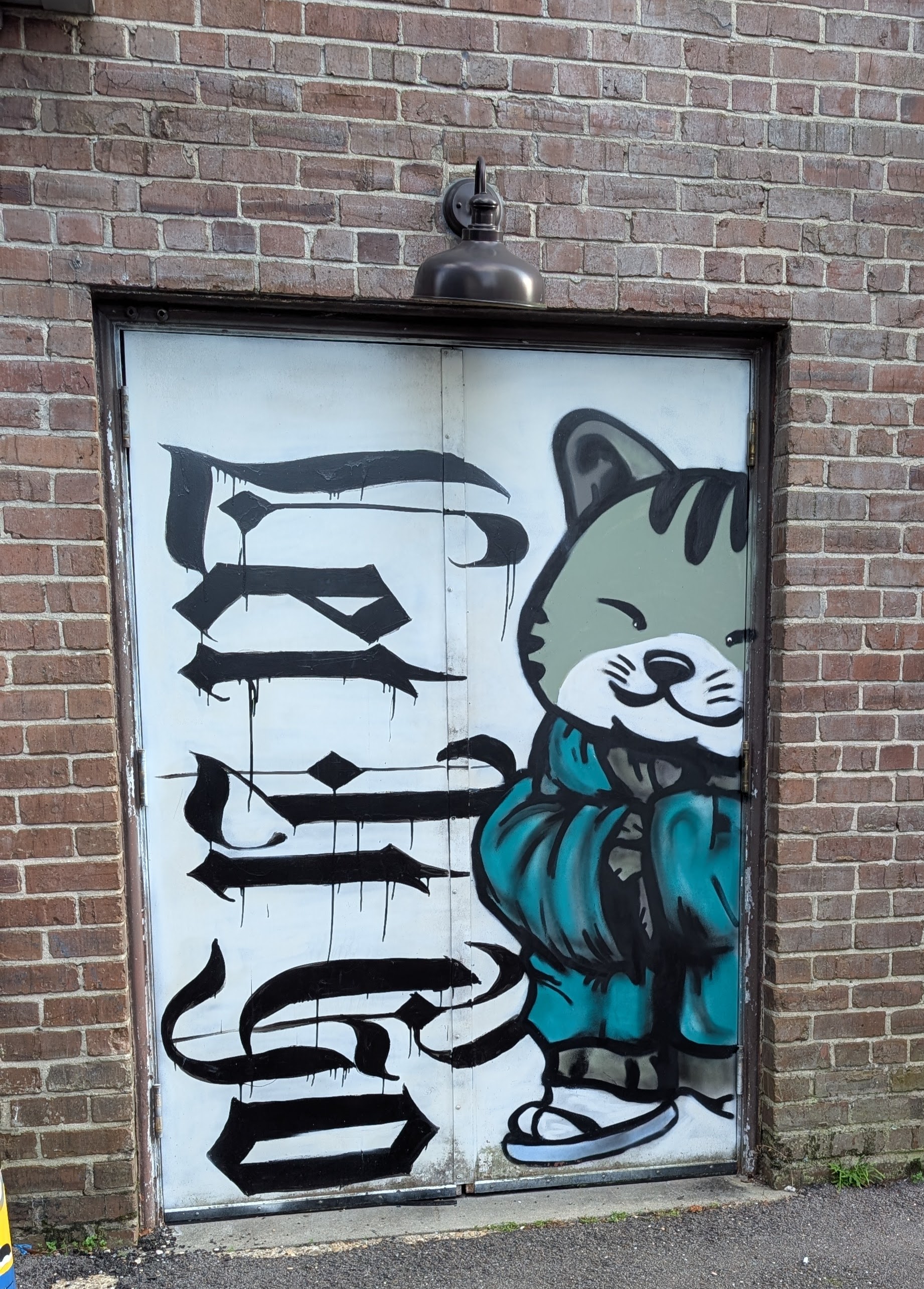
The theme of the painting matters too. It may be appealing as eye candy or because it’s just plain fun, like the hat-wearing dog I discovered in an alley in Knoxville or the girl on a bike in the same alley, but the meaning often matters most to me…after all, it’s public art and that status adds the task of speaking to the public. Obviously, not every mural is going to speak to everyone, nor will it be interpreted the same way by different people…that’s art.
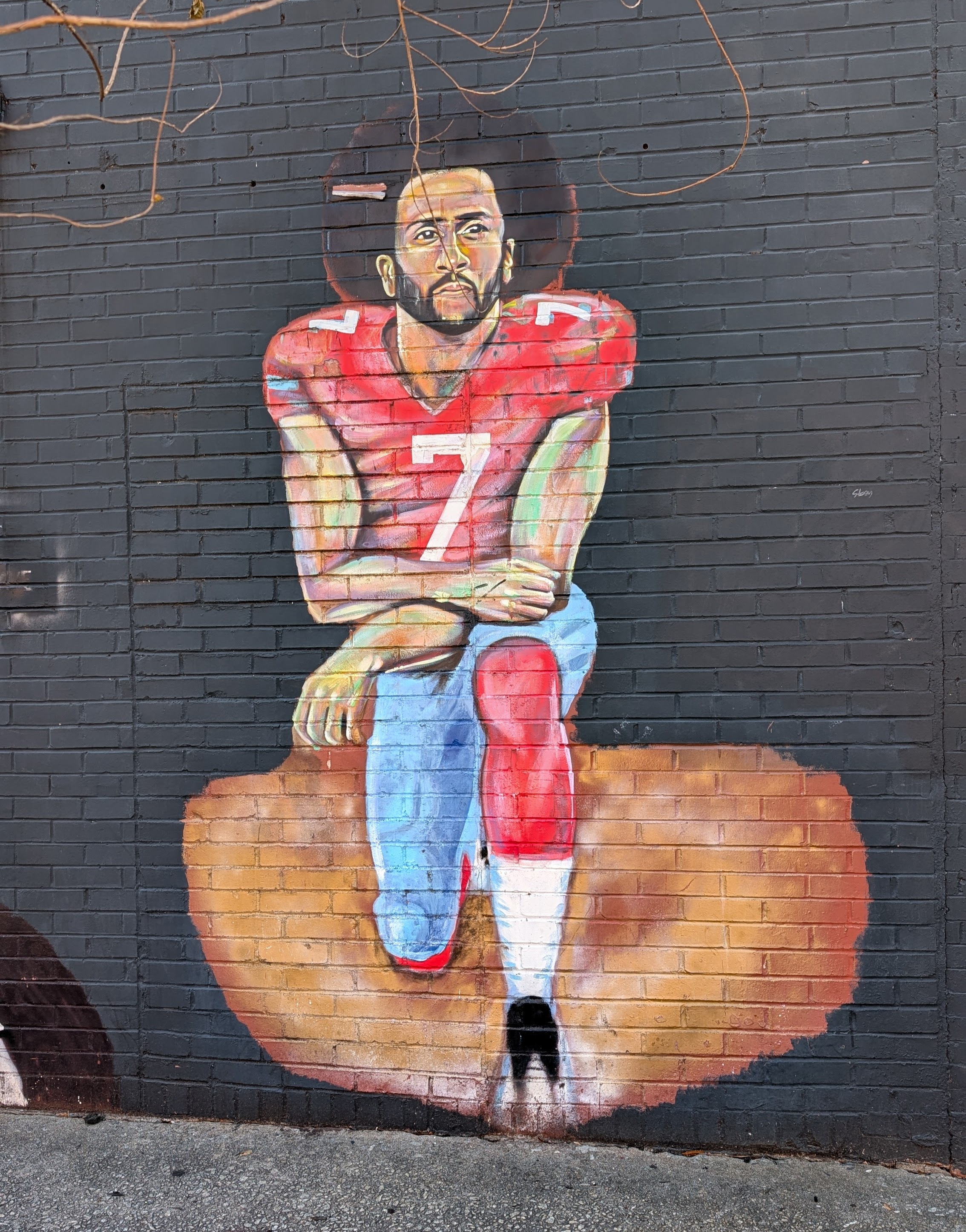
I’m drawn in by themes reflecting the power of the people, challenging the status quo, calling for people to join together in solidarity explicitly or implicitly. The image of Colin Kaepernick around the corner from the King Center: The Center for Nonviolent Social Change was poignant and keeps alive the bold, righteous, and costly action he took in the interest of racial justice, especially important in this time when the pace and volume of troubling events seems to just keep increasing, making it easy to forget the important actions people have taken.
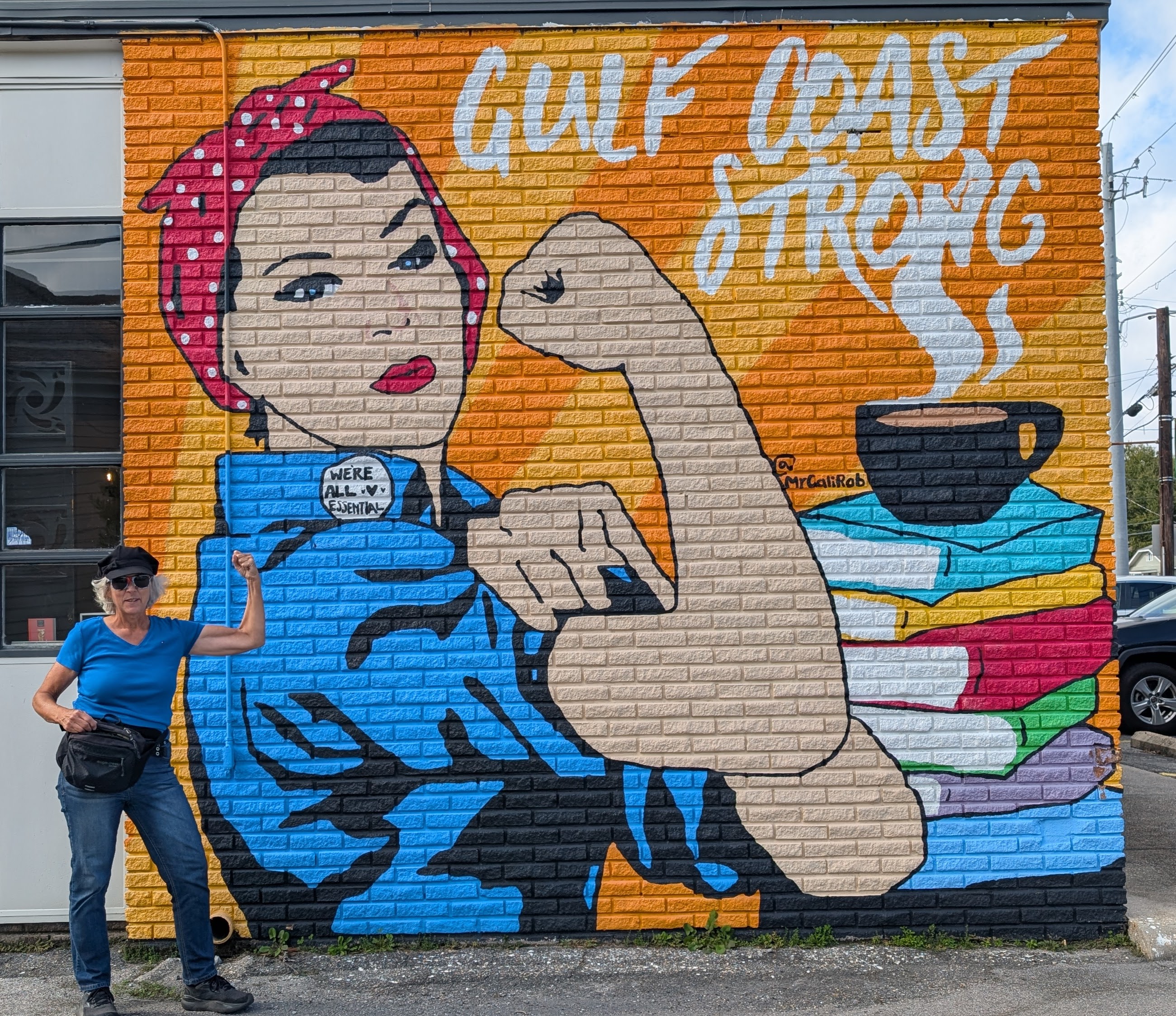
Seeing Rosie the Riveter on a wall in Biloxi from a block away felt great and there’s no way I wasn’t going up close to get a pic. I was a little annoyed that the coffee shop on whose wall the mural lives used it as a marketing ploy. Ah, well, perhaps I should be happy that the image is so iconic that it can serve as a marketing ploy!
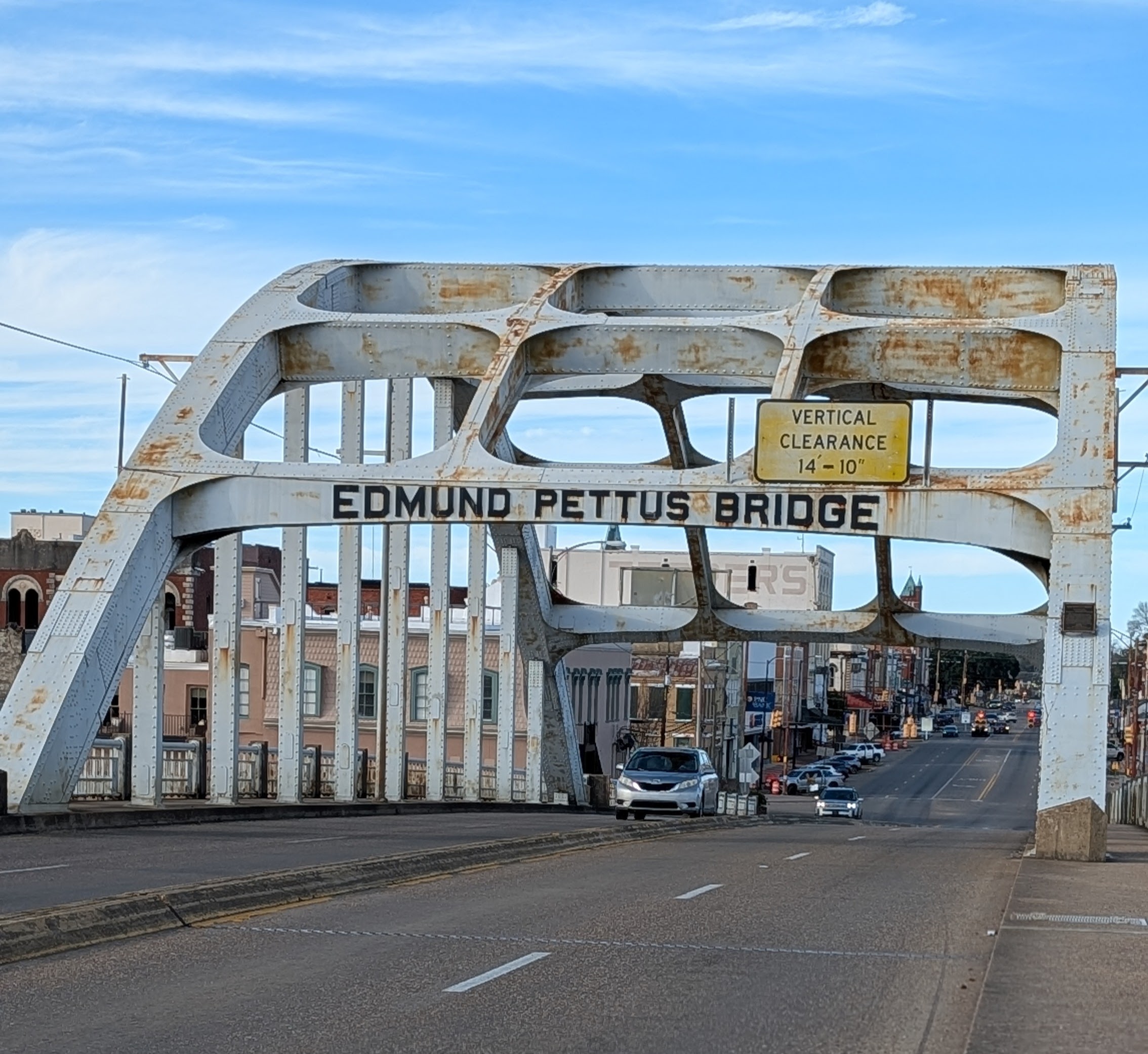
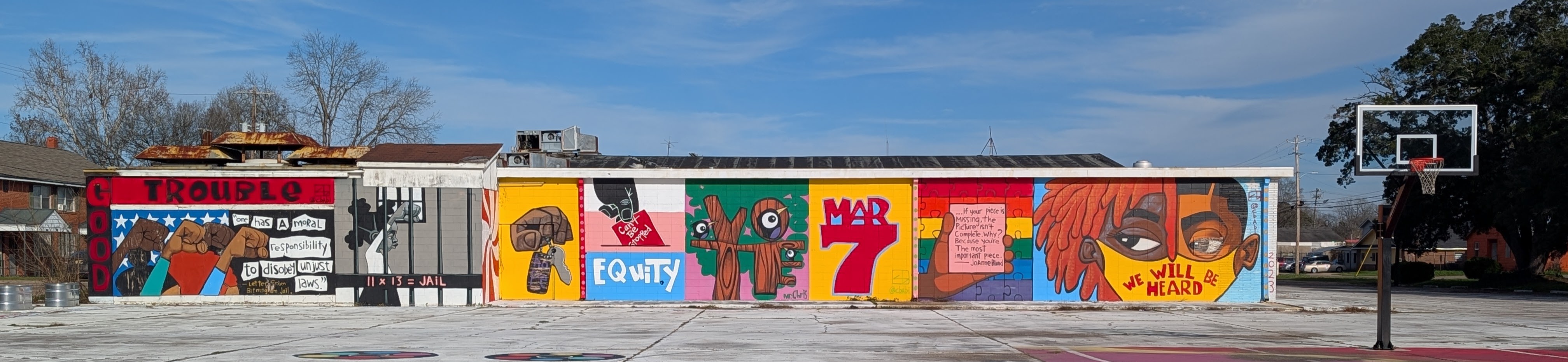
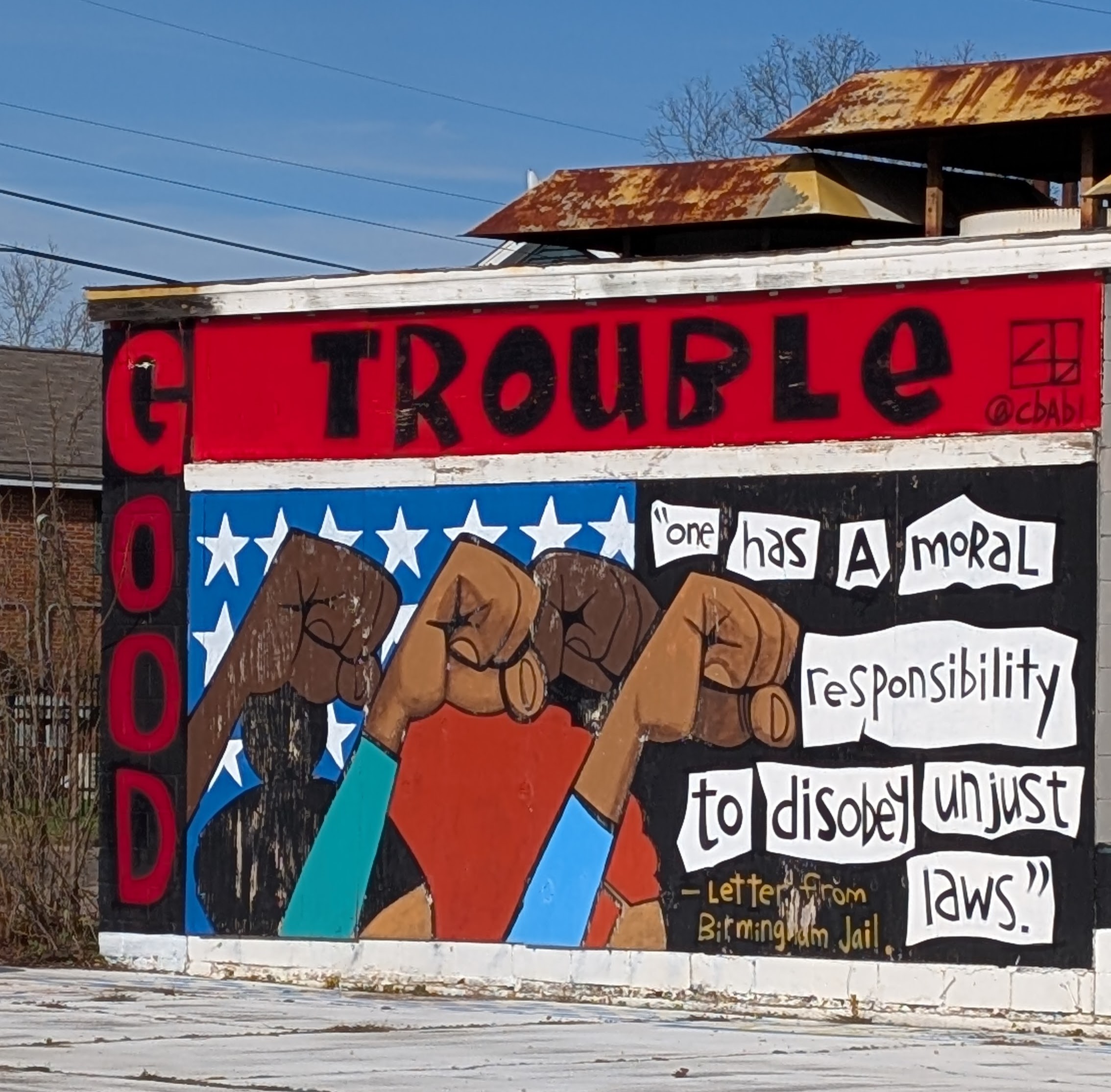
After visiting the Lowndes Interpretive Center which provided a thorough lesson on the struggle for voting rights in Selma, Alabama and making gut-wrenchingly salient the sacrifice, suffering and harm civil rights activists endured, it was disheartening to see one boarded up business after another and the near-absence of human activity on the main street in Selma. As we walked through an adjacent neighborhood we came upon a community center that was a little worn down. We saw a wall about 100 feet long painted with mural panels calling for equity and good trouble, and asserting We Will Be Heard…this was uplifting! Later we met two women engaged in the work of revitalizing the community and learned that the community center was part of the Foot Soldiers Park project (https://footsoldierspark.org/). The presence of that mural was a powerful representation of what is possible and that things are happening to realize the possible…I felt more hopeful as we drove away than I would have without it.
Nice to Meet You
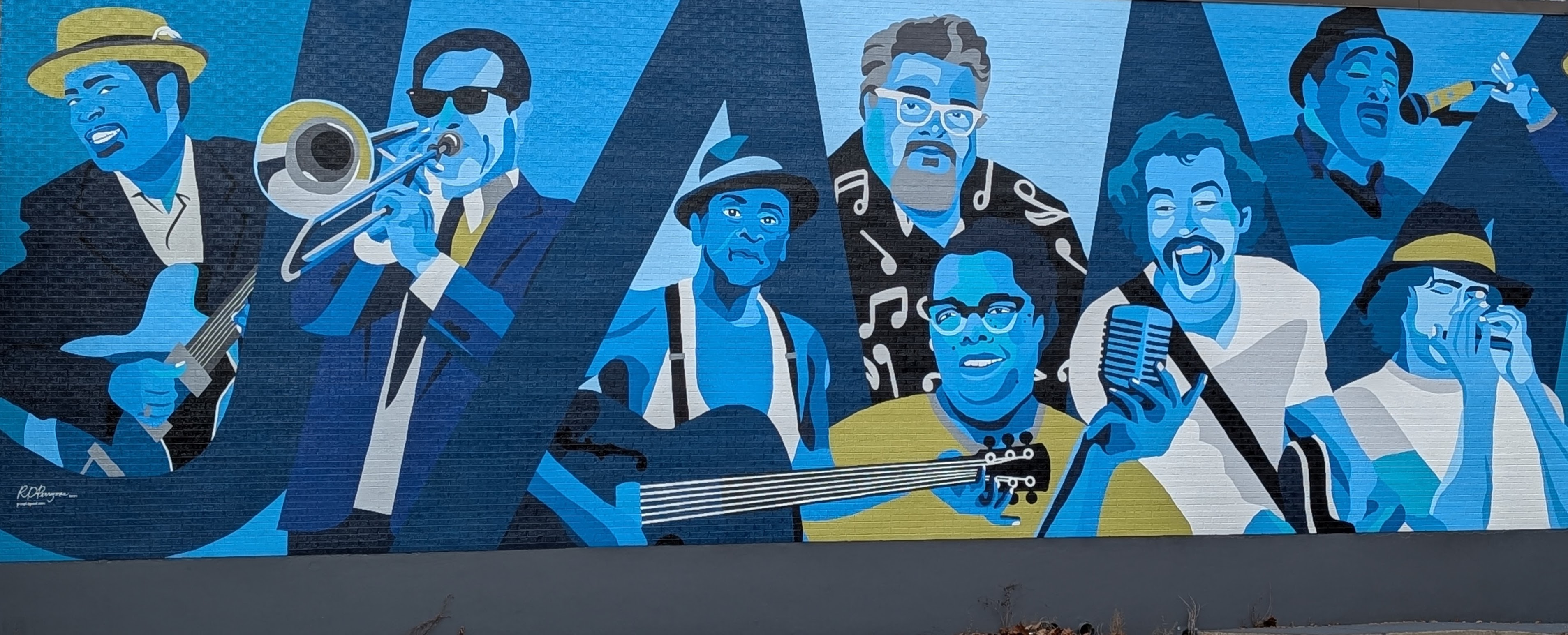
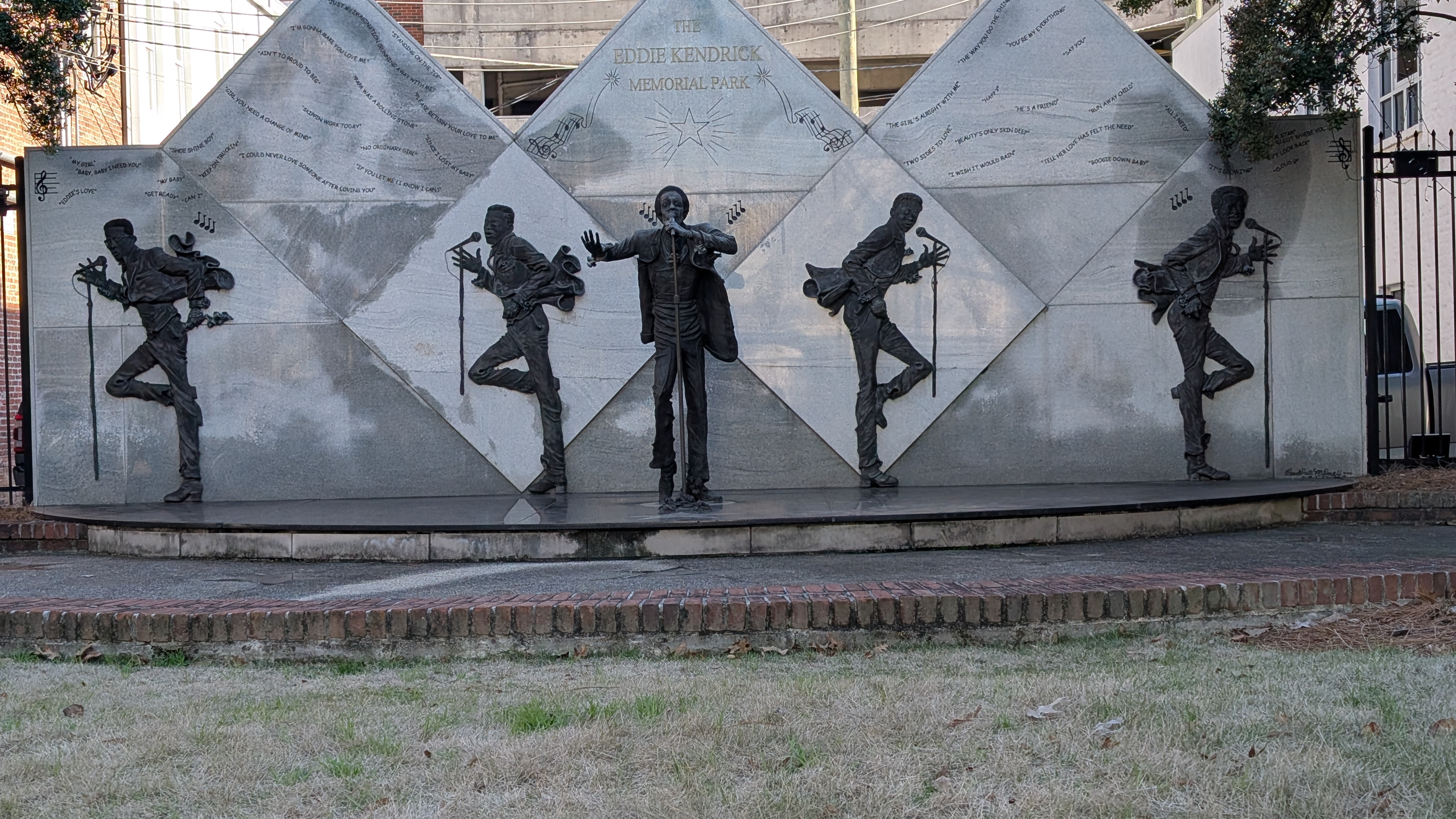
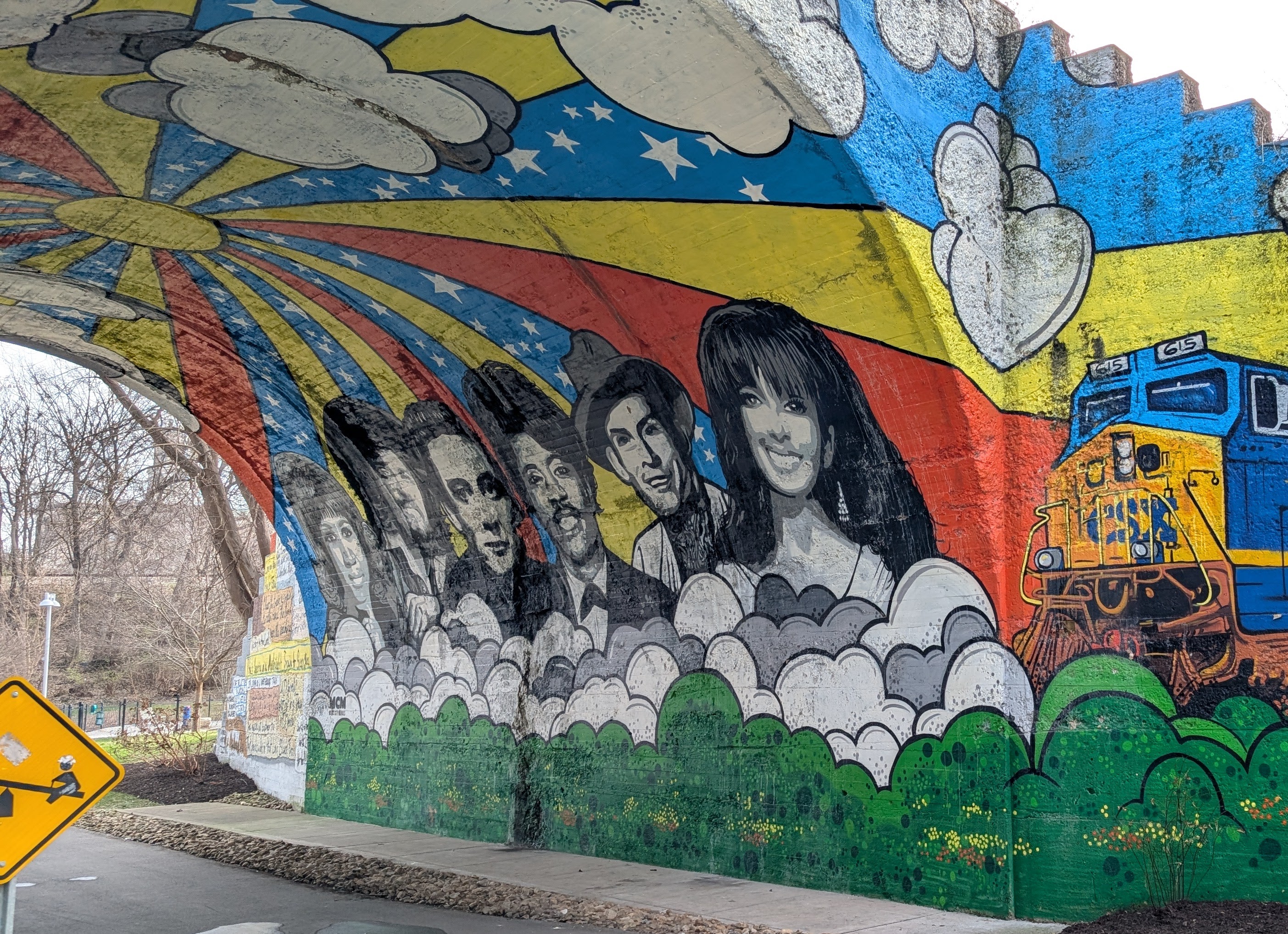
Since I’m traveling to so many places I’ve never been, I’ve found that murals serve the purpose of introducing me to the community. Murals help to elevate place (although curiously, I don’t have any photos of the “Welcome to…” murals that are practically everywhere), people, claims to fame and more. I loved seeing the music scenes of Hattiesburg and Jackson, Mississippi reflected in the murals there. In Birmingham a mural honors Eddie Kendricks, co-founder and singer of the Temptations who was born in Union Springs, AL and lived in Birmingham; it also adds flavor to the block…the mural practically had me singing Papa Was a Rollin’ Stone and dancing down the street as I made my way to a coffee shop.
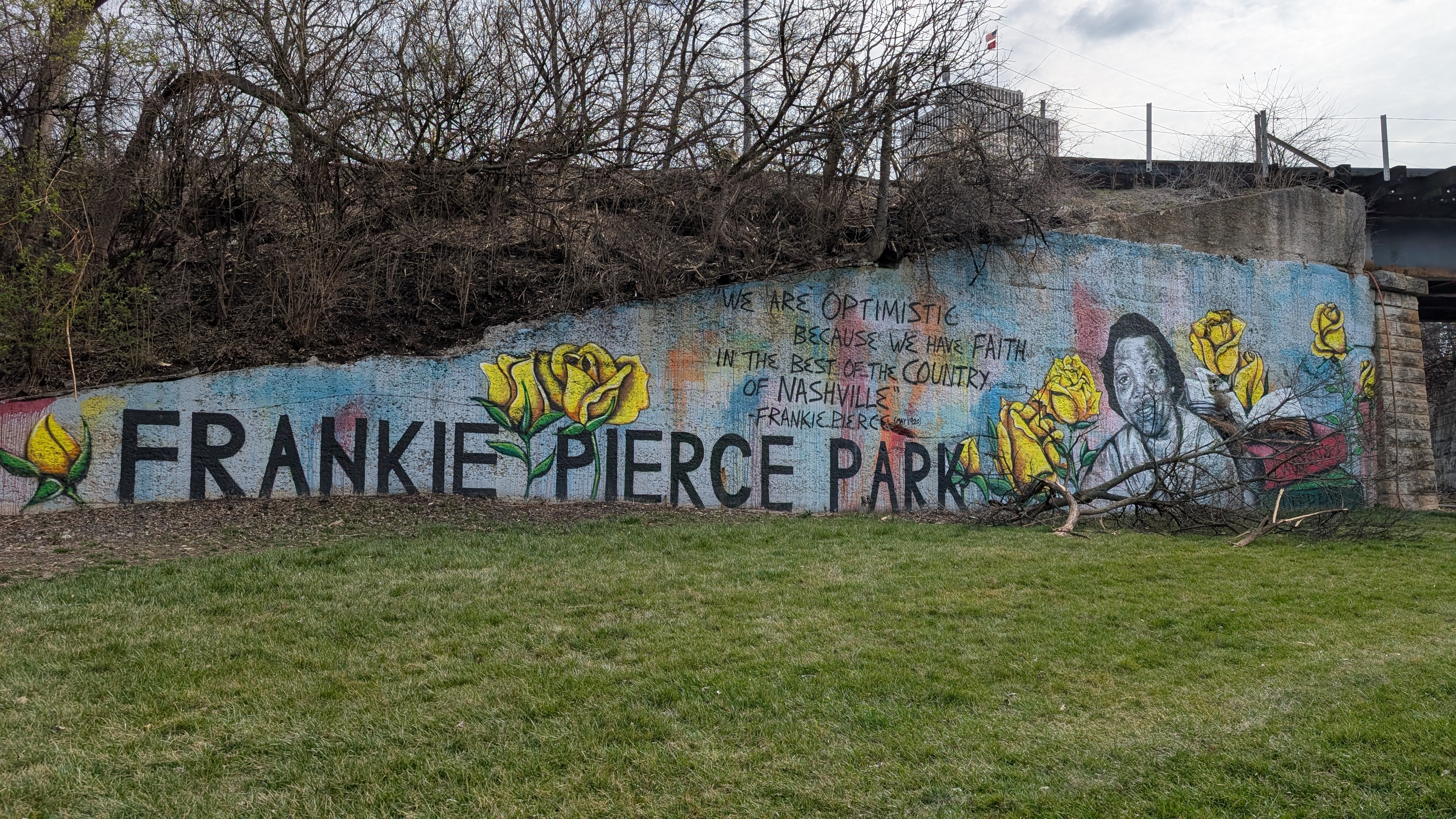
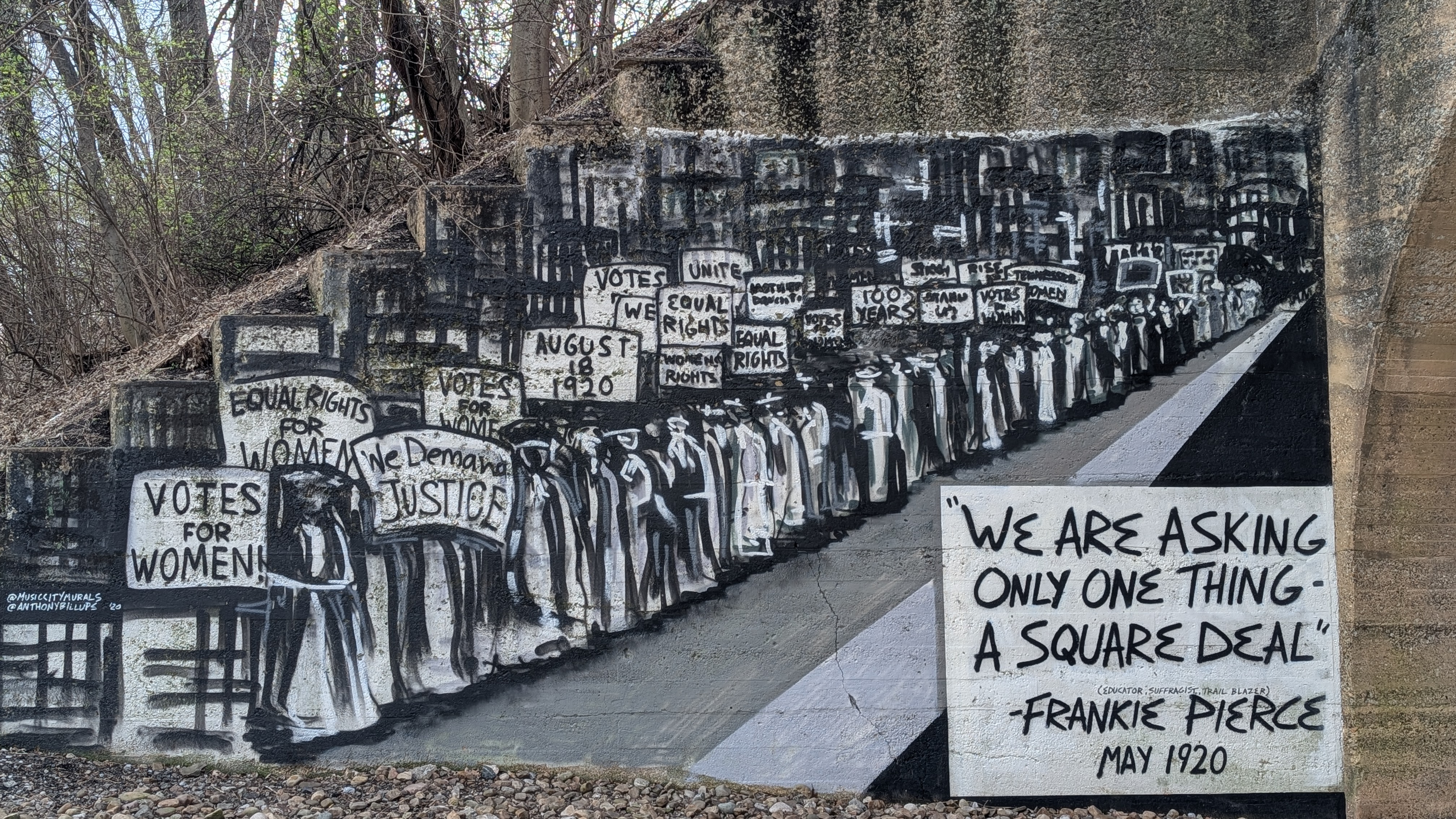
Frankie Pierce (https://tennesseeencyclopedia.net/entries/juno-frankie-pierce/) was honored in Nashville with a park named after her along with her story in words and paintings. She was born around 1864 and spent her life fighting for Black girls and women, making an impact on education and voting rights in particular. One of the murals captures collective action, the seriousness of the struggle, the range of rights women demanded and a quote that sums it all up – “We are asking only one thing – a square deal.” There were quite a few murals covering two underpasses next to the park, so there was lots to see. Frankie featured prominently among them, demonstrating the power of murals to educate, to elevate and inspire all at the same time (https://nashvillepublicart.com/2020/10/26/frankie-pierce-park-part-1/).
Maybe I’m suffering selective attention, but it seems to me that there are few acknowledgements of women in history at home in Seattle. I have a book about women who made an impact in Seattle that a guest from Wales gave me, but without that I wouldn’t have had any idea about those women and the contributions they made. In both Kentucky and Tennessee I saw many monuments to women often revolving around the right to vote and notable in that they seemed unusual.
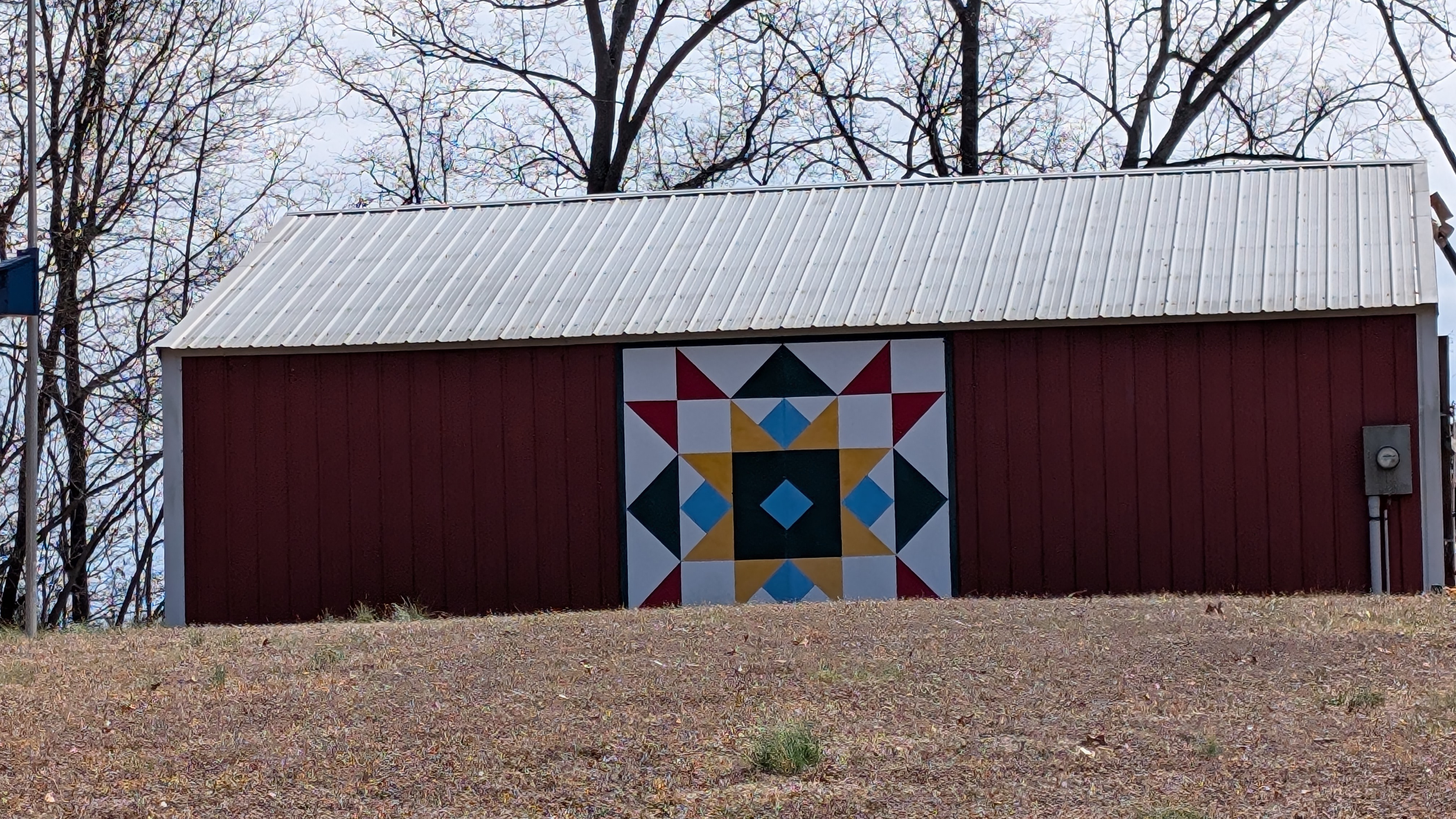
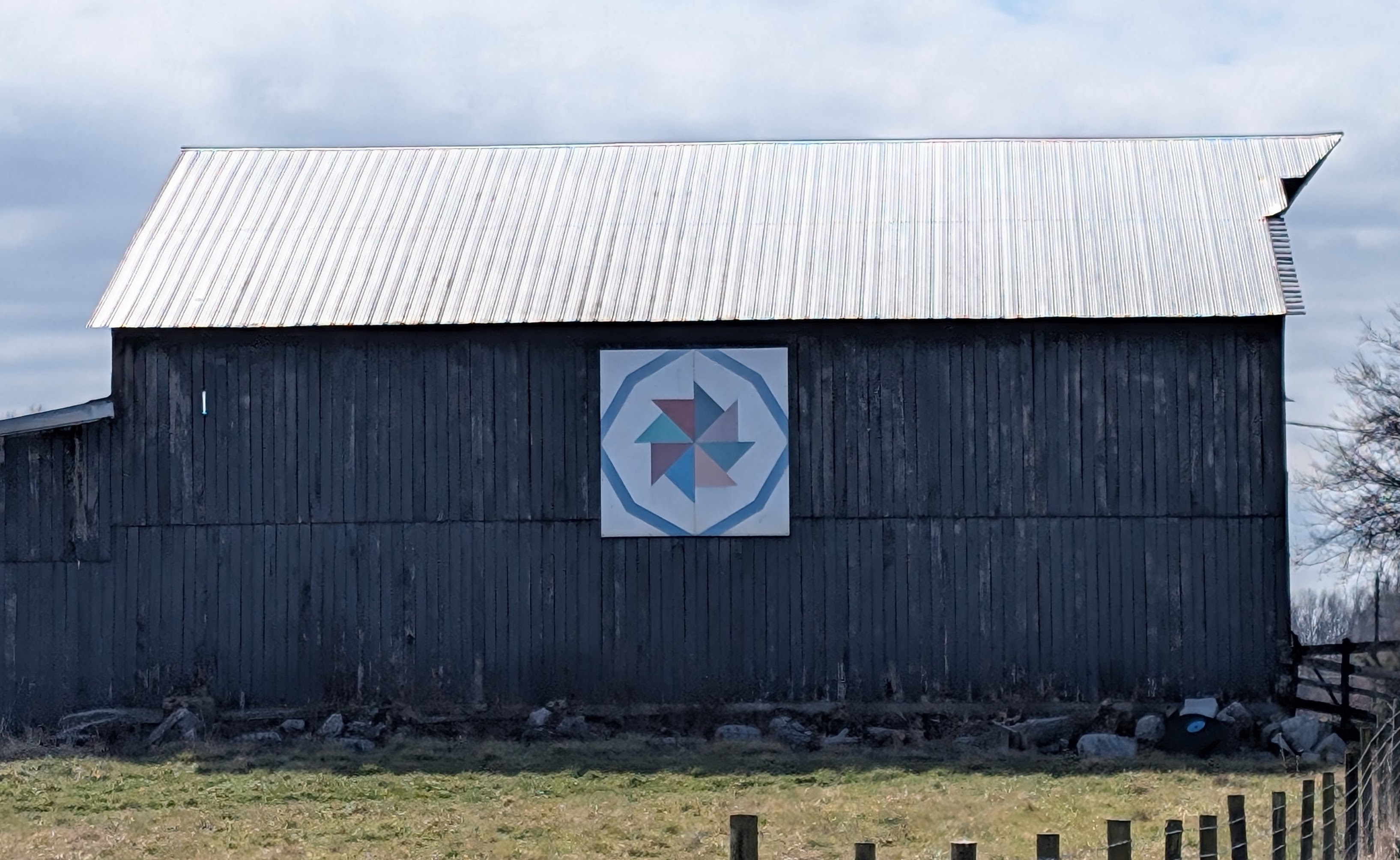
I took up quilting a few years ago so I was delighted to read about the tour of quilts on barns in the rural area of Warren County, Kentucky. I hopped in the van to track down eight of the quilts on my map after reading up on how the quilts were installed. First off, I discovered that they weren’t cloth quilts…they were hand-painted wooden blocks applied to the barns by volunteers after the barn owners chose the design and colors. I wasn’t able to take in much detail as the road was narrow and there was nowhere to pull over to see most of them; others were off the road but on private property and I was a little uneasy spending much time without an invitation. Nonetheless, I managed to get photos of seven of them while feeling like I’d found an Easter egg each time I saw one! I found this project intriguing…somehow it seems a way to create community, perhaps as a statement that beauty and craftsmanship matters.
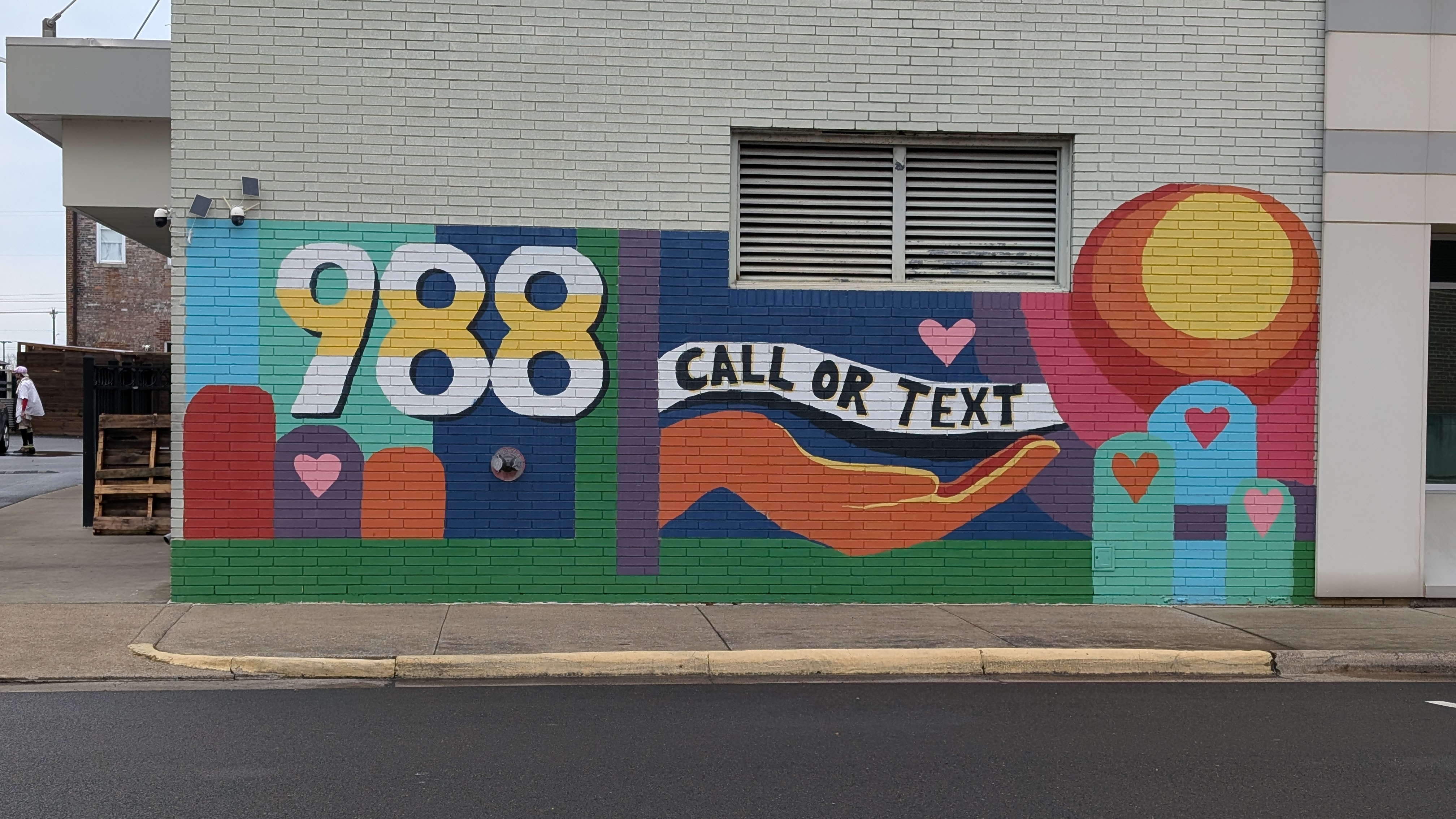
Paducah has murals but the ones I saw were of a much different nature than what I’ve seen elsewhere. In one case they were used as a kind of public service announcement. Two of them graced the side of a mental health counseling center – first I saw one with simple flowers that said “you are not alone,” then I noticed another that had a simple painting with “988 – call or text.” I thought it was a clever way to amplify the existence of the 988 line but something about it bothers me and I can’t put my finger on why; in spite of that, I think it’s probably helpful as it provides important information and brings the uneasy subject of mental health a little further into the open.
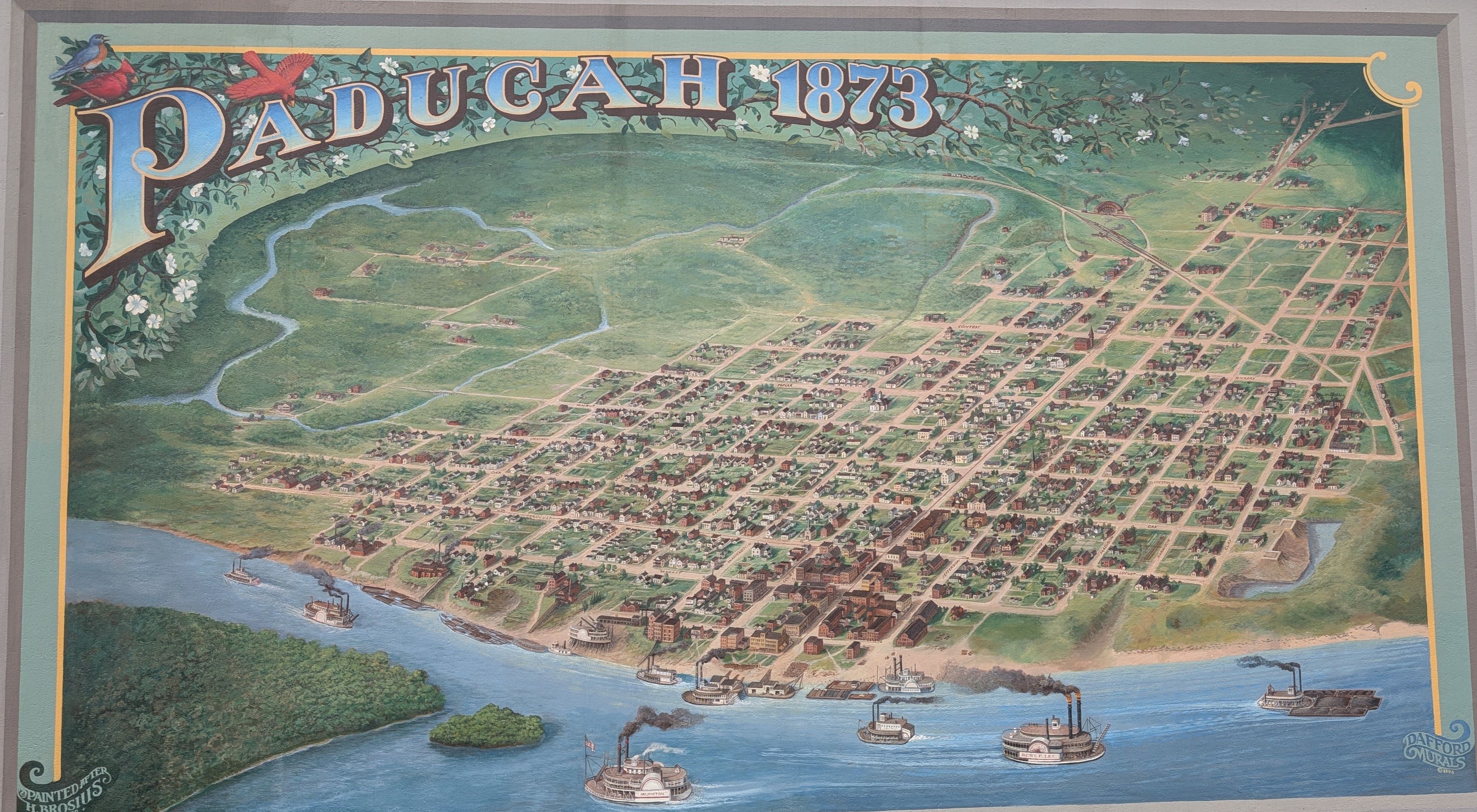
Along the shore of the Ohio and Tennessee rivers is the Paducah Wall to Wall Murals Project. The wall was built between 1939 and 1940 to protect against floods like those that occurred in 1883, 1913, and 1937, the last of those cresting at almost 61 feet and inundating the city.
The murals depict the history of Paducah, from the time when Indigenous people lived on the land to current day. I like the idea of this more than the reality. There’s a serious hazard that comes with choosing what events, perspectives and people to include in the story being told, particularly when the space for presentation is tiny relative to the full history of the place. While the intention is laudable, it’s likely to perpetuate biases, stereotypes and a narrow understanding of the people and events of the place. An example of a mural depicting history that I think took great care to ensure that the story told reflected multiple perspectives is the Labor History mural at Seattle’s Washington State Labor Council building. I can’t help but shout out my dear friend Lynne Dodson, the driver of the project, who created an inclusive and comprehensive process to avoid the very problems I observed in Paducah.
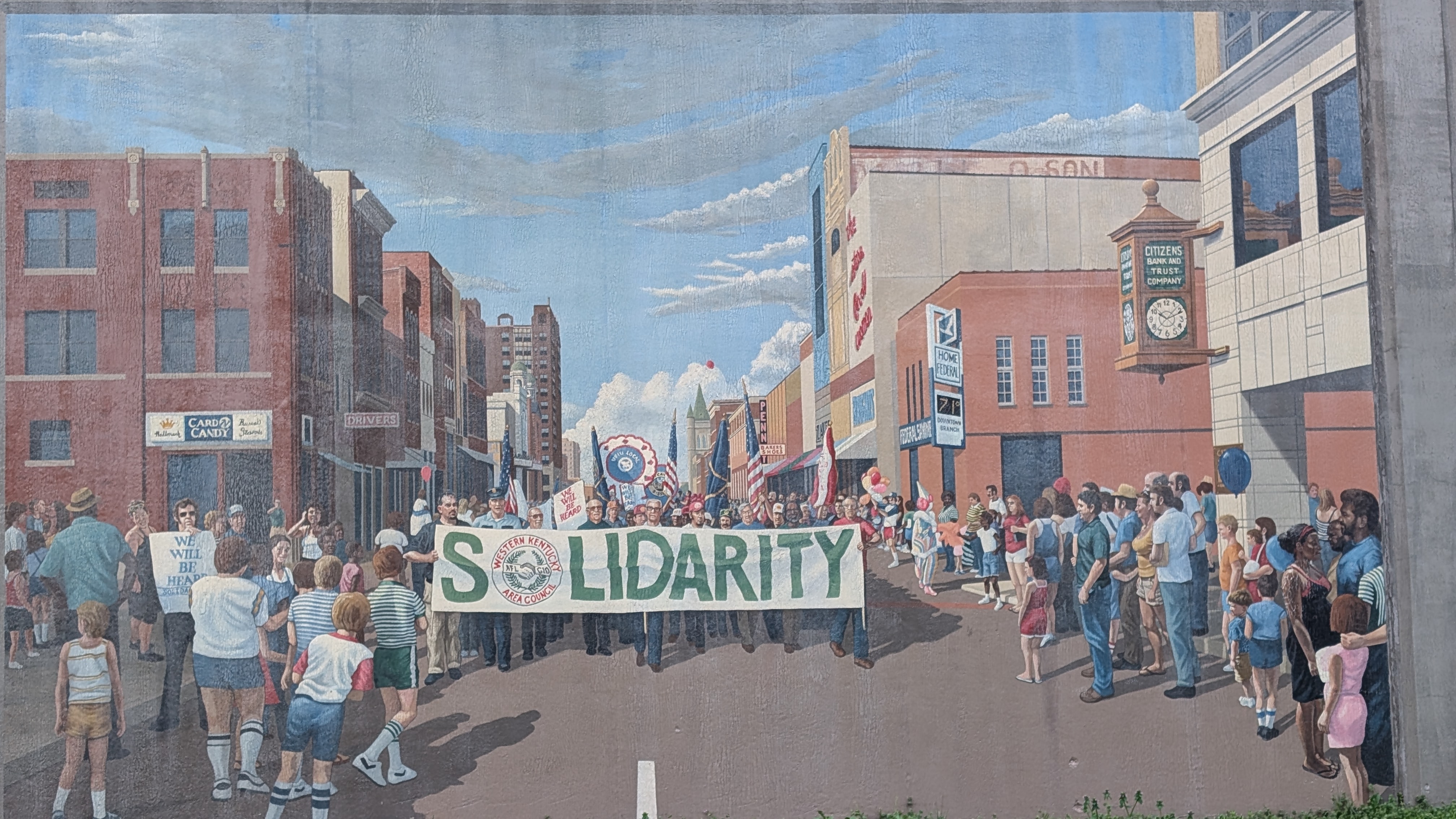
I would describe these murals as practical, overt in their message, and literal in the style. I was pleased to see one of the final murals in the series depicting the AFL-CIO Labor Day picnic – this tradition in Paducah dates back to 1892! The mural was accompanied by a placard that acknowledged the contributions of working people and the role of organized labor in building the middle class. Given that I’ve been in states lacking collective bargaining rights the last couple of months, it was refreshing to see this mural as part of the story.
I know that I’ll see many more murals as I travel – in fact, I’m in Louisville, Muhammad Ali’s hometown, and tomorrow I’ll roam about the city to see six murals dedicated to his impact (https://www.gotolouisville.com/blog/ali-around-town/).
Having written this essay, I’m thinking about what my fascination with murals specifically and art more broadly means given that I’ve believed myself to be completely lacking in any creative talent. I considered going to a “Sip and Paint” event a couple days ago, until those helpless and hapless feelings that surface when faced with drawing or painting emerged. I was reminded me how frustrated and disappointed I am with most attempts to “do art.” I think I’ll stick with what makes me feel good (quilting and writing) and skip that which makes me feel like a kindergartner (no shade on kindergartners intended). Regardless of what art I might make, exploring art, learning more about it, and reflecting on how I’m impacted by it has been an unanticipated joy of my gap year adventure.

 Karen in the Gap
Leave a comment