Montgomery – Selma – Montgomery – Birmingham
After three rainy days at a campground in the city of Jackson, I headed for Montgomery on Saturday, January 10th and headed straight to the Cracker Barrel where I would camp in the parking lot – Cracker Barrel has been a terrific resource for free camping. Although there are few vegetarian options on the menu, they do have wine which was just what I needed having just driven on a two lane highway in the dark.
Sunday morning I found Lagoon Park with a lovely trail and a sign that said “don’t feed the alligators” and I went on a lovely hike. New stop was downtown to scope things out before friends Tracy and Stan would arrive that evening. I had the good luck to happen upon preparations for an ICE OUT rally so I joined the roughly 100 people to sing, reflect and be inspired. It felt great to be standing in solidarity with others who are outraged and deeply concerned about what’s happening. After speaking with one of the organizers for a few minutes she invited me to join her and others at the best-named coffee shop ever – Prevail Union – to debrief and chat. What a great way to start my visit to Montgomery!
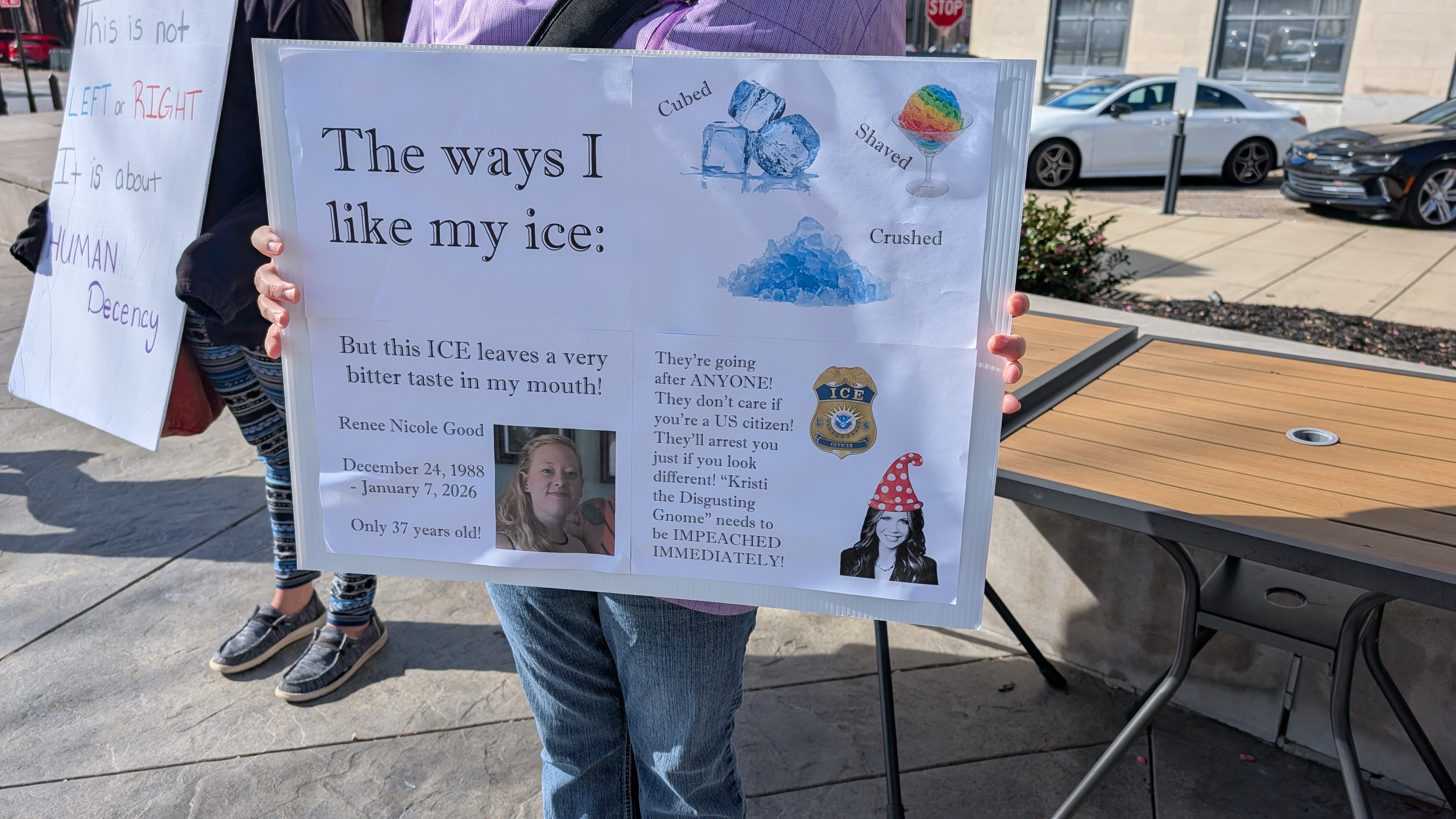
I was delighted when Tracy and Stan arrived – I’d been looking forward to our time together for weeks! We made a plan for the next few days, cramming in as much of the area’s history as we could. it would become an intense three days and I was really glad to dig into the civil rights’ movement history with friends.
We hit the road to Selma, stopping at the Lowndes Interpretive Center which went into great detail about Blood Sunday and the 54 mile march from Selma to Montgomery in the struggle for voting rights. I was unaware of the second attempt to cross the Edmund Pettus bridge on March 9th, following Bloody Sunday on the 7th. Dr. MLK Jr. led this one which, when confronted with the promise of further brutality, ended in a prayer meeting. Bloody Sunday started with 300 marchers and grew to 600 as they crossed the bridge. On the 9th there were about twice that many marchers and two weeks later, March 21, 1965 thousands set everything else aside to spend five days and four nights walking to the Capitol to demand the right to vote. My walk across the Edmund Pettus bridge was more poignant having visited the Lowndes Interpretive Center first and I found myself considering that as ICE escalates I may need to set aside my trip and prioritize today’s civil and human rights struggle. From the moment Trump was elected I knew my plan might be disrupted, but this was the first time a decision point felt s close.
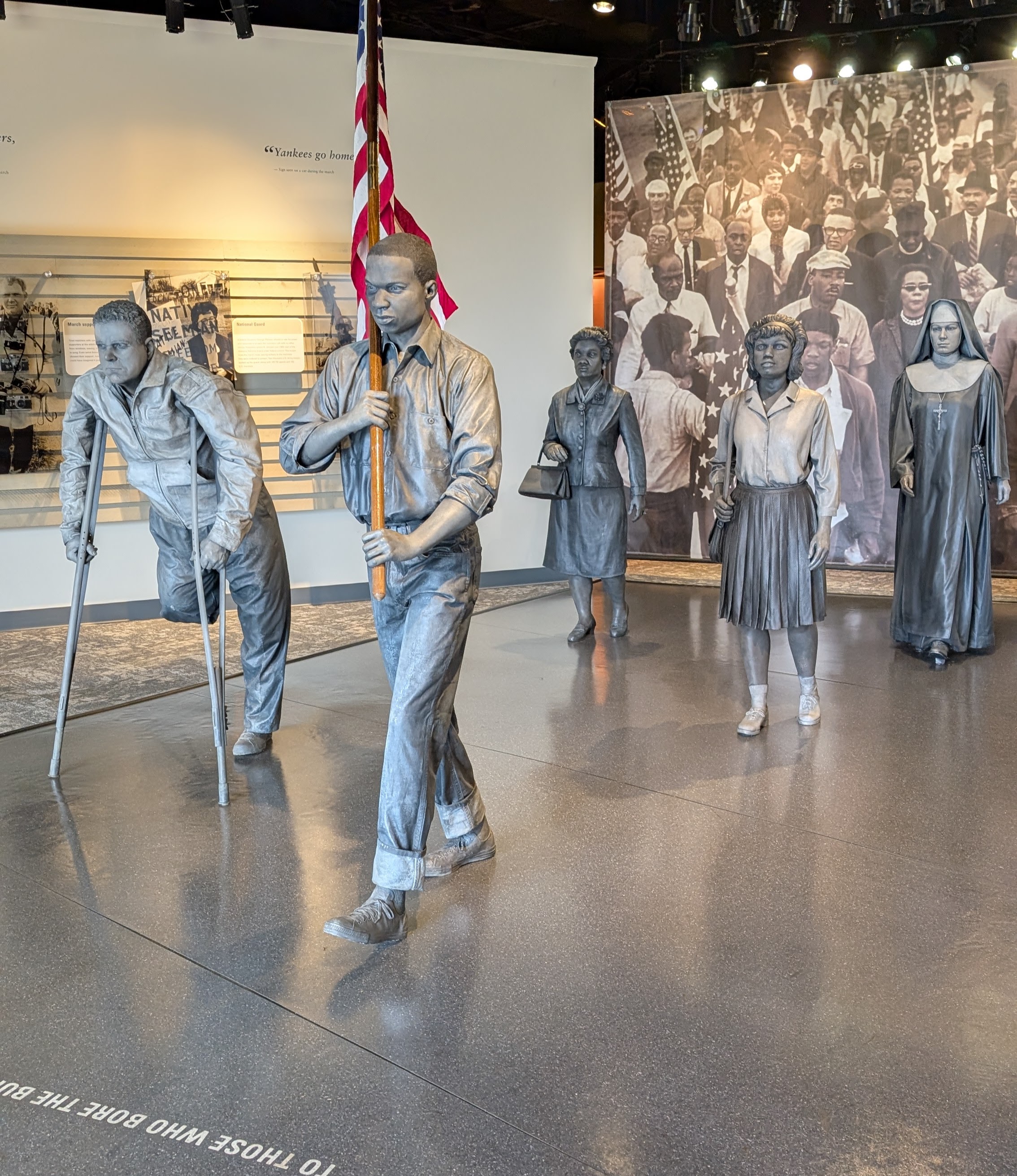
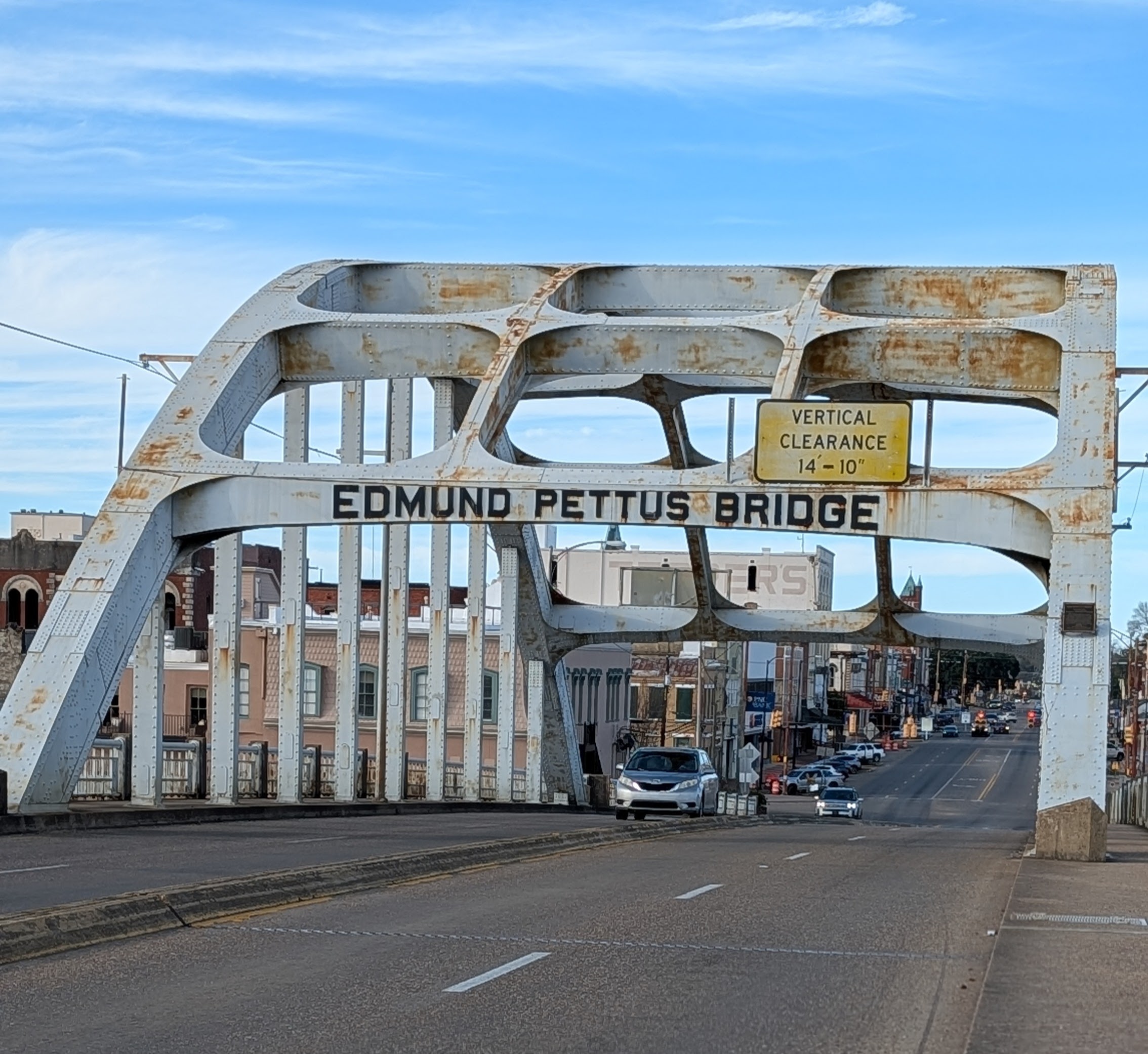
We walked around Selma and I was feeling troubled by the prevalence of boarded up buildings and closed businesses; I couldn’t help but contrast the sacrifice and struggle of so many people with the economic despair of this city. Nearly 30% of residents are living in poverty and 60% of kids are. I was less discouraged after talking to two women in a coffee shop, both from Seattle. It was the “12” lanyard hanging out of the pocket of one of them that got Stan’s attention and led to not just a conversation about redevelopment work but a tour of the Institute for Common Power’s Scholars in Motion offices. Positive change is happening in Selma, but people have been suffering for far too long. We need to face the fact that in the U.S. we have a devastatingly high tolerance for injustice and hardship, specifically when those suffering are not white or wealthy. We need to stop being so tolerant!
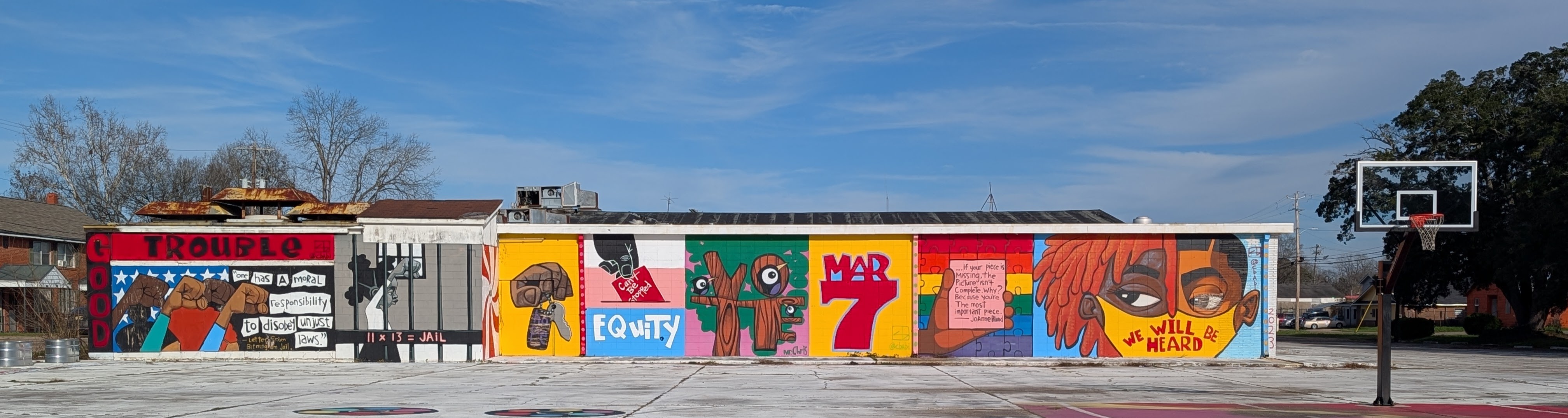
Over the course of the next two days we went to the Rosa Parks Museum, the Southern Poverty Law Center, the Freedom Riders Museum and the Equal Justice Initiative, all of which provided information in ways that pulled you in and kept your attention with detailed multi-media exhibits and repetition. I was struck time and again of the enormity of what civil rights activists and leaders accomplished.
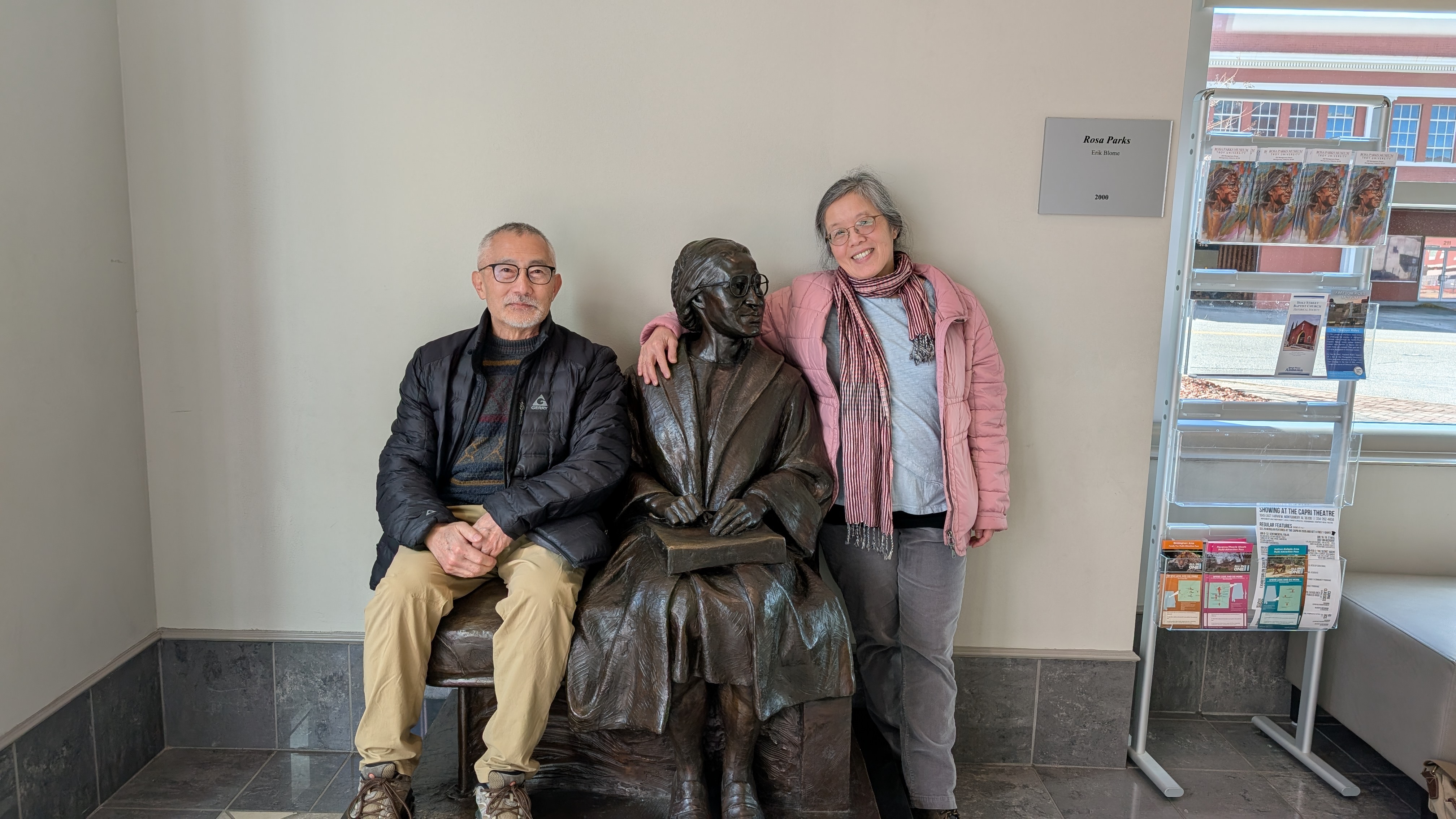
For example, after Rosa Parks was arrested a college teacher, college professor Jo Ann Robinson and allies made and distributed tens of thousands of leaflets calling for a one day boycott; it grew to a boycott lasting more than a year. Ms. Robinson didn’t get bogged down by process or let the perfect be the enemy of the good. She got busy and she got it done. I wasn’t there so I don’t have the full story, but it struck me just how monumental pulling off that boycott was. And they did it without the ease of Signal or email, texting or Instagram. People with cars volunteered to form carpools so people could get to work. They talked to each other to make sure everyone stayed the course. They held firm in the face of violence and threats…Jo Ann eventually had to have a security detail after being targeted along with other leaders.
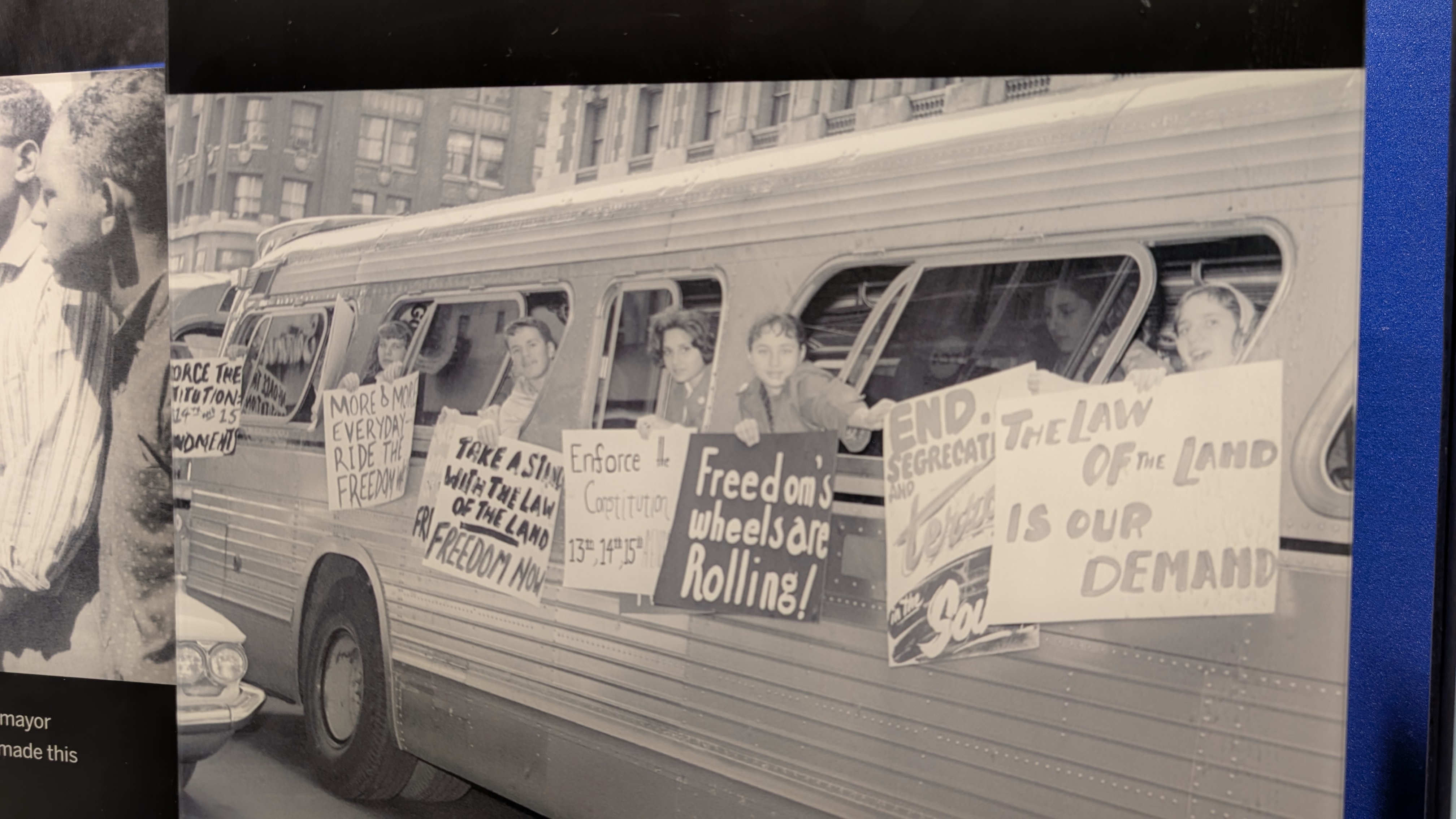
The bus boycott is a major part of the civil rights movement, but it’s not the only one. The Freedom Riders Museum went into depth on the multi-state campaign to end desegregation on buses with hundreds of people being attacked and spending time in jail, offering another example of the extraordinary and sustained efforts activists and leaders went to in the fight for their rights and the strengthening of our democracy.
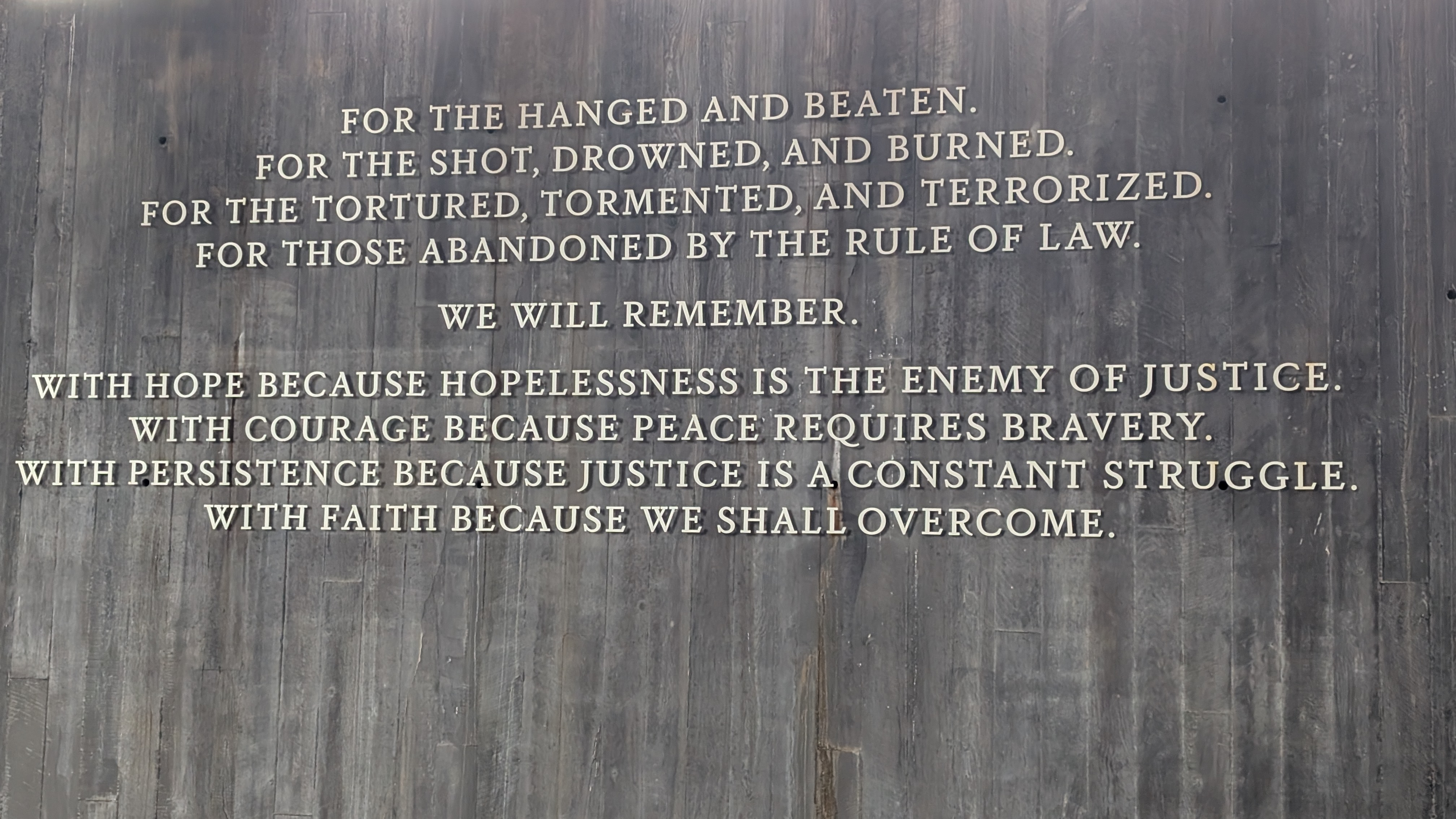
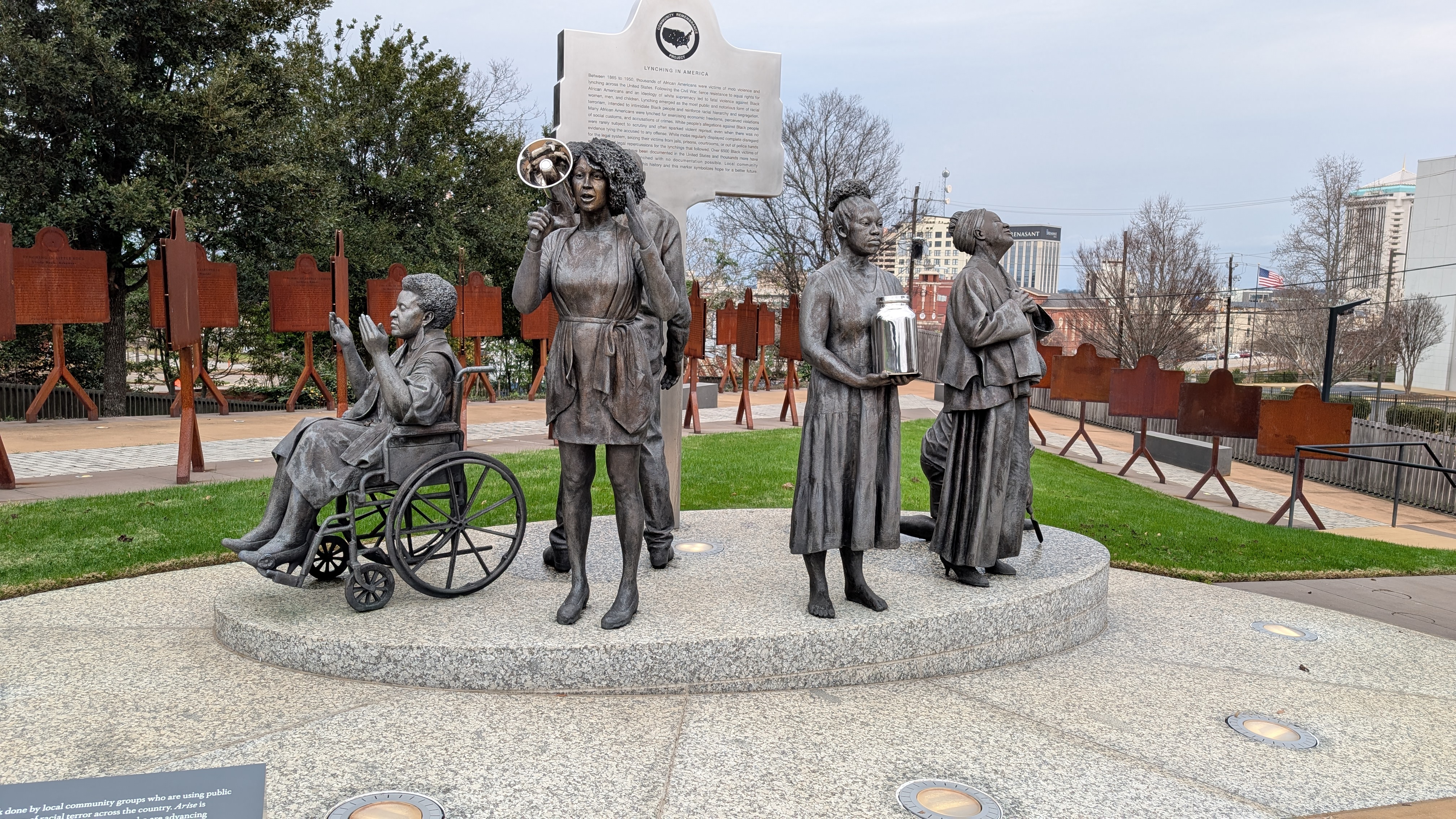
The horror of enslavement of African people and all that followed was prominent in the three Equal Justice Initiative sites – the museum, the memorial, and the sculpture park. Each one, especially the museum, immerses you in the reality of the terror and torture imposed on Black people. From enslavement to reconstruction to the civil rights movement to mass incarceration and many points along the way (I was reminded of the destruction of Black Wall Street and the massacre of hundreds of people in Tulsa, Oklahoma in 1921) the hatred and inhumanity of white people is gut-wrenching. The will to survive and to thrive is all the more extraordinary when one sees the raw reality of what people endured.
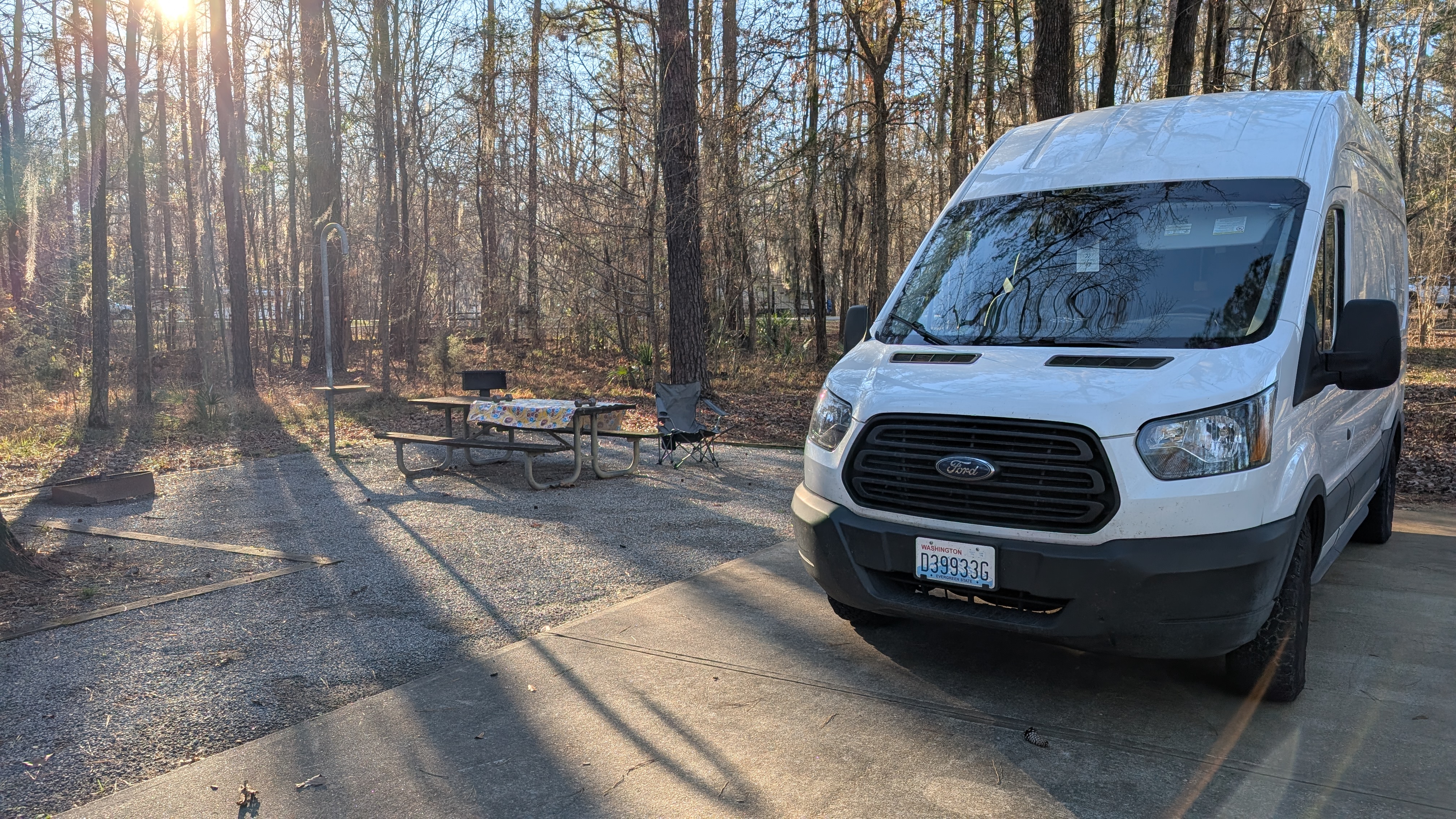
After a few days of camping just outside Montgomery, I went back for the Dr. MLK Jr parade. As I was headed to the route I greeted a man as I passed by and he asked if that was my van across the street, then asked a few more questions. I couldn’t figure out what he was after until he finally said, “how would you like to drive a celebrity in the parade?” I practically had a panic attack imagining driving my big ass van on a crowded street with people lining the sidewalks. I hemmed and hawed and asked a bunch of questions and finally said ok, let’s do it! We stuck the magnetic placards announcing the Nat King Cole Society, of which he was the president, and headed for the line-up. The parade was small and the crowd sparse, but we smiled and waved, he hollered greetings out the window and a few people recognized him as the former mayor of Union Springs. It was a good time!
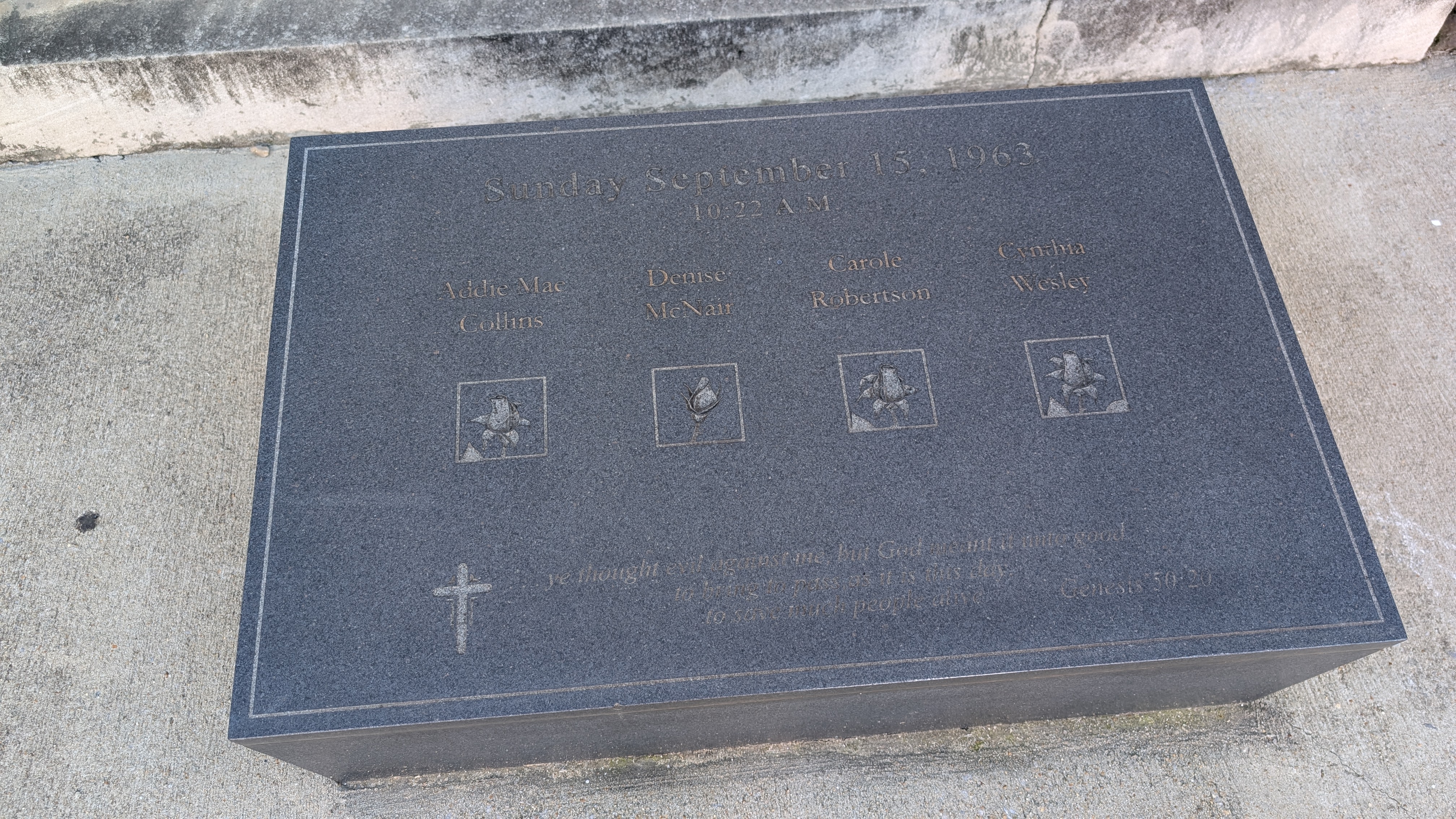
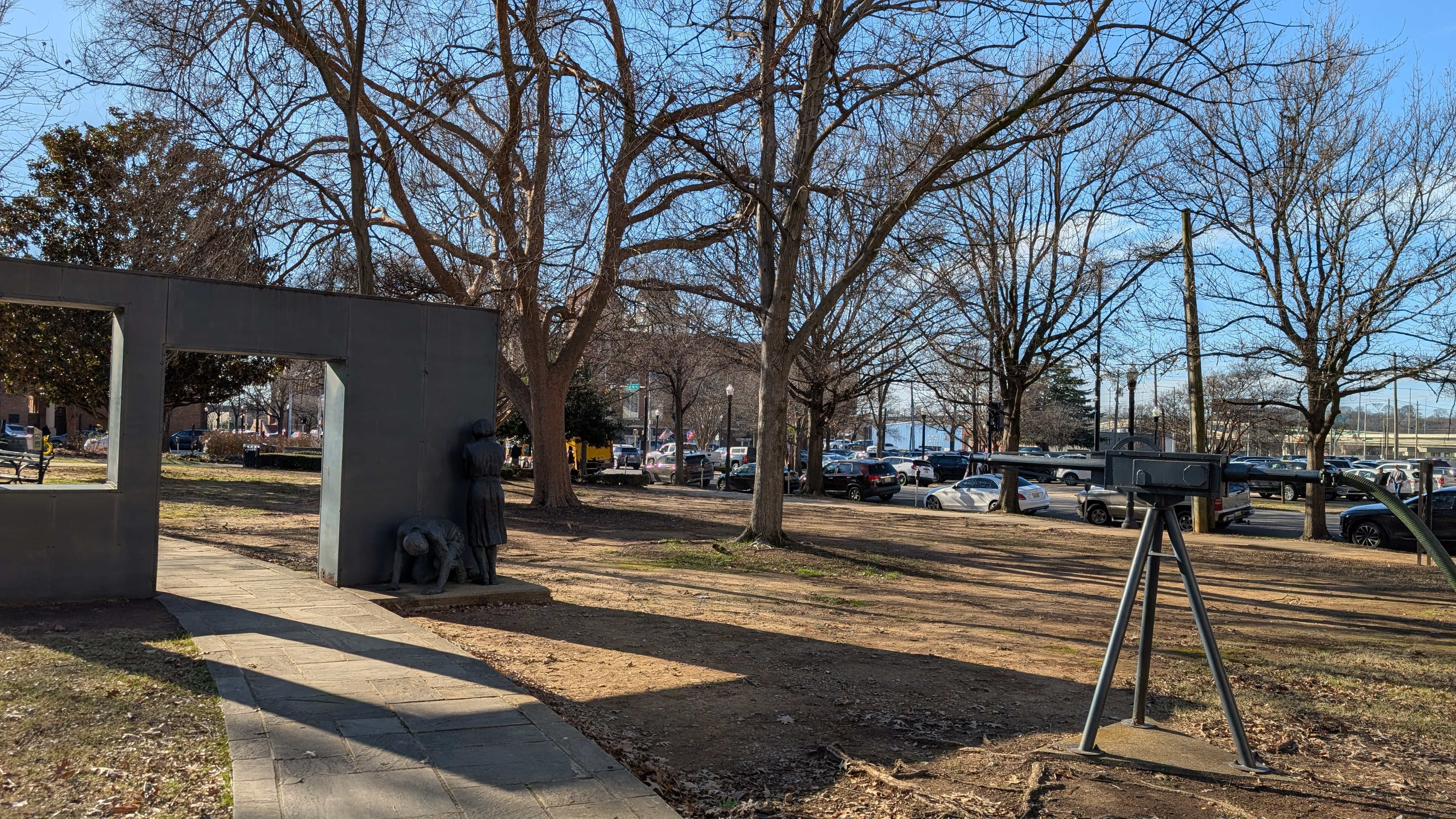
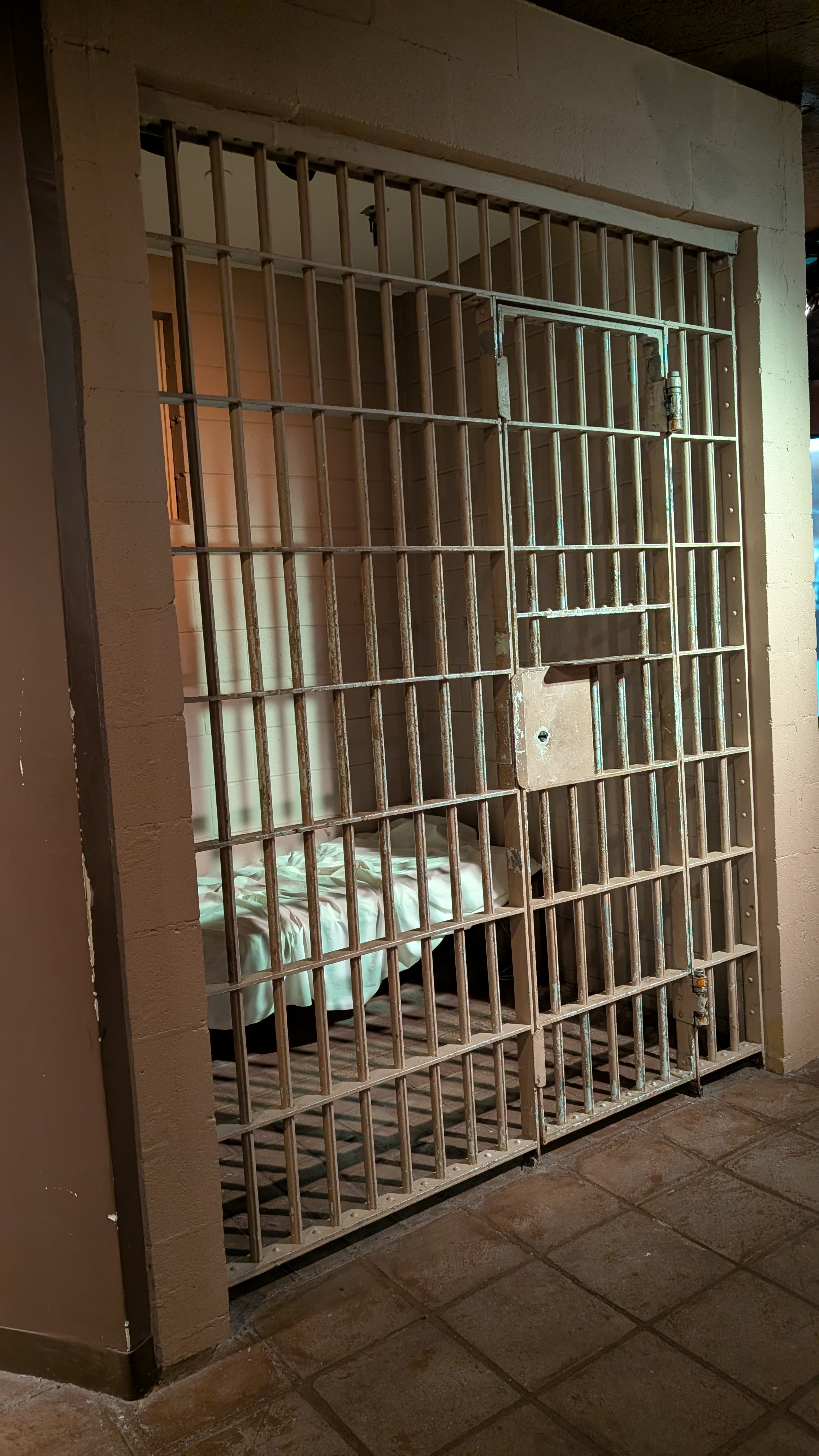
I headed to Birmingham and visited the Kelly Ingram Park, a site where the Southern Christian Leadership Conference launched actions in the campaign for civil rights. This was where dogs and firehoses were used to attack activists, kids included, seeking to end segregation, brutality, the denial of voting rights, etc. Dr. Martin Luther King Jr. and the Reverend Fred Shuttlesworth led the campaign which included store boycotts, protests and Dr. King being jailed. I also went to the Birmingham Civil Rights Institute across the street, which has the jail door from his cell and the letter he wrote from the Birmingham jail to white religious leaders who said the civil rights activism was “unwise and untimely.” As if they would ever have seen any time as wise or timely! Kitty corner from the park is the 16th Street Baptist Church where four kids – Addie Mae Collins, Cynthia Wesley, Carole Robertson, and Denise McNair – were murdered when it was bombed by white supremacists. I didn’t know it, but two boys were killed that same day, Johnny Robinson was shot by a cop in the melee after the bombing and Virgil Ware was shot by a white boy as Virgil rode by on a bike.
I haven’t been in the habit of urging people to go to the places I’ve been, but Montgomery and Birmingham (well, you may as well throw Jackson in the mix too) offer an education every American should experience. If you haven’t been there, go!
I almost forgot – I also visited Rickwood Baseball Stadium, built in 1910 and the oldest pro baseball stadium in the country. It hosted two teams, the Birmingham Barons and the Black Barons. Currently high school and college teams play there.
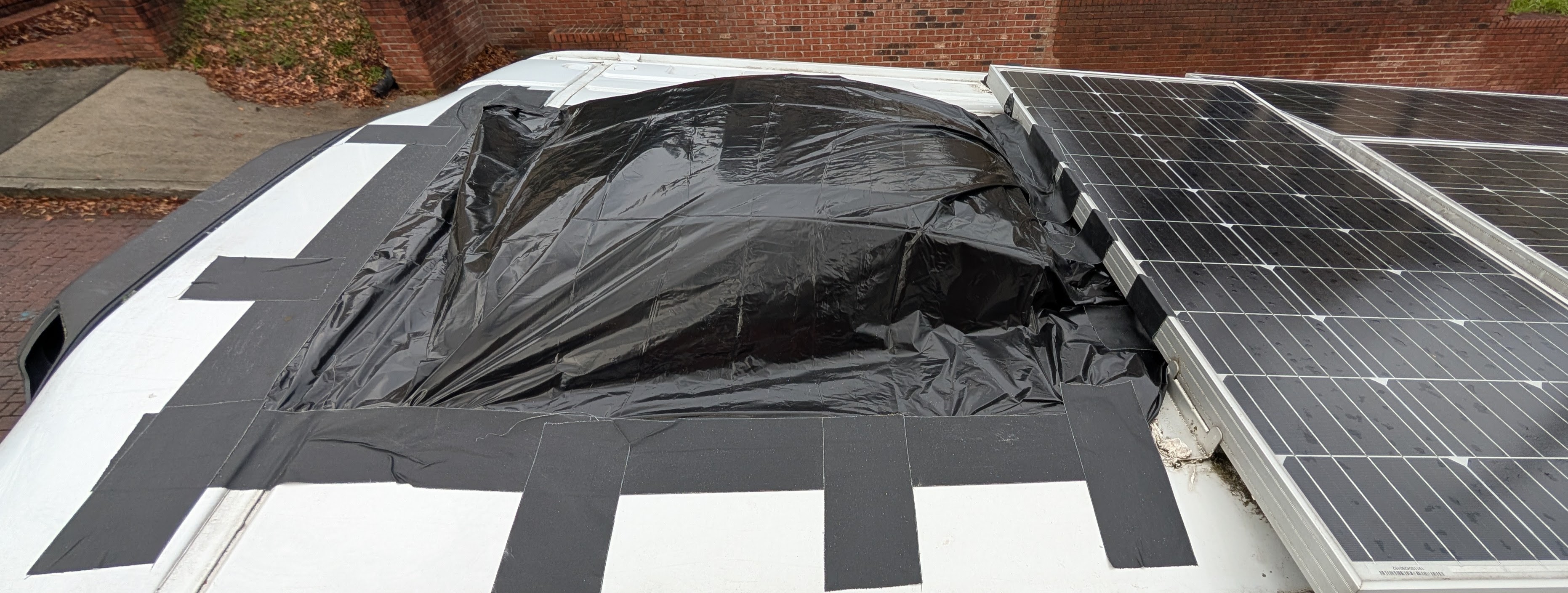
I arrived in Atlanta today (finally in the Eastern Time Zone)…just in time for the ice storm! I think I’ll have a day and a half to check things out before the storm hits. Meanwhile, with the heavy rain I’ve got a leak in my roof. I have a temporary fix but argh, I’ll need to deal with that before I go much farther.
 Karen in the Gap
Leave a comment